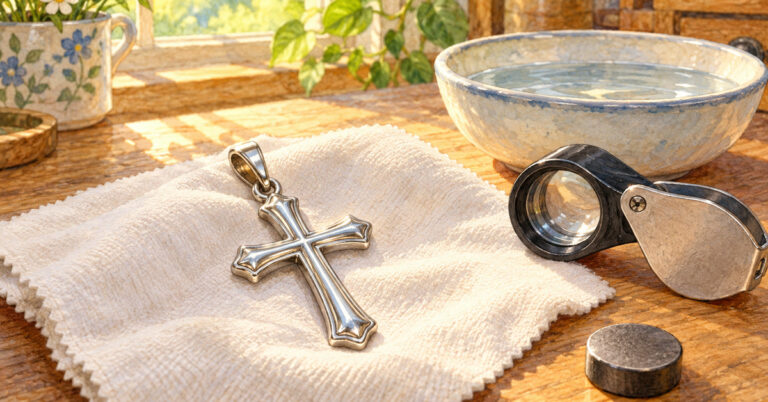
Why Does Your Skin Turn Green? The Real Reason and the Fix
TL;DR – A green mark on your skin is almost never an allergy. It is copper from the metal under the plating reacting with sweat and moisture. Brass and cheap gold plated pieces are the usual culprits. Solid sterling silver and stainless steel do not turn skin green, and a few simple habits stop it from coming back.
You took off your cross at the end of the day and found a soft green ring on your skin. Maybe on your finger, maybe across your collarbone. It looks alarming, it stains your shirts, and the first thought everyone has is “I must be allergic to this metal.” Almost every time, that guess is wrong. Here is what is actually happening on your skin, why certain metals do it and others never will, and exactly how to stop it for good. If you want pieces that stay kind to your skin from day one, our sterling silver cross collection is built on solid 925 silver, with nothing under the surface to turn on you.
What That Green Mark Actually Is
That green tint is a metal salt, plain and simple. Most affordable jewelry is not made of one pure metal. It is an alloy, a mix, and the metal doing the staining is almost always copper. When copper meets sweat, moisture, and the air, it oxidizes. The compound that forms on your skin is copper carbonate or copper chloride, and it is green. Same reason the Statue of Liberty is green: her skin is copper too, she just has more of it.
The mark is harmless. It washes off, it does not mean your body is rejecting the piece, and it is not a sign that the metal is dangerous. It is a sign of what is inside. A cross that turns your skin green is telling you its core is copper rich, even if the outside looked like gold or silver when you bought it.
The Real Reason It Happens: Copper, Sweat, and Timing
Three things have to line up for the green reaction: copper in the piece, moisture on your skin, and a little time. Change any one of them and the mark often never appears.
The Usual Culprit: What Is Under the Plating
Gold plated jewelry is the repeat offender. The plating itself is fine, but underneath it is usually brass, and brass is mostly copper. Every day of wear thins that thin gold layer a little more, at friction points first: the back of the piece, the edges, anywhere it rubs against skin or fabric. The moment the base metal shows through, the green starts. This is also why a piece can behave for months and then suddenly stain everything: the plating finally wore through at one spot.

A gold plated piece looks warm and rich right up until the plating thins at the edges. Underneath is usually brass, and brass is where the green comes from.
Your Skin: Sweat, pH, and What You Put On It
Skin is not inert. It is slightly acidic, and how acidic varies from person to person, which is why the same ring stains one friend’s hand and leaves another completely clean. Sweat speeds everything up. So do the products you wear: lotion, sunscreen, perfume, even shampoo residue. Humidity and summer heat make it worse, which is why most people first notice the green mark in July. None of this is a defect in your body. It is chemistry doing what chemistry does.
Is It an Allergy or Just a Stain?
This is the part worth being careful about, because the two problems look similar and are not the same thing at all.
A green mark appears with no other symptom. Your skin is its normal color apart from the tint, it does not itch, and it fades with soap and water. That is copper. A metal allergy, almost always nickel, looks different: redness, itching, small bumps, dry or flaky skin that lingers for days after the piece is gone. If that is what you are seeing, the fix is not cleaning, it is switching to pieces that are guaranteed nickel free, like solid 925 sterling silver or stainless steel.
Quick sanity check: green plus zero itch equals harmless copper reaction. Itch plus rash equals allergy, and it is worth taking seriously. Both point the same direction though, toward better metal.
Which Metals Turn Green (And Which Never Do)
Once you know what causes it, choosing pieces becomes simple. Here is the honest breakdown.
| Metal | Turns skin green? | What actually happens |
| Brass / copper alloy | Yes, easily | The most common source of green marks |
| Gold plated over brass | Yes, eventually | Green starts once the plating wears thin |
| Sterling silver (925) | No | May tarnish dark, but skin stays clean |
| Stainless steel | No | Inert, water friendly, allergy friendly |
| Solid gold (14k and up) | No | No copper in the mix |
The pattern is clear: pure and stable metals leave you alone, copper rich ones do not. If a piece is suspiciously cheap and still looks like gold, that is usually the answer right there.
Solid 925 silver pieces that stay kind to your skin :
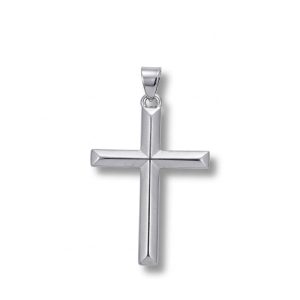







Stainless steel is the other worry free option, especially if you live in the shower or at the gym. It does not oxidize, it holds up to water, sweat, and sunscreen, and it never leaves a mark.
Stainless steel picks you can wear every single day :






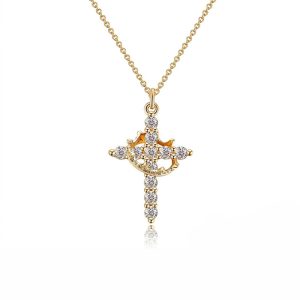


Solid 925 sterling silver has no copper core to speak of. It can darken with time, but it never hands that color over to your skin.
One clarification people get wrong: sterling silver can tarnish, and tarnish is dark gray or black, never green. Tarnish is a surface reaction with air and sulfur, it sits on the metal, and it comes off with a simple cleaning. Completely different reaction from the copper stain, and much easier to live with.
How to Get the Green Off Your Skin
Good news: the stain is cosmetic and it leaves easily. Pick whichever of these fits your day.
Method 1: Soap and Water (The Everyday Fix)
Warm water, a bit of hand soap, thirty seconds of rubbing. For most marks that is the whole job. Dry your skin fully afterward, since lingering moisture keeps the reaction going.
Method 2: Baking Soda Paste (The Stubborn Mark)
Mix baking soda with a few drops of water into a paste, rub it over the green with your fingertips or a soft cloth, then rinse. The mild abrasion lifts what soap left behind. Makeup remover on a cotton pad works in the same way if that is what is on your counter.
And while you are at it, take care of the piece too. A stained piece is usually a piece that needs cleaning, and the same gentle methods that fix your skin work on the metal. Our guide on how to clean silver jewelry at home walks through five safe options, from baking soda to a soft polishing cloth. If the piece lives in the shower with you, our everyday faith questions guide covers what water and soap really do to different metals.
How to Keep It From Coming Back
Cleaning the stain after every wear gets old fast. Preventing it is easier, and none of these take more than a minute.
- Upgrade the metal. The real fix. Solid sterling silver, stainless steel, or solid gold never green, so there is nothing to prevent.
- Try the clear polish trick. A thin coat of clear nail polish on the back of a plated piece acts as a barrier between the base metal and your skin. It wears off after a few weeks, so reapply now and then.
- Put it on last. Get dressed, spray perfume, rub in lotion, then add your pieces. Products applied over metal attack the plating faster.
- Dry it off. Sweat and water are the fuel. Wiping your piece and your skin after a workout cuts the reaction dramatically.
- Rotate and store well. Giving a piece a day off between wears slows plating wear, and proper storage keeps humidity away. Our storage guide covers the mistakes almost everyone makes.

Stainless steel is the set it and forget it option: sweat, water, sunscreen, it does not react and it does not stain.
Bottom line: green skin is a copper story, not a body story. Wear copper rich pieces knowingly, treat them with the clear polish trick, or skip the whole issue with metals that were never going to react in the first place. Your skin and your shirts will both thank you.
Related Cross Guides
New to cross pieces, or building a small collection that behaves? These guides pick up where this one leaves off.
- 12 Types of Crosses in Christianity: History, Meaning and Jewelry Guide, the hub that covers every major style in one place.
- Gold vs Silver Cross: Which One Should You Pick?, the metal face off, now with the skin reaction angle included.
- Sterling Silver vs Stainless Steel: Pros, Cons and Prices, the two metals that never turn skin green, compared in depth.
- How to Clean Silver Jewelry at Home Without Ruining It, five methods for both your skin stained pieces and your silver.
- The Latin Cross: History, Symbolism and Meaning, for the meaning behind the most classic shape of all.