Jerusalem Cross Meaning: History and Symbolism of the Five Crosses
TL;DR – The Jerusalem cross is a large central cross surrounded by four smaller crosses, one in each quadrant. It dates back to the Crusades, when it became the emblem of the Kingdom of Jerusalem. Most historians read it as a symbol of the five wounds of Christ, and some as a call to spread the faith to the four corners of the earth. Today it is worn as a sign of pilgrimage, heritage, and devotion.
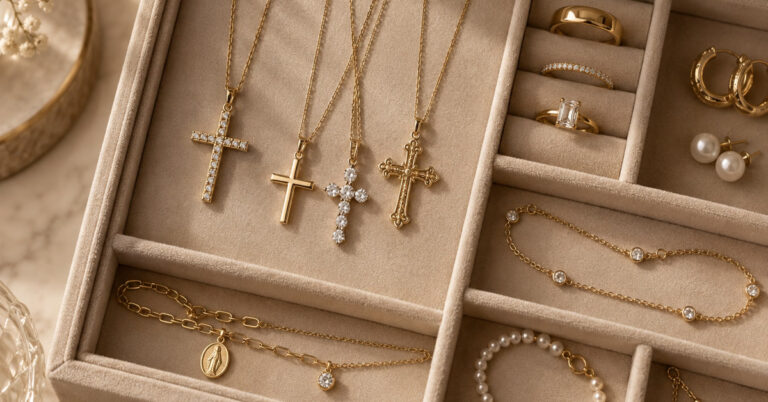
You have probably seen it on a church door, a flag, or a pendant: one big cross, four small ones, all locked together in a single square shape. It looks a bit like a medal, and for centuries that is exactly what it was. This guide explains where the Jerusalem cross came from, what the five crosses are supposed to mean, how it differs from other famous cross designs, and how people wear it today. If you want to see the symbol in person, start with our cross necklace collection, where five-fold designs sit next to every other classic shape. If you are drawn to symbols with a real story behind them, this one has plenty.
What Is the Jerusalem Cross?
The Jerusalem cross, sometimes called the Crusader cross or the five-fold cross, is a large central cross with a smaller cross placed in each of the four open quadrants around it. In technical terms, the central shape is usually a cross potent (a cross with bar-like ends) or a plain Greek cross, and the four companions are plain Greek crosses. The whole design fits inside an invisible square, which is one of the reasons it looks so balanced and heraldic.
The Five Crosses, Explained
Count them once and the name makes sense: one central cross plus four smaller ones gives you five in total. That number is the heart of every interpretation of this symbol, and it has kept theologians, historians, and hobbyists debating for almost a thousand years.
The most accepted reading is the five wounds of Christ: the nails through both hands, the nail through both feet, and the spear wound in his side. In medieval devotion, the five wounds were a huge focus of prayer, and a symbol that gathered all five into one image was considered especially powerful. The second popular reading is geographic: the four corners of the earth with Christ, or Jerusalem, at the center, a visual way of saying that the faith was meant to travel outward from that exact spot. Some scholars also connect the design to the cross of Constantine, whose labarum carried a similar arrangement.
None of these readings cancel each other out. Medieval symbols were built to carry several layers at once, and the Jerusalem cross is a textbook example.
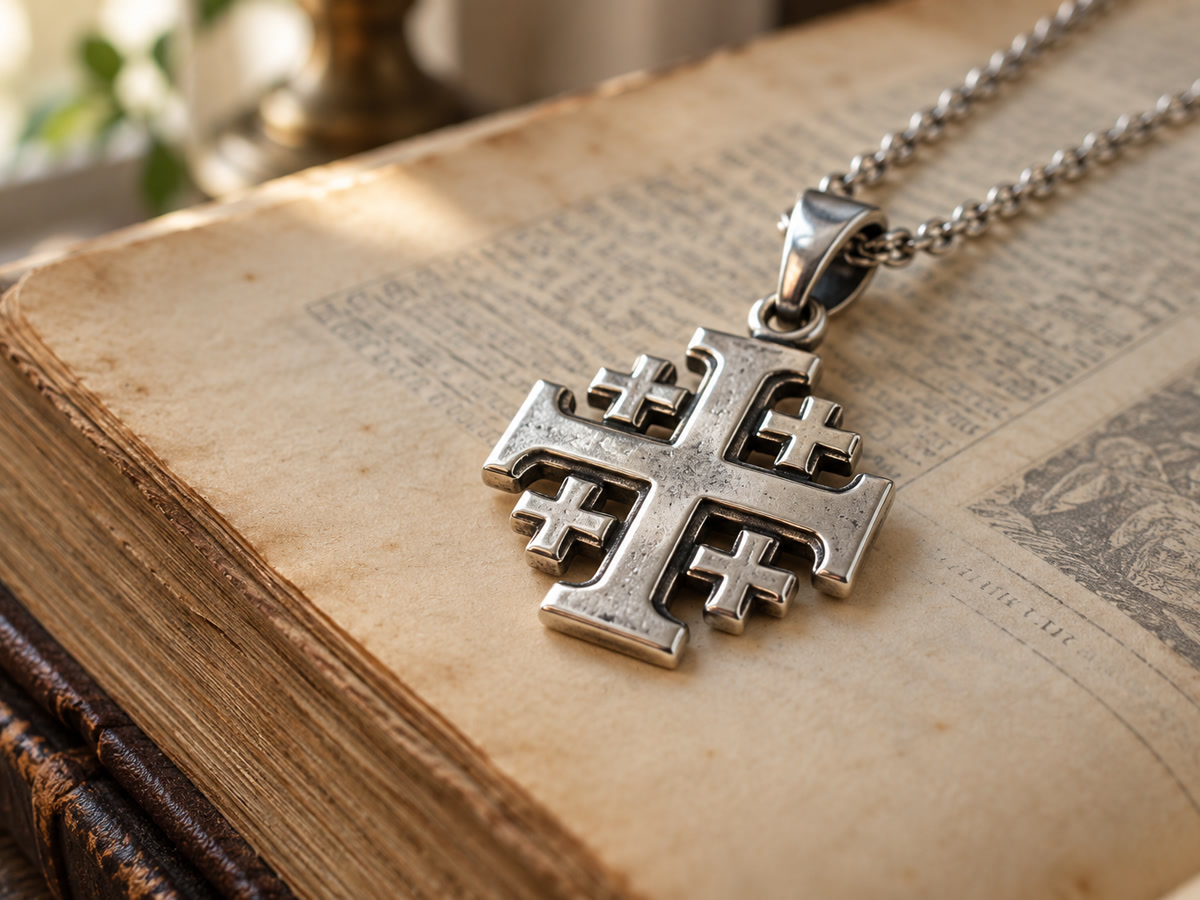
A classic five-fold cross, with the central cross dominant and the four smaller ones tucked into the corners.
A History Tied to the Crusades
The Jerusalem cross did not start out as a piece of jewelry. It started as an emblem of power, granted by a pope and carried into battle by knights. Understanding that origin explains why the symbol still carries such weight.
Key Dates in the Story of the Jerusalem Cross
- 1099 – Crusaders capture Jerusalem and establish the Kingdom of Jerusalem, the first Crusader state.
- 1099 to 1187 – The five-fold cross appears on seals, coins, and the royal banner of the Kingdom of Jerusalem under Godfrey of Bouillon and his successors.
- 1100s – Pope Paschal II grants the cross to the Knights of the Holy Sepulchre, making it an official mark of the religious military orders guarding the city.
- 1187 – Saladin retakes Jerusalem. The cross survives the loss of the city because the orders carry it back to Europe, where it becomes a symbol of pilgrimage rather than conquest.
- 1400s to today – The design is adopted by the Equestrian Order of the Holy Sepulchre of Jerusalem, which still uses it as its official insignia, and it appears on the coats of arms of old Christian families across Europe.
That arc, from battlefield emblem to pilgrimage badge to family crest, is why the Jerusalem cross feels different from other cross designs. It is not just an image of faith. It is an image of a place.
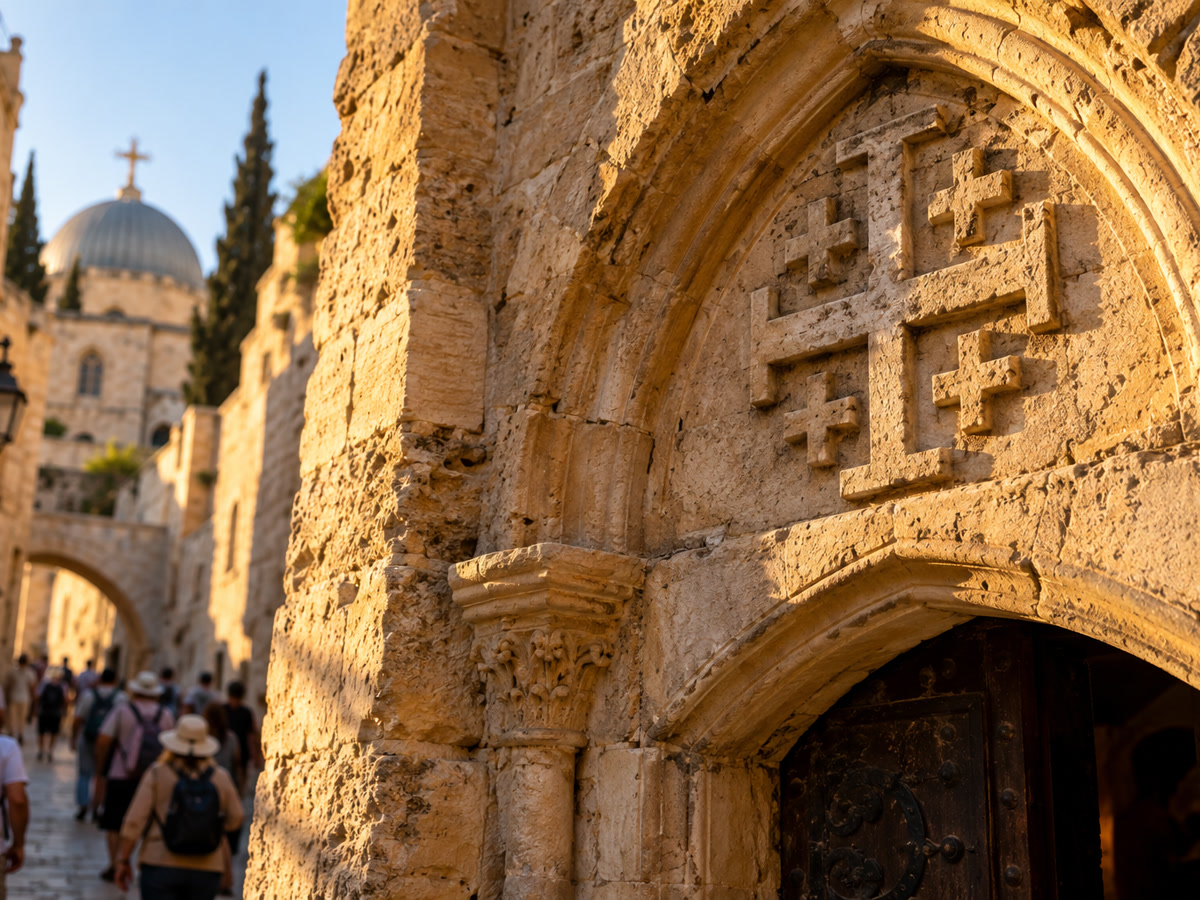
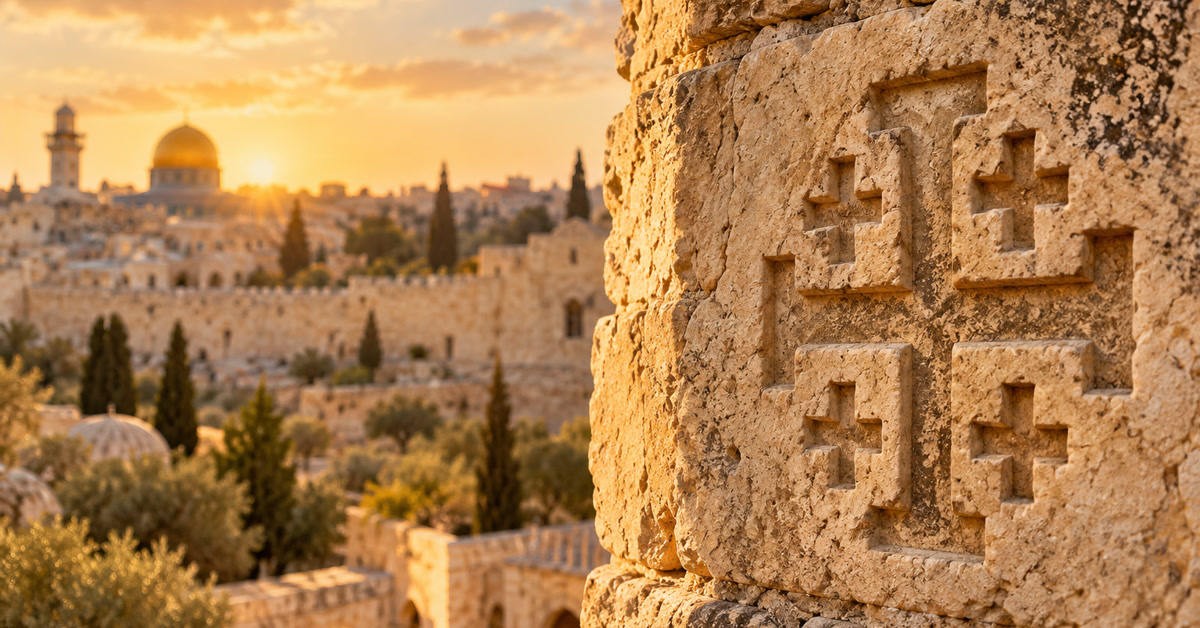
Carved stone crosses like this one still mark churches and gates across the old city of Jerusalem.
What Does the Jerusalem Cross Symbolize?
Beyond the historical readings, the symbol works on a personal level, which is exactly why people still choose to wear it.
The Five Wounds of Christ
For many Christians, the five crosses are a compact reminder of the crucifixion: two hands, two feet, one side. Wearing the symbol is a quiet way of keeping that sacrifice close, in the same family of devotion as wearing a crucifix, but with a different visual language.
Faith Sent Outward
With Christ at the center and the four small crosses pointing to the edges, the design also reads as a mission statement: the faith starts in one place and travels. That meaning resonates with missionaries, aid workers, and anyone who sees their faith as something to share rather than keep private.
Pilgrimage and Heritage
Plenty of people wear a Jerusalem cross simply because it connects them to a place or a family line. Pilgrims bring one home from the Holy Sepulchre. Families in Belgium, France, Italy, and Spain find the symbol on old crests and keep it going. It is one of the few cross designs that works equally well as a devotional object and as a heritage piece.
Jerusalem Cross vs Other Famous Cross Designs
If you are comparing symbols before choosing one, these are the distinctions that matter most.
Jerusalem Cross vs Latin Cross
The Latin cross is the simple two-bar shape with a longer vertical arm, the one you see on most church steeples. It has no smaller crosses and no frame. The Jerusalem cross adds the four companions and the implied square, which gives it a denser, more emblem-like look. If the Latin cross is a signature, the Jerusalem cross is a seal.
Jerusalem Cross vs Greek Cross
A Greek cross has four arms of equal length and nothing else. The four small crosses inside a Jerusalem cross are Greek crosses themselves, so the two designs are closely related. The difference is the frame: the Jerusalem cross is a Greek cross surrounded by four more. For a deeper dive into the four-armed shape, see our guide to the Greek cross and its meaning.
Jerusalem Cross vs Orthodox Cross
The Orthodox cross carries three horizontal bars, including the slanted footrest, and usually includes the corpus. The Jerusalem cross has no corpus and no third bar. They come from different traditions and different centuries, and they are easy to tell apart at a glance. Our Orthodox cross guide covers that design in full.
How People Wear the Jerusalem Cross Today
The design has moved far beyond church doors and old family crests, and it shows up in several materials and styles.
Pendants and Chains
The most common format is a small five-fold cross on a chain, in sterling silver or gold plating. Because the design is busier than a plain Latin cross, it pairs best with a simple chain and a clean neckline. If you are building a small stack, keep the other pieces minimal and let the five crosses do the talking.
Rings, Cuffs, and Home Pieces
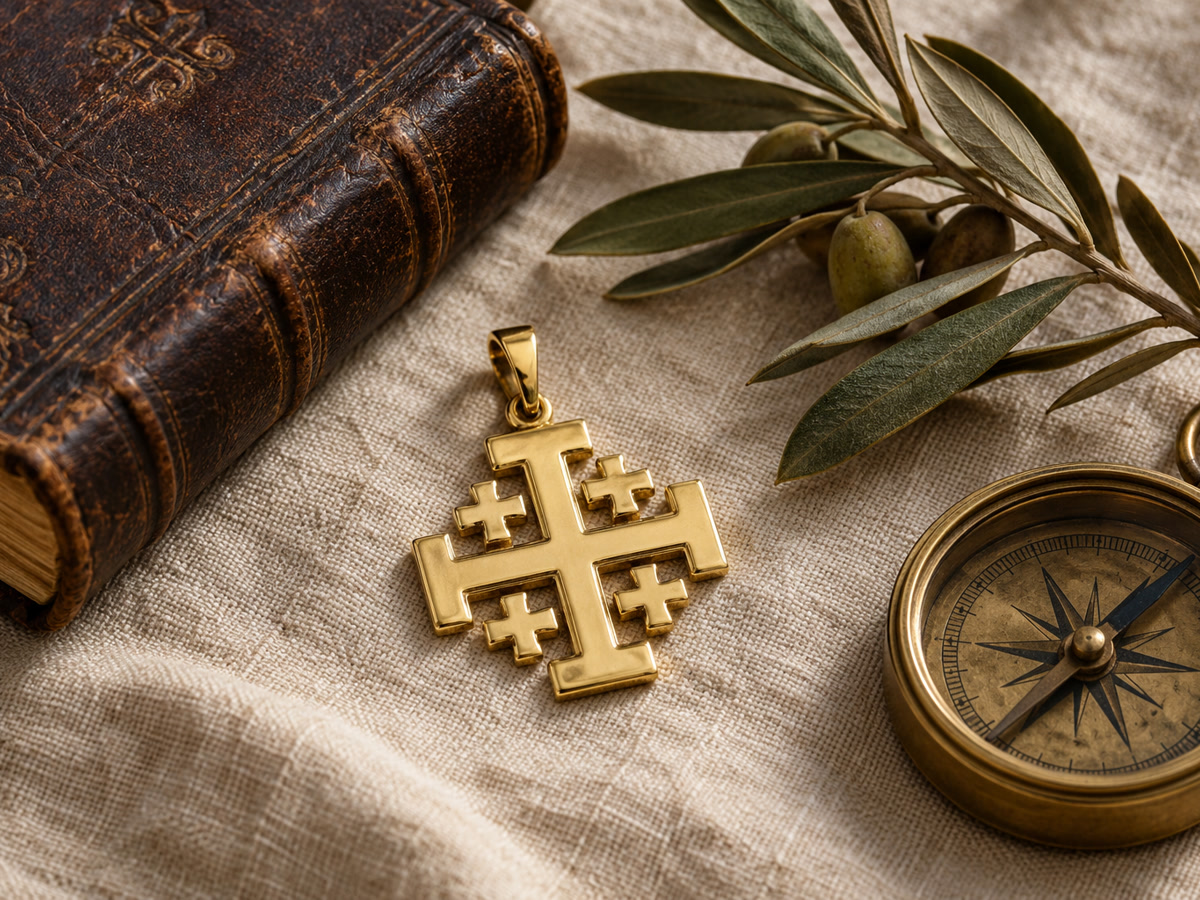
The square silhouette works just as well in gold plating as in silver, and layers easily with a plain chain.
Related Cross Guides
If the Jerusalem cross got you curious about other designs, these guides go deeper on the symbols most often compared with it.
- 12 Types of Crosses in Christianity: History, Meaning and Jewelry Guide – the full overview of every major cross design.
- The Latin Cross: History, Symbolism and Meaning – the simple two-bar shape behind most church steeples.
- The Greek Cross: History, Symbolism and Meaning – the four equal arms that make up the small crosses in a Jerusalem cross.
- Orthodox Cross: Meaning, History and How to Style It – the three-barred cross of the Eastern churches.
- Crucifix vs Cross: What is the Difference? – when a cross carries the corpus and when it does not.