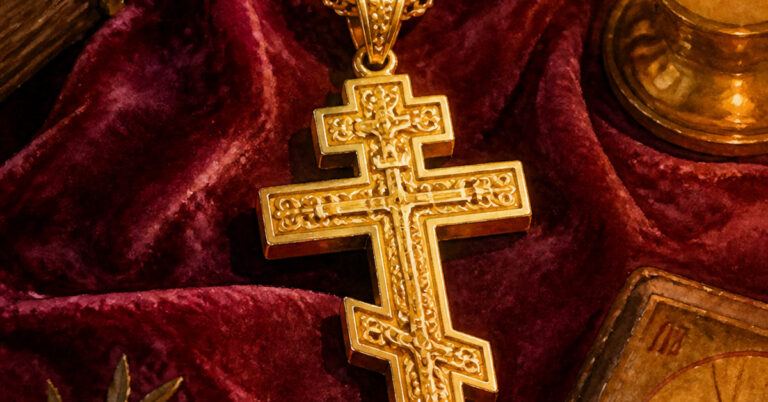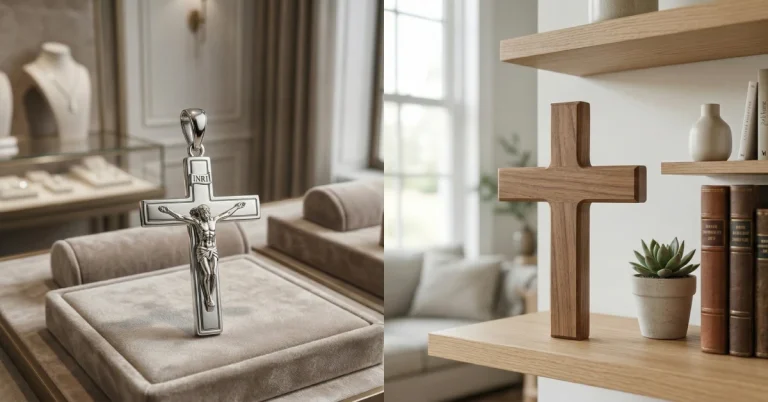
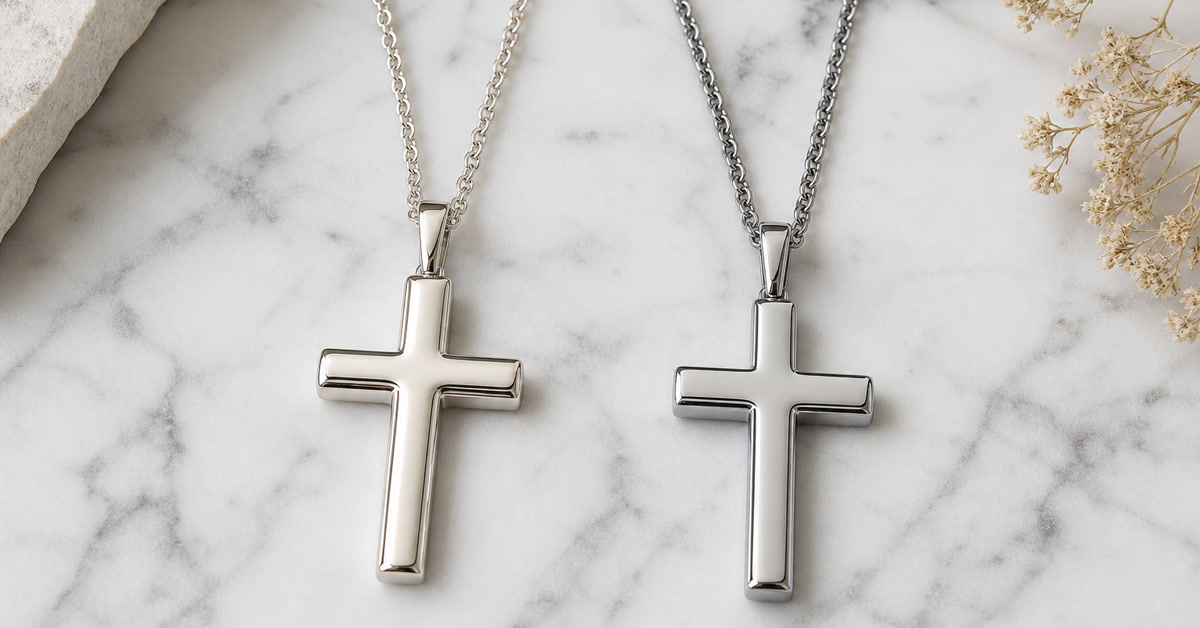
Sterling Silver vs Stainless Steel Cross Jewelry: Pros, Cons & Prices
TL;DR – Sterling silver (925) gives you a warm, traditional luster and real precious-metal prestige, but it tarnishes and costs more. Stainless steel is tougher, hypoallergenic, and budget-friendly with almost zero maintenance, though it lacks the soft glow of genuine silver. Pick sterling for heirloom-worthy gifts and meaningful occasions. Pick stainless for everyday wear, active lifestyles, and pieces you never want to worry about.
Shopping for a cross necklace or cross ring and stuck between sterling silver and stainless steel? You are not alone. These two metals dominate the faith jewelry market, and they could not be more different in how they look, how they age, and what they cost. This guide lays out every factor side by side so you can walk away confident in your choice.
What Is Sterling Silver?
Sterling silver is an alloy made of 92.5% pure silver and 7.5% other metals, almost always copper. That 925 stamp you see on quality silver jewelry is not a brand name – it is a legally recognized standard that guarantees the silver content. Pure silver (999 fine silver) is too soft for jewelry that needs to survive daily wear, so the copper addition gives it the strength to hold shape, resist bending, and take a high polish.
The result is a metal with a bright, warm white luster that has been prized in jewelry for centuries. Sterling silver sits in the “precious metal” category alongside gold and platinum, which means it carries inherent material value and a certain prestige that costume metals simply do not have.
Key Properties of Sterling Silver
- Composition: 92.5% silver, 7.5% copper (or occasionally other alloys)
- Hallmark: Stamped “925” to verify authenticity
- Hardness: 2.5 to 3 on the Mohs scale – soft enough to scratch but durable enough for jewelry
- Weight: Heavier than stainless steel, giving a substantial, premium feel
- Tarnish: Yes – reacts with sulfur in the air to form a dark patina over time
- Hypoallergenic: Generally yes, but the copper content can occasionally irritate very sensitive skin
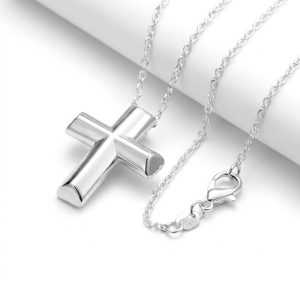
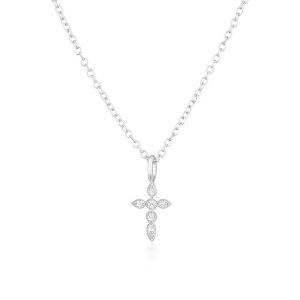
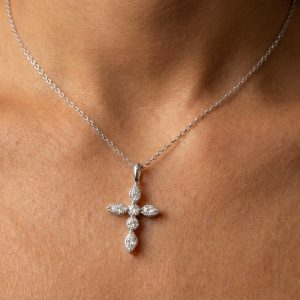
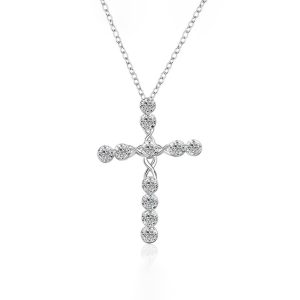
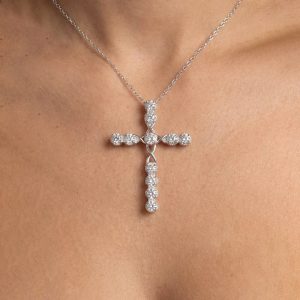
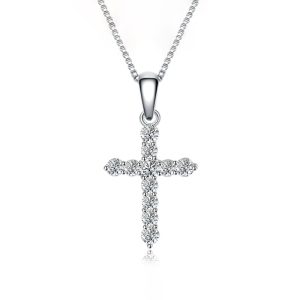
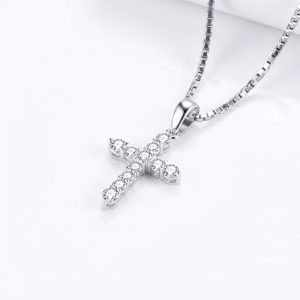
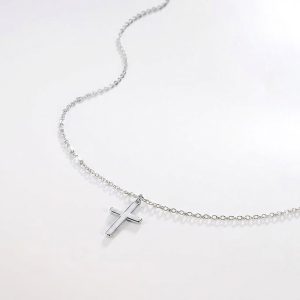
A few of our favorite sterling silver cross designs :
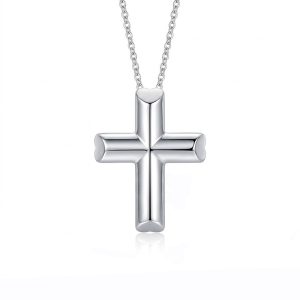
What Is Stainless Steel in Jewelry?
Stainless steel used in jewelry is typically 316L surgical-grade stainless steel – the same alloy found in medical implants, surgical instruments, and high-end watch cases. It is an alloy of iron, chromium (at least 10.5%), nickel, and molybdenum. The chromium creates a passive oxide layer on the surface that makes the metal highly resistant to rust, corrosion, and tarnish.
Stainless steel entered the jewelry world relatively recently compared to silver, but it has carved out a serious niche. Its industrial-modern aesthetic, near-indestructible nature, and extremely accessible price point make it a popular choice for men’s cross necklaces, everyday pendants, and pieces that need to withstand rough handling without showing wear.
Key Properties of Stainless Steel
- Composition: Iron, chromium (10.5%+), nickel, molybdenum, and trace elements
- Grade: 316L is the jewelry standard – the “L” means low carbon for better corrosion resistance
- Hardness: 5 to 6.5 on the Mohs scale – significantly harder than silver
- Weight: Lighter than silver but still feels solid in hand
- Tarnish: Virtually none – the chromium oxide layer self-heals
- Hypoallergenic: Yes for most people, though the nickel content can be a concern for those with severe nickel allergies
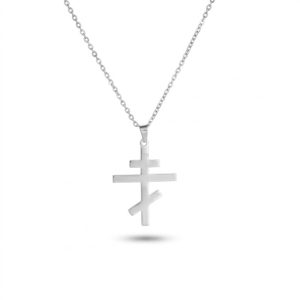
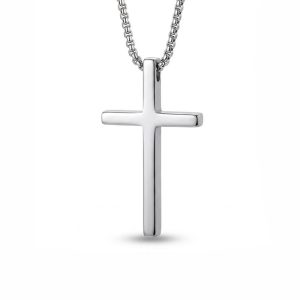
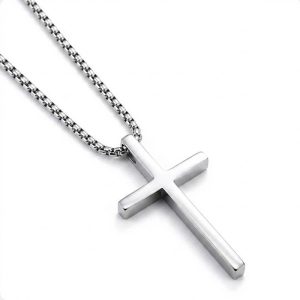
Explore our stainless steel cross collection. :
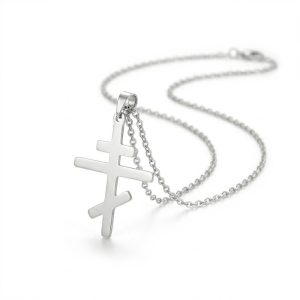
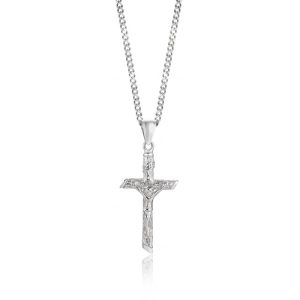
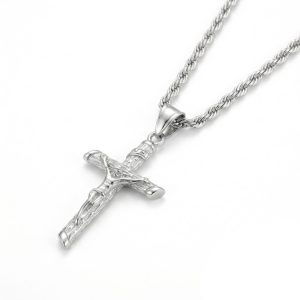
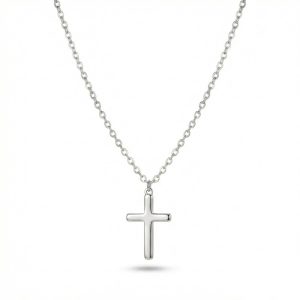
Sterling Silver vs Stainless Steel: The Full Comparison
Now that you know what each metal actually is, let us put them head to head on every factor that matters when you are buying cross jewelry.
Durability and Scratch Resistance
Stainless steel wins this category by a wide margin. At 5 to 6.5 on the Mohs hardness scale, it resists scratches, dents, and deformation far better than sterling silver’s 2.5 to 3. If you wear your cross necklace every day – to the gym, in the shower, while cooking, during outdoor activities – stainless steel will maintain its surface finish much longer.
Sterling silver is softer and will develop fine surface scratches over time. Some people love this natural patina as it develops character. Others find it frustrating. A scratched sterling piece can always be polished back to a mirror finish, but that does require periodic attention.
Tarnish and Maintenance
This is the biggest practical difference. Sterling silver tarnishes – there is no way around it. Exposure to air, moisture, perfumes, lotions, and even the sulfur compounds naturally present on your skin will cause silver to develop a dark, yellowish, or blackish patina. Regular cleaning with a silver polishing cloth or a mild silver cleaner restores the shine, but it is an ongoing commitment.
Stainless steel, by contrast, is essentially zero-maintenance. The chromium oxide layer that forms on its surface is self-repairing – if you scratch it, a new protective layer forms within minutes in the presence of oxygen. You can wear stainless steel in the shower, the ocean, or a swimming pool without worry. A quick wipe with a damp cloth is all it ever needs.
Look and Feel
Sterling silver has a warmer, softer white tone with a depth of luster that precious-metal lovers recognize instantly. It catches light differently than steel, with a gentle glow rather than a hard shine. When polished, it can achieve a mirror-like finish that looks stunning in photos and in person.
Stainless steel has a cooler, slightly darker silver tone with a more industrial or contemporary feel. It can be polished to a high shine or given a brushed matte finish. Some stainless steel cross necklaces are coated in gold-tone or black finishes, expanding the style range considerably. The difference is subtle to casual observers but obvious to anyone who wears silver regularly.
Price
Stainless steel is significantly cheaper. A quality stainless steel cross necklace typically runs between $15 and $40, while a comparable sterling silver piece starts around $25 and can reach $60 or more depending on the design, gemstone accents, and craftsmanship. For budget-conscious shoppers or anyone buying multiple pieces, stainless steel offers excellent value.
That said, sterling silver holds intrinsic material value. Silver is a traded commodity, and a 925 piece carries real worth in its metal content alone. Stainless steel has no precious-metal value – its worth comes entirely from the craftsmanship and design.
Skin Sensitivity and Hypoallergenic Properties
Both metals are generally safe for sensitive skin, but with caveats. Sterling silver’s 7.5% copper content can occasionally cause a greenish discoloration or mild irritation in people with copper sensitivity. High-quality 925 silver with rhodium plating eliminates this issue entirely.
316L stainless steel contains nickel, which is a known allergen for roughly 10% of the population. However, the nickel in 316L is locked into the alloy’s crystal structure and does not leach onto skin under normal conditions. For the vast majority of wearers, stainless steel is perfectly hypoallergenic. If you have a confirmed nickel allergy, sterling silver is the safer bet.
Weight and Comfort
Sterling silver is denser (10.49 g/cm³) than stainless steel (8.0 g/cm³), which means a silver cross pendant of the same size will feel heavier around your neck. Some people prefer this heft – it feels substantial and valuable. Others, especially those who are not used to wearing jewelry, find lighter stainless steel more comfortable for all-day wear.
Environmental and Ethical Considerations
Silver mining has a significant environmental footprint, though recycled silver is increasingly common in the jewelry industry. If sustainability matters to you, look for sterling silver pieces made from recycled materials. Stainless steel is one of the most recycled metals on earth – roughly 85% of end-of-life stainless steel is recovered and reprocessed. Both metals have a case to make on the sustainability front.
Which Should You Choose? A Quick Decision Guide
Still not sure? Here is a straightforward breakdown based on your situation.
Choose Sterling Silver If…
- You want a meaningful gift for a baptism, First Communion, Confirmation, or other religious milestone
- You value the warm luster and prestige of a precious metal
- You plan to pass the piece down as an heirloom
- You do not mind occasional polishing to maintain its shine
- You have a nickel allergy and need to avoid stainless steel
Choose Stainless Steel If…
- You want a cross necklace you can wear 24/7 without thinking about it
- You have an active lifestyle – gym, sports, outdoor work, swimming
- You are on a budget but still want something that looks great
- You want zero maintenance – no polishing, no special storage
- You prefer a modern, industrial aesthetic over a classic precious-metal look
Care Tips for Both Metals
Caring for Sterling Silver Cross Jewelry
- Store it right: Keep silver in an anti-tarnish pouch or a sealed ziplock bag when not wearing it. Air exposure is the number one cause of tarnish.
- Polish regularly: A silver polishing cloth restores shine in seconds. For heavier tarnish, use a dedicated silver cleaner or a baking soda paste.
- Remove before water: Take off silver before showering, swimming, or washing dishes. Chlorine and saltwater accelerate tarnish dramatically.
- Last on, first off: Put your cross necklace on after applying perfume, lotion, and hairspray. Remove it before bed.
Caring for Stainless Steel Cross Jewelry
- Wipe it down: A soft damp cloth removes fingerprints and grime. That is genuinely all stainless steel needs on a daily basis.
- Deep clean occasionally: Warm water with a drop of dish soap and a soft brush handles any buildup in crevices or engraved details.
- Store however you want: No special storage needed. Stainless steel does not react to air, humidity, or most chemicals found in a home environment.
- Avoid harsh abrasives: Steel wool or abrasive cleaners can scratch the surface. Stick to soft cloths.