How to Clean Tarnished Jewelry: What Actually Works (And What Doesn’t)
TL;DR – Tarnish is a chemical reaction, not dirt, and the fix depends entirely on your jewelry’s material. Sterling silver responds best to baking soda paste or a polishing cloth. Gold plated pieces need only warm soapy water (abrasives strip the coating). Stainless steel rarely tarnishes but can be restored with a damp microfiber cloth. The methods that actually work are simple; the ones that don’t (toothpaste, vinegar baths, ketchup) do more harm than good.
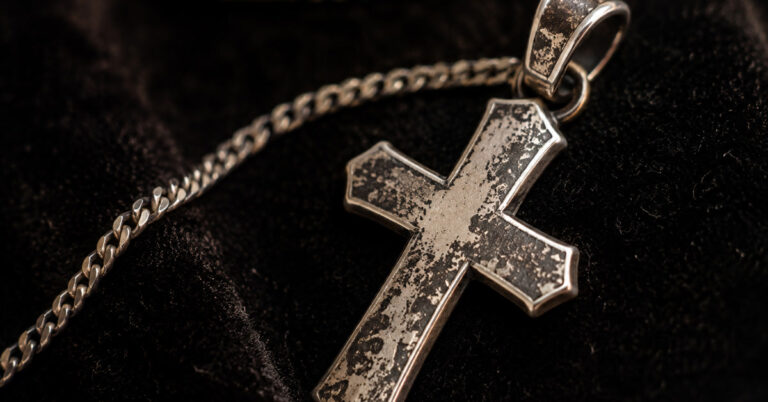
Your cross necklace looked perfect the day you got it. Now it’s dull, discolored, or worse, turning black in the crevices. Before you throw it in a drawer or toss it in the trash, know this: almost every piece of tarnished jewelry can be restored at home. The key is matching the right method to the right material, because what works on sterling silver will destroy gold plating, and what works on stainless steel is pointless on silver.
Why Jewelry Tarnishes: The Science Nobody Explains
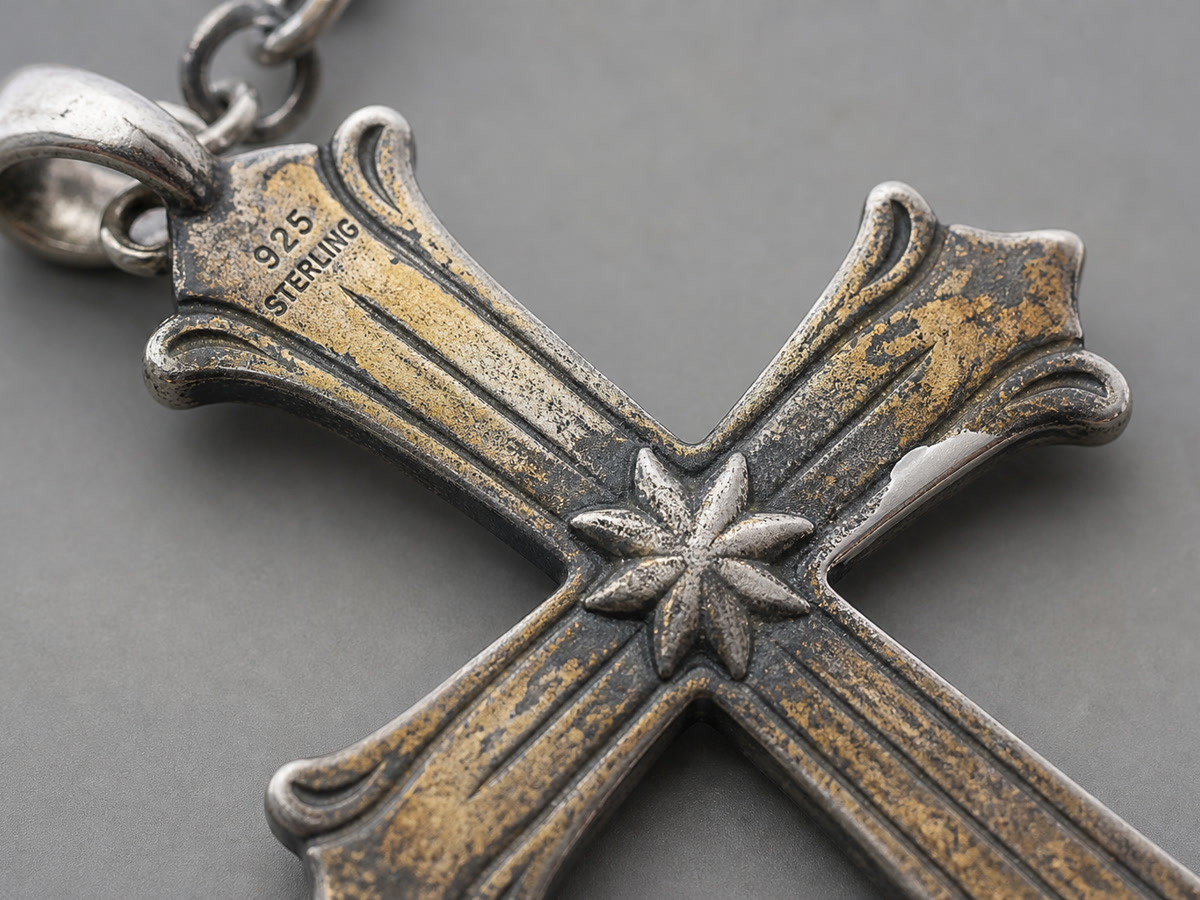
Tarnish is not dirt, grime, or a sign of cheap jewelry. It is a chemical reaction between the metal surface and sulfur compounds in the air, on your skin, and in the environment around you. When silver meets hydrogen sulfide (present in even trace amounts in indoor air), it forms silver sulfide, a thin, dark layer that builds up over time and gives your jewelry that dull, grayish-black appearance.
The process is entirely natural. Even .999 fine silver tarnishes. What makes sterling silver (.925) slightly more reactive is the 7.5% copper mixed in for strength, copper accelerates the oxidation. Humidity, proximity to rubber, exposure to perfume or lotions, and even the chlorine in tap water can speed it up. Gold plating tarnishes when the thin gold layer wears through to the base metal underneath. Stainless steel, by contrast, is remarkably resistant, but not immune.
The Material-by-Material Guide: What Works for Each Type
Before you reach for the baking soda or the polishing cloth, you need to know what your jewelry is actually made of. The wrong method on the wrong material won’t just fail, it can permanently damage the piece. Here’s the honest breakdown.
Sterling Silver (925)
Sterling silver is the most common material for cross necklaces, and it’s also the most prone to tarnish. The good news: it’s the easiest to restore. The 7.5% copper content that makes it reactive also means the tarnish sits on the surface and can be physically or chemically removed without affecting the metal underneath.
Best methods: Baking soda paste (3 parts baking soda to 1 part water), silver polishing cloth, or the aluminum foil electrochemical bath for heavy tarnish. Start with the gentlest option and escalate only if needed. For pieces with gemstones or delicate settings, stick to warm soapy water, abrasion can loosen prongs.
Gold Plated
Gold plating is a thin layer of gold bonded to a base metal (usually brass, copper, or stainless steel). The plating itself doesn’t tarnish, but it wears through over time, exposing the base metal underneath. When you see darkening on a gold plated piece, it’s usually the base metal showing through, not tarnish on the gold.
Best methods: Warm soapy water and a soft cloth, that’s it. Never use baking soda, polishing cloths, or any abrasive on gold plated jewelry. The friction will strip the gold layer faster than time alone. If the plating has worn through significantly, the only real fix is replating by a jeweler.
Stainless Steel
Stainless steel (specifically 316L surgical steel, which is what quality cross necklaces use) is the most low-maintenance material in your collection. The chromium oxide layer that forms naturally on its surface acts as a self-healing barrier against corrosion and tarnish. It takes years of hard use before stainless steel shows any dulling.
Best methods: A damp microfiber cloth is usually all you need. For stubborn spots, a bit of rubbing alcohol on a cotton pad works well. Avoid steel wool or abrasive cleaners, they can scratch the mirror finish. Stainless steel doesn’t tarnish the way silver does, so if your stainless piece looks dull, it’s likely just surface oils or soap residue.
What Actually Works: 5 Methods That Have Been Tested
These aren’t theoretical, they’re the methods that consistently produce results on real jewelry. Listed from gentlest to most aggressive, so you can match the method to how bad the tarnish really is.
Method 1: Warm Soapy Water (Best for Light Cleaning)
The simplest and safest method. Fill a small bowl with lukewarm water, add a few drops of mild dish soap (the kind without moisturizers or additives), and submerge your piece for 5-10 minutes. Use a soft-bristle toothbrush to gently scrub crevices, chain links, and engraved areas. Rinse under clean running water and pat dry immediately with a lint-free cloth. Do not air dry, water spots on silver look worse than the tarnish you just removed.
This is the only method safe for pieces with gemstones, opals, pearls, or delicate settings. Start here every time, regardless of material.
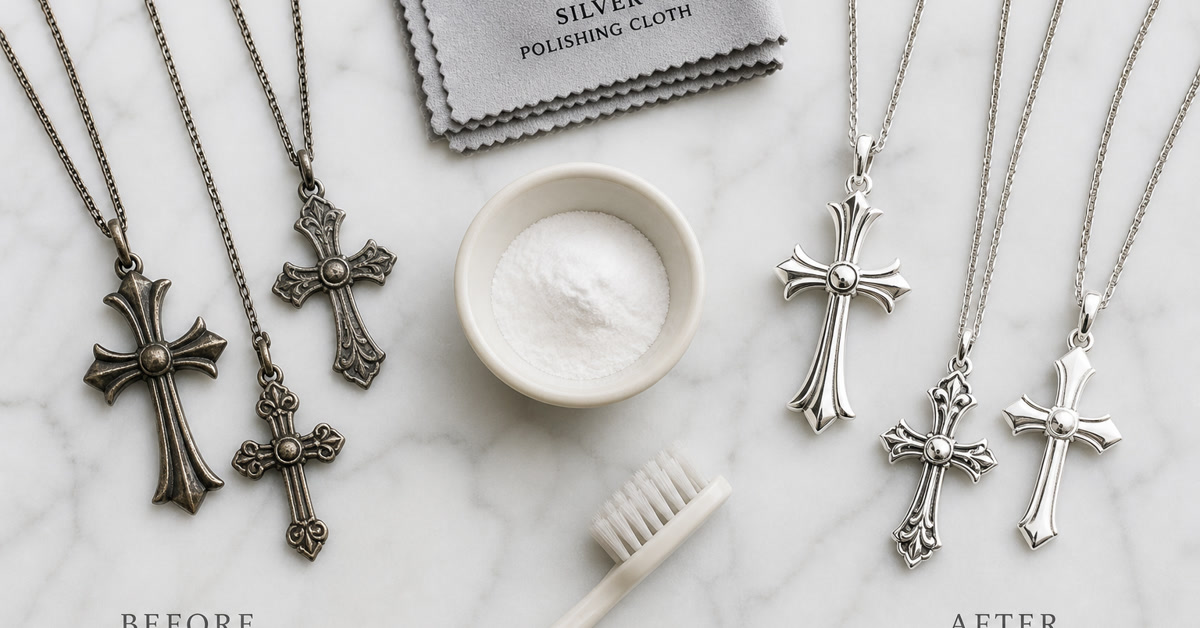
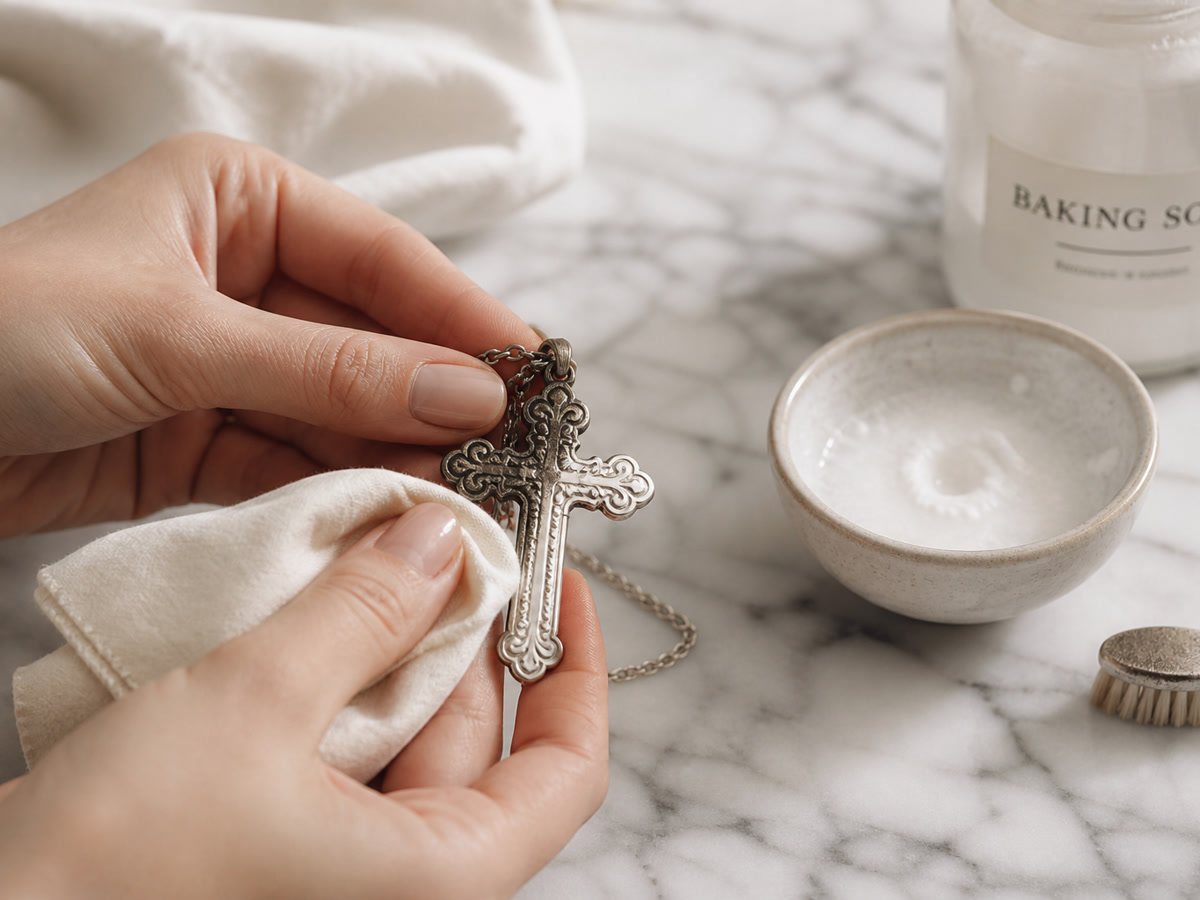
Method 2: Baking Soda Paste (Best for Moderate Tarnish)
Mix three parts baking soda to one part water into a thick paste. Apply it to the tarnished areas using a soft cloth, rubbing gently in small circular motions. The tarnish will transfer from the silver to the cloth as a dark residue. Rinse thoroughly and dry immediately.
Important: Do not use this on matte or brushed finishes (the abrasion will alter the texture), glued-in stones (the paste works under settings), or gold plated jewelry (it strips the coating). And never mix baking soda with vinegar for an “enhanced” effect, the fizzing sounds impressive but produces inconsistent results and leaves residue in hard-to-reach areas.
Method 3: Silver Polishing Cloth (Best for Regular Maintenance)
A silver polishing cloth is the single best investment for anyone who wears silver regularly. These cloths are treated with a micro-abrasive compound that removes tarnish quickly without the mess of pastes or liquids. They’re the gentlest option after soapy water, making them ideal for routine touch-ups between deeper cleanings.
Rub your silver piece gently with the treated side. The cloth darkens as it picks up tarnish. Flip to a clean section and continue until uniformly bright. For intricate designs or chain links, use a corner of the cloth to get into tighter spots. No rinsing needed. The cloth wears out over time (the treated sections lose effectiveness), but a good one handles dozens of pieces before replacement is needed.
Method 4: Aluminum Foil Electrochemical Bath (Best for Heavy Tarnish)
This is the most impressive method to watch and one of the most effective for heavily tarnished silver. Line a bowl with aluminum foil (shiny side up), add a tablespoon of baking soda, and pour in boiling water. Submerge your silver piece so it touches the foil. Within seconds, you’ll see the tarnish transfer, the silver brightens while the foil darkens.
The science: the aluminum and silver create a galvanic cell in the alkaline solution, and the silver sulfide is chemically reduced back to silver on the surface. It’s not magic, it’s electrochemistry. Rinse and dry thoroughly after. This method works only on sterling and fine silver; it has no effect on gold plated or stainless steel.
Method 5: Commercial Jewelry Cleaner (When You Want Convenience)
A quality commercial silver dip or jewelry cleaning solution does the work for you. Dip your piece for the time specified on the label (usually 30 seconds to 2 minutes), rinse, and dry. These are especially useful for intricate pieces with many crevices where manual polishing can’t reach.
The trade-off: commercial cleaners are more expensive per use than home methods, and some contain chemicals that can be harsh on skin. Always use in a well-ventilated area, wear gloves if the label recommends it, and never use a silver dip on gold plated or gemstone jewelry.
What Doesn’t Work: The Myths That Keep Circulating
For every method that works, there are three that don’t, but keep showing up in internet tutorials. Here’s why they fail, and what they actually do to your jewelry.
Toothpaste: The Worst Advice on the Internet
Toothpaste contains silica, a mild abrasive designed to scrub plaque off enamel. On silver, it works similarly to baking soda, but the grit is finer and less predictable. The real danger is that modern toothpastes often contain whitening agents, charcoal, or microbeads that can scratch polished surfaces and leave a residue in engraved details that’s nearly impossible to remove. If you absolutely must use it, stick to plain white non-gel toothpaste without whitening formulas, but baking soda is cheaper, safer, and more effective.
Vinegar: Corrosive, Not Restorative
Vinegar is an acid (acetic acid, typically 5% concentration). While it can dissolve some tarnish, it also attacks the metal itself, especially the copper in sterling silver. Soaking silver in vinegar can pit the surface, create a dull matte finish, and accelerate future tarnishing by roughening the metal. For gold plated jewelry, vinegar dissolves the base metal under the plating. Skip it entirely.
Ketchup, Beer, and Other Kitchen Remedies
These internet hacks work on the same principle as vinegar (acidity dissolves tarnish) but add the risk of sticky residue, food particles trapped in chain links, and unpredictable results. Ketchup’s tomato acid is too weak to remove real tarnish but strong enough to dull a polished finish. Beer contains acids and carbonation that can leave water spots. None of them are worth the cleanup effort.
How to Prevent Tarnish Before It Starts
Prevention is always easier than restoration. A few habits will keep your cross necklaces looking their best for years:
- Store properly. Keep silver in an airtight bag or a tarnish-resistant jewelry box with anti-tarnish strips. Exposure to air is the primary cause of tarnish, minimize it.
- Put jewelry on last. Apply perfume, lotion, hairspray, and sunscreen before putting on your necklace. These products contain chemicals that accelerate tarnish and can leave residue in chain links.
- Remove before swimming or showering. Chlorine, salt water, and even the minerals in tap water can damage silver and strip gold plating.
- Wear it regularly. Sounds counterintuitive, but the natural oils in your skin can actually slow tarnish on sterling silver. The friction of wearing it polishes the surface. Jewelry that sits in a drawer tarnishes faster.
- Clean after each wear. A quick wipe with a soft cloth takes 10 seconds and prevents the buildup that eventually requires a deep clean.

When to See a Professional (And When You Don’t Need To)
Most tarnish can be handled at home. But there are a few situations where a jeweler is the right call:
- Deep scratches or dents. Cleaning won’t fix physical damage. A jeweler can polish out minor scratches and reshape dented pieces.
- Loose or missing stones. If gemstones are rattling in their settings, do not attempt to clean the piece yourself, you risk losing the stones entirely.
- Severely worn gold plating. If the gold has worn through to大面积 base metal, replating is the only real solution. A jeweler can also assess whether replating is cost-effective for the piece.
- Antique or heirloom pieces. If the jewelry has sentimental or monetary value, professional cleaning preserves the patina and structure. Some collectors actually want the patina, a professional can clean selectively.
For everything else, the everyday tarnish on your daily-wear cross necklace, the home methods above are more than sufficient. The key is acting early. A piece that’s been tarnishing for months will take more effort than one you catch in the first week.
Sterling silver pieces that reward proper care: