How to Tell If Sterling Silver Is Real: 5 Tests to Run Before You Buy
TL;DR – Real sterling silver is 92.5% pure silver, and five quick checks at home prove it: the 925 hallmark, a magnet that does not stick, the ice test, a white polishing cloth, and a price that makes sense. None of them replace an acid test, but together they catch almost every fake piece before you spend a cent.
Sterling silver is the most popular metal for faith-based pieces because it is bright, durable and affordable, and it is also the most faked metal out there. If you want to shop with the tests from this guide in mind, our sterling silver cross collection lists the exact material of every single piece.
Silver plating has gotten very good. A piece can look identical to solid sterling, photograph beautifully, and still turn out to be a thin coat of metal over brass that blackens in three weeks. The good news: you do not need a lab to spot most of them. Everything below runs at your kitchen table with items you already own, and none of it takes longer than a minute.
What Sterling Silver Actually Means
Pure silver (called fine silver) is 99.9% silver. It is also too soft to hold a shape, so jewelers mix in 7.5% other metals, almost always copper. That mix is sterling silver, stamped 925 for its 92.5% silver content. The stamp is a legal standard in the US, the EU and most of Asia, which is why it is the first thing a scammer has to imitate, and the first thing you should check.
Two terms sound similar and are not: sterling silver is a metal standard, while silver plated and silver filled describe a thin layer of silver over a cheaper base. Plated pieces can be perfectly nice, they should simply never be priced or sold as sterling.
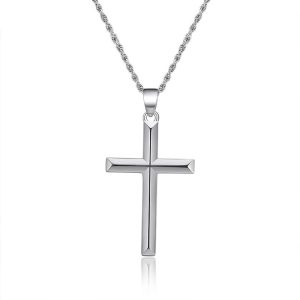
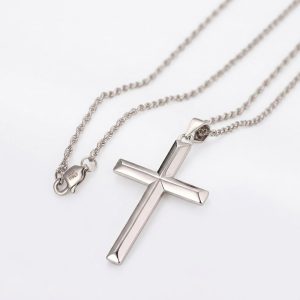
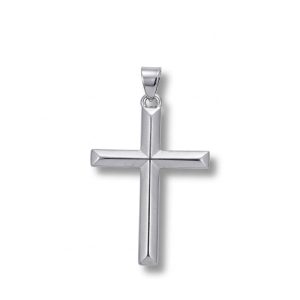
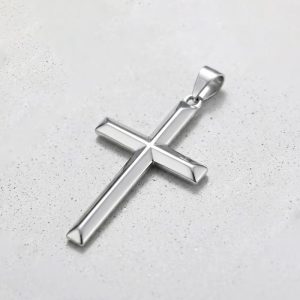
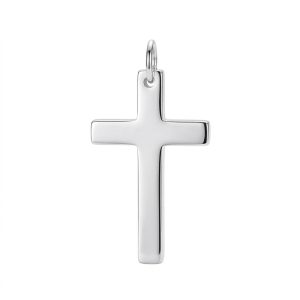
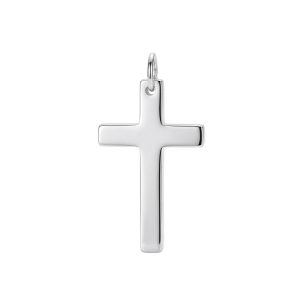
Every piece below is solid 925 sterling, hallmarked and verified: :
Test 1: Look for the 925 Hallmark
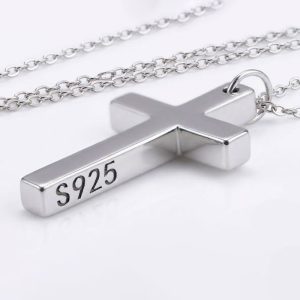
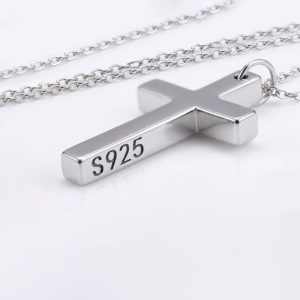
This takes ten seconds and filters out the lazy fakes immediately. Turn the piece over and look for a tiny 925 stamp. On quality work it is crisp, evenly spaced and deep enough to catch a fingernail. On fakes it is often shallow, blurry, off-center, or printed instead of struck.
Where the Mark Hides
Hallmarks rarely sit on the front. Check these spots first:
- The back of the cross, dead center or near the bottom arm.
- The inside of the bail, the small loop where the chain passes through. This is the most common hiding place on a small piece.
- The clasp: real chains are often stamped on the lobster claw or the ring next to it.
- The flat edge of a bangle or band, where a stamp can be struck without showing when worn.
Use a phone flashlight and a magnifying app. If the mark reads 925, S925, .925 or Sterling, you are looking at the right standard. Marks like IP, GP, HF or a bare country code mean plated, not solid.
What If There Is No Stamp at All?
Older pieces lost their marks through polishing, and very small charms sometimes skip them. A missing stamp is not proof of a fake, it just means the other four tests carry more weight. What you should not accept is a new, expensive piece with no mark anywhere. Legitimate manufacturers stamp every piece they make, because the mark is their own guarantee.
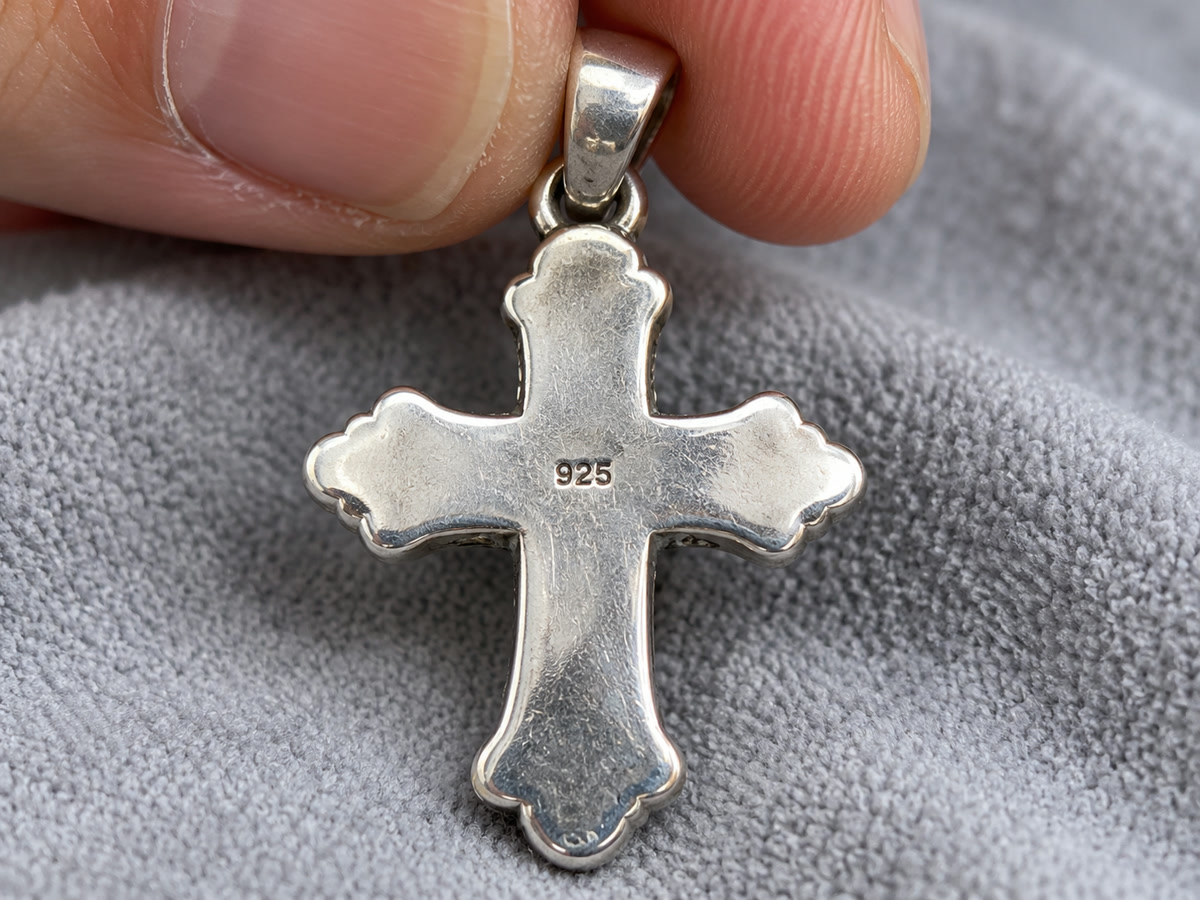
A real hallmark is struck into the metal, not printed on it. This one sits on the back of the piece, where it stays out of sight.
Test 2: The Magnet Test
Silver is diamagnetic: it does not attract a magnet, and it barely pushes back either. Cheap imitations are usually steel, nickel or iron hiding under a silver wash, and those grab a magnet hard. The test costs nothing and takes five seconds.
How to Run It
Use a small strong magnet, the kind found in fridge magnets, hard drive closures or cheap magnetic clasps. Hold the piece flat in one hand and bring the magnet toward the back of the cross, not the front. Move slowly, about a centimeter away, and feel for any pull. Test two or three spots, because plated pieces are sometimes uneven.
Reading the Result
No pull at all is what you want from sterling. A firm snap onto the magnet means ferrous metal underneath, so the piece is not solid silver. A weak tug is ambiguous: many sterling clasps and chains contain a small steel spring inside the clasp mechanism, and that will react on its own. Test the body of the piece away from the clasp before you judge it.
One warning: some fakes use brass, copper or zinc alloy, and none of those react to a magnet either. Passing the magnet test only clears a suspect, it does not prove anything on its own. That is why the next test exists.
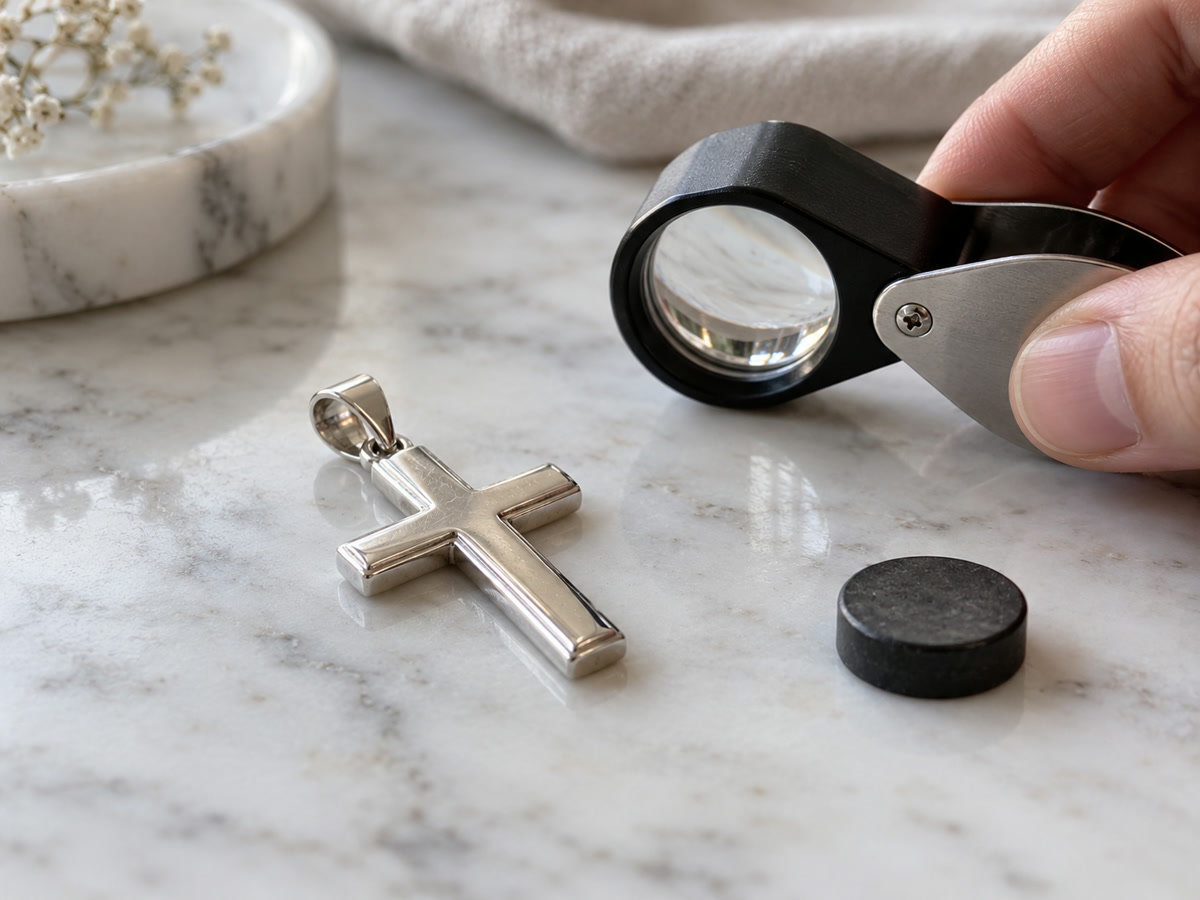
The whole toolkit: a loupe for the hallmark, a fridge magnet for the pull test, and a piece you can check in under a minute.
Test 3: The Ice Test
Silver has one of the highest thermal conductivity ratings of any metal, around 429 watts per meter kelvin, far above stainless steel at about 16. In plain terms: silver pulls cold out of an ice cube much faster than almost anything else does.
Place an ice cube on a room temperature piece, or hold the piece against the cube. Real sterling melts the contact point within a few seconds and you will hear a distinct sizzle as water forms. A steel or zinc fake melts the surface slowly and unevenly, and the cube just sits there looking smug. The bigger the piece, the clearer the difference, since mass gives silver more surface to draw heat from.
This test rewards comparison. If you own any piece you already trust, run both at the same time from the same ice tray. The difference between them is much easier to read than a number in your head.
Test 4: The White Cloth Test
Silver rubs off. Not the whole piece, but enough of the surface oxidation to leave a visible black mark on soft cloth. That black residue is silver sulfide, the same stuff that makes old pieces look tarnished, and it is a genuine signature of the metal.
Rub a hidden area, the back or the inside edge, with a clean white polishing cloth or a cotton pad. A gray or black streak is a good sign. Nothing at all after real pressure is not automatically bad, a freshly polished piece has little oxide to move, but a piece that never tarnishes, never marks a cloth and never changes color over months of wear is worth doubting. Base metals do not leave black marks; they leave green ones, on the cloth and on your skin.
If you want the science behind why silver darkens in the first place, it comes down to sulfur in the air reacting with the metal, which we break down in our guide to why silver tarnishes.
Test 5: The Price and Seller Check
The cheapest test is the one you run before the package arrives. Silver has a spot price that moves daily, and labor, stone setting and design are added on top. A solid silver cross listed at $12 with free shipping is losing money on the metal alone, so something else is being sold instead: a plating, a hope, or a stock photo.
Three green flags worth looking for:
- The metal is stated precisely. “925 sterling silver” or “solid sterling” is a claim with a legal standard behind it. “Silver tone”, “silver colored” or “alloy” is not.
- The seller answers questions. Ask where the hallmark is and what the base metal is. A real seller knows instantly. Silence or a copy-pasted reply is information too.
- Returns are accepted. Confidence in your own inventory shows up in the return policy more than anywhere else.
The Five Tests at a Glance
If you only have a minute, run them in this order. Each one is faster than the last, and the early ones eliminate the weakest fakes before you bother with anything else.
| Test | What you need | Pass looks like | Time |
|---|---|---|---|
| 925 hallmark | Flashlight, magnifier | Crisp struck 925 or Sterling mark | 10 sec |
| Magnet | Fridge magnet | No pull on the piece itself | 5 sec |
| Ice | One ice cube | Fast melt, audible sizzle | 15 sec |
| White cloth | Polishing cloth | Gray or black streak, no green | 20 sec |
| Price and seller | Common sense | Solid metal stated, returns offered | 2 min |
What Home Tests Cannot Tell You
Home tests are honest about their limits. They identify the metal, they do not measure the exact silver content. Two situations deserve a professional.
The Acid and Stone Test
The definitive quick test at a jeweler’s bench is a drop of nitric acid on an inconspicuous spot, or on a testing stone where the piece has left a streak. Sterling turns creamy white, lower grades turn green or brown. It is cheap and fast, and it is not something to do at your kitchen table: nitric acid burns skin and fumes, and one drop in the wrong place ruins the finish on a piece you love.
When to Ask for Documentation
For anything expensive, ask for the paperwork: an invoice naming the metal, a hallmark photograph, a maker’s mark, or an appraisal from an independent gemologist. On a high value piece, an XRF analyzer at a jeweler reads the exact alloy in seconds without touching it, and many shops will do it while you watch.
There is also the long game. Silver that is genuinely solid will tarnish slowly, polish back to a bright white, and keep its edges sharp after years of wear. Plated pieces do something else entirely: the high points go dull and gray, the color underneath shows through, and no amount of polishing brings them back. If you have owned it a year, you already know the answer.
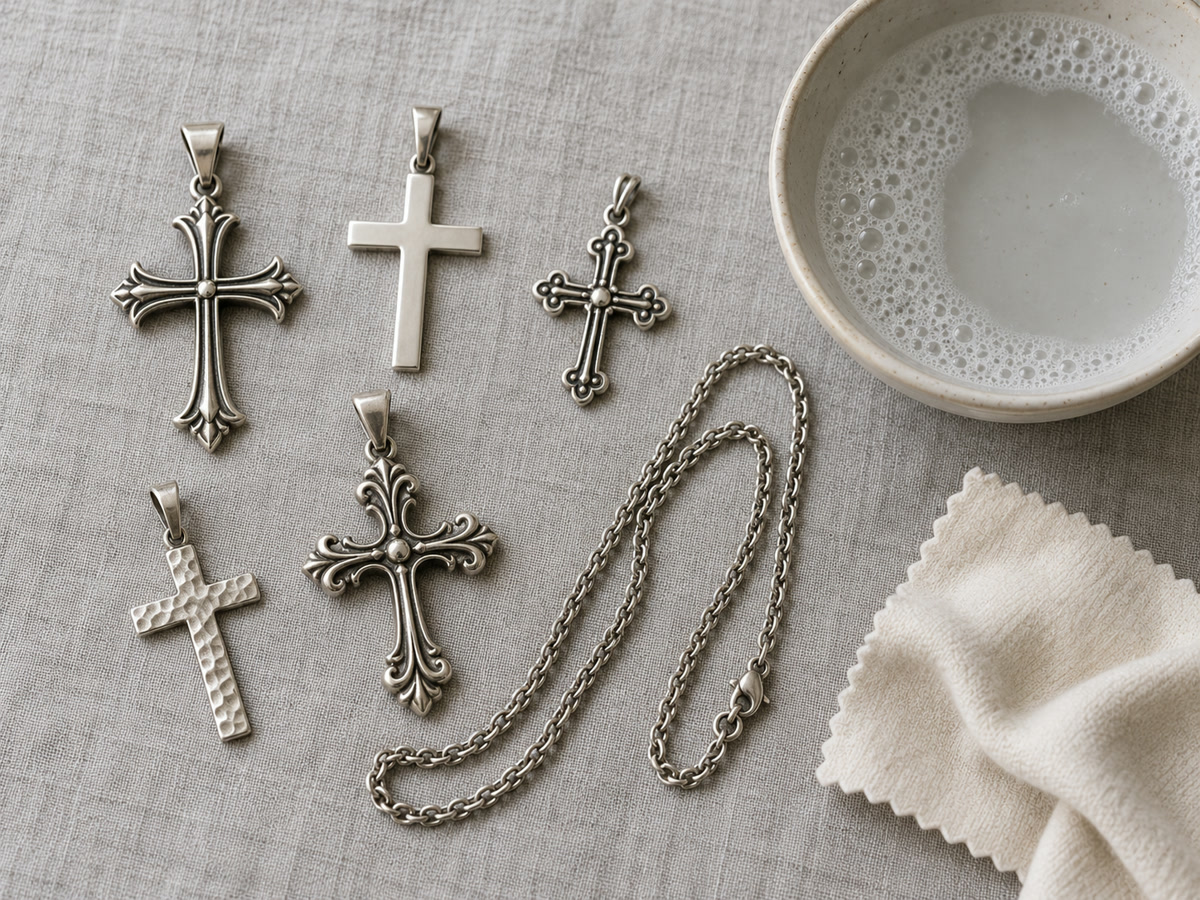
Solid silver earns its keep over time: it tarnishes, polishes back, and keeps its edges. Plated pieces fade at the high points and never recover.
Choosing a Piece You Can Trust
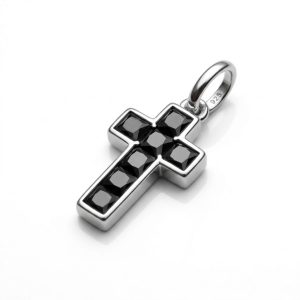
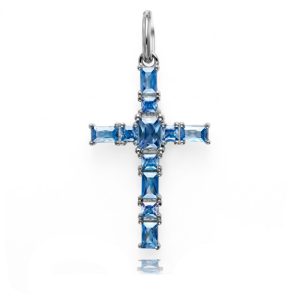
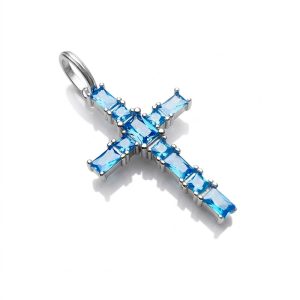
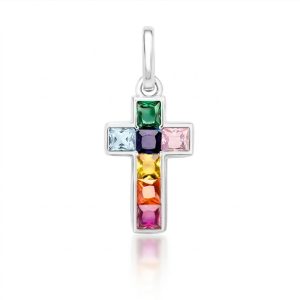
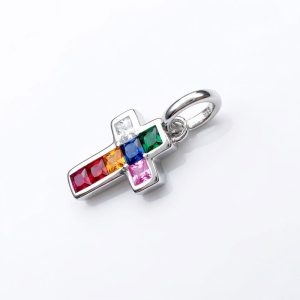
Once you know what a real hallmark looks like and how silver behaves, shopping gets much simpler. Read the material line before the price, run the magnet when the piece arrives, and keep the receipt. Below are four sterling silver pieces from our own shelves, each one stamped 925 and made to be tested, worn and polished for years.
Solid 925 picks that pass every test in this guide: :


Related Cross Guides
These guides go deeper on the metal, the styles and the care routine that keep silver looking like the day you bought it.
- 12 Types of Crosses in Christianity: History, Meaning & Jewelry Guide, the hub that covers every symbol in one place.
- Sterling Silver vs Stainless Steel: Pros, Cons & Prices, which metal fits daily wear.
- Gold vs Silver: Which One Should You Pick?, the color and styling side of the decision.
- How to Clean Silver at Home Without Ruining It (5 Methods), once your piece passes the tests.
- Sterling Silver Cleaning: Baking Soda, Toothpaste or Professional Cleaner, a closer look at the most popular methods.