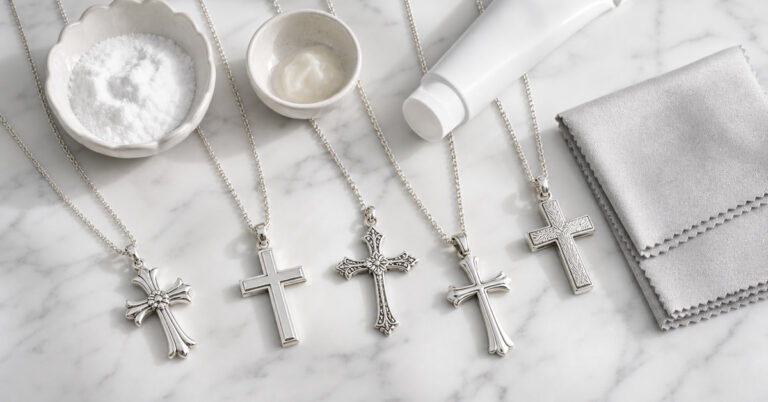

How to Store Your Cross Collection: 7 Mistakes You’re Probably Making
TL;DR – Most cross jewelry is not damaged by wearing it, but by storing it. The seven mistakes below, from tossing everything in one drawer to leaving chains tangled, cause scratches, stretched links, and tarnish that no polish can fully reverse. A divided box, an anti-tarnish strip, and a dry spot away from the bathroom solve almost all of it for under $20.
You take your cross off at night and put it somewhere. That somewhere is doing more damage than you think. Jewelry rarely wears out from being worn. It wears out from sitting in the wrong conditions for weeks at a time, rubbing against other pieces, catching humidity, and slowly losing the finish that made you buy it. The good news is that fixing this takes one trip to a store and about five minutes of setup. If you are looking for pieces worth protecting in the first place, our cross necklace collection covers everything from dainty sterling silver to bold stainless steel.
Why Cross Jewelry Storage Matters More Than You Think
A cross pendant has features that make it more vulnerable than a plain band or a simple chain. It has arms that catch on fabric, an open shape that bends if something heavy rests on it, and often a chain with fine links. Silver and gold plating also react to the air around them, which means the drawer you choose matters as much as the piece itself.
Two things drive almost all storage damage. The first is friction: metal against metal, which scratches polished surfaces and dulls the crisp edges of a cross. The second is chemistry: sulfur compounds in the air, humidity, and residue from skin care products all accelerate tarnish on silver and wear on gold plating. Neither one is dramatic on its own. Together, over a year, they turn a bright piece into something you no longer want to wear.
The 7 Storage Mistakes That Damage Your Crosses
Mistake #1: Tossing Everything in One Drawer
This is the single most common habit, and the most damaging. When several pieces share open space, they migrate every time the drawer opens. Chains wrap around pendants, clasps scratch polished faces, and gold plating rubs against sterling silver. Over months, the fine scratches add up into a dull, cloudy surface. The fix costs nothing: give each piece its own compartment or its own pouch.
Mistake #2: Storing Near the Bathroom
The bathroom is the worst room in the house for jewelry. Every shower pushes humidity into the air, and that moisture settles on metal surfaces. For sterling silver, humidity speeds up tarnish. For gold plated pieces, it works its way into tiny gaps in the plating and lifts it from the base metal. A bedroom drawer or a closet shelf keeps your crosses dramatically drier.
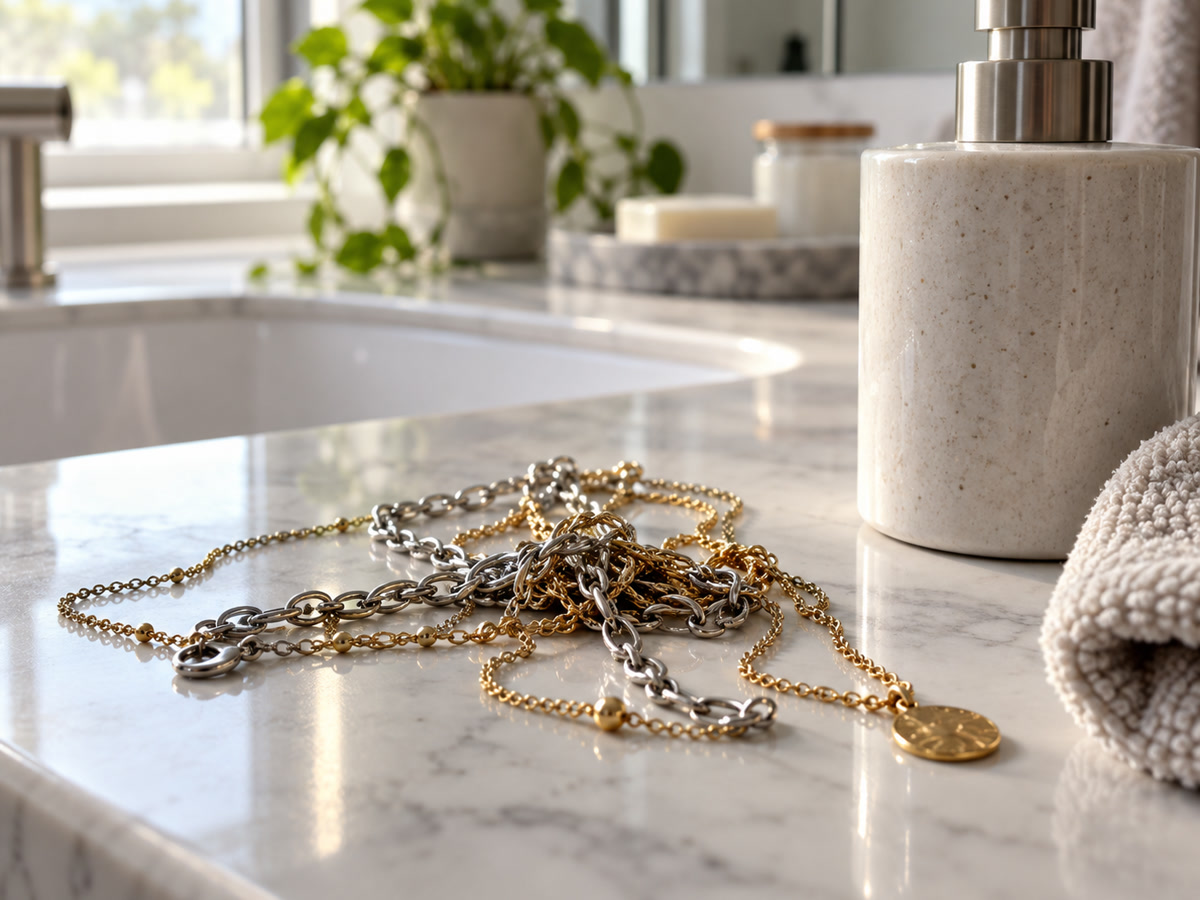
Mistake #3: Leaving Chains Untangled (Until They Knot)
A knot is not just annoying. Untangling a chain pulls on individual links, and thin chains stretch or snap under that kind of force. The damage is invisible until the chain suddenly looks longer on one side. Hanging chains separately, or closing each clasp and laying the chain flat in its own slot, prevents the problem entirely.
Mistake #4: Skipping Anti-Tarnish Protection
Silver tarnishes because sulfur in the air reacts with it. In a closed space with no protection, that reaction happens faster. Anti-tarnish strips and treated pouches absorb the sulfur before it reaches the metal, and they are inexpensive. Replace strips every six to twelve months, and store silver pieces in anti-tarnish pouches rather than loose in a box.
Mistake #5: Keeping Pieces in Ordinary Plastic Bags
Not all plastic is safe for jewelry. Some plastics release sulfur compounds as they age, which is exactly what makes silver tarnish, and most trap moisture against the metal. If you need a bag, use a pouch lined for jewelry storage, or a small zip pouch designed for silver. A sandwich bag is not a storage solution.
Mistake #6: Hanging Chains on Nails or Hooks
Hanging looks tidy, but the entire weight of a pendant concentrates on one or two links at the top of the chain. Over time those links stretch and the chain develops a weak point. If you want to hang your pieces, use a padded jewelry bar or a hook with a wide, smooth surface so the load spreads across several links.
Mistake #7: Storing While Wearing Perfume or Lotion Residue
Perfume, sunscreen, and body lotion leave a film on metal and in the small crevices around a pendant. That film attracts dust and holds moisture and chemicals against the surface. Wipe each piece with a soft microfiber cloth before it goes back in the box, and it will stay brighter between cleanings.

The Right Way to Store Each Type of Cross
Different metals need slightly different treatment. Here is what each one wants.
Sterling Silver Crosses
925 sterling silver is the most reactive of the common jewelry metals. Store it in an anti-tarnish pouch or a closed box with an anti-tarnish strip, away from humidity and direct light. If it does tarnish, a polishing cloth brings the shine back quickly.
Gold-Plated Crosses
Gold plating is a thin layer over a base metal, so the goal is to avoid abrasion. Never let plated pieces rub against each other, and never store them loose with silver. A soft pouch with nothing else in it is the safest option, and it keeps the plating intact far longer.
Stainless Steel Crosses
Stainless steel is the most forgiving material you can store. It does not tarnish and handles humidity well. The main risk is scratching, so separate compartments still matter, but you do not need anti-tarnish protection.
Black and Gunmetal Crosses
These finishes are usually a coating over steel or silver. They resist tarnish but not abrasion, so keep them apart from harder pieces and avoid anything abrasive when you clean them. A dry, soft-lined compartment is all they need.
A Simple Storage Setup That Actually Works
You do not need an expensive jewelry armoire. Here is a setup that costs under $20 and protects every piece you own.
- A small jewelry box with divided compartments, one per piece
- Anti-tarnish strips placed inside the box, replaced every 6 to 12 months
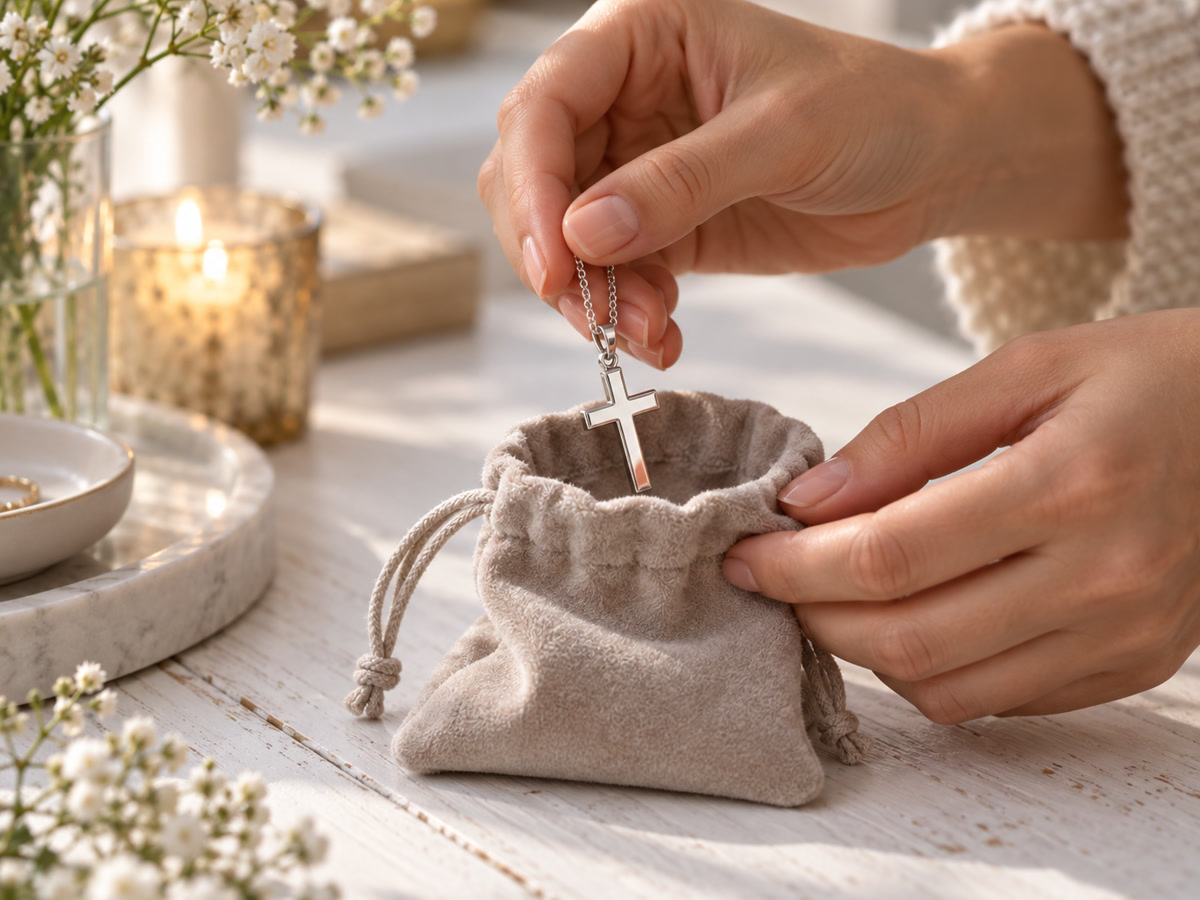
- A pack of anti-tarnish pouches for silver pieces
- A microfiber cloth kept nearby for a quick wipe before storage
- A dry location away from bathrooms, windows, and direct sunlight
This setup prevents the large majority of damage that cross jewelry suffers in everyday storage. It takes five minutes to put together and almost no daily effort to maintain.






Related Cross Guides
If you are building or reorganizing a collection, these guides pair well with this one.
- 12 Types of Crosses in Christianity: History, Meaning & Jewelry Guide
- The Latin Cross: History, Symbolism & Meaning
- The Greek Cross: History, Symbolism & Meaning
- Orthodox Cross: History, Symbolism & How to Style It
- Celtic Cross Meaning: What the Ring Really Stands For
- How to Clean Silver Jewelry at Home Without Ruining It
- Crystia Jewelry Care Guide