Orthodox Cross: History, Symbolism & How to Style It
TL;DR – The Orthodox cross (also called the three-barred or Russian cross) is distinguished by three horizontal bars: a small titulus bar at the top, the main crossbar, and a slanted footrest at the bottom. Used by Eastern Orthodox Christians for over a thousand years, it carries deep symbolism in every bar. Whether you wear it as a faith statement or a bold style piece, the Orthodox cross stands out from every other cross design.
From the golden domes of Russian cathedrals to the necks of modern jewelry lovers, the Orthodox cross has traveled far beyond its origins. It is one of the most visually distinctive cross designs in Christianity, and one of the least understood outside Eastern Orthodox communities. This guide covers its full history, explains what each bar symbolizes, explores how Orthodox Christians use it today, and shows you how to style an Orthodox cross necklace with confidence. If you want to bring that tradition into your everyday wardrobe, explore our Orthodox cross necklace collection.
Explore our collection of Orthodox cross necklaces.
What Is an Orthodox Cross?
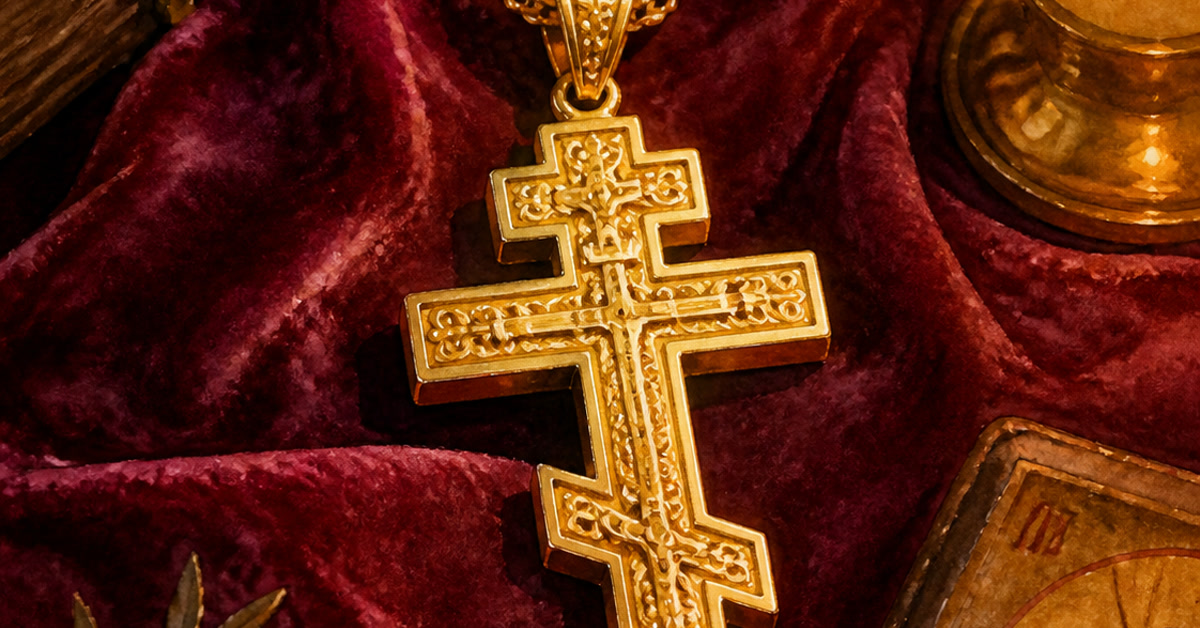
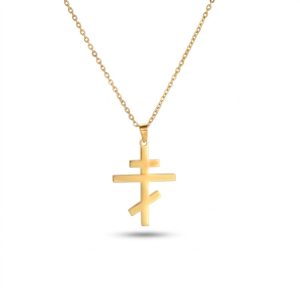
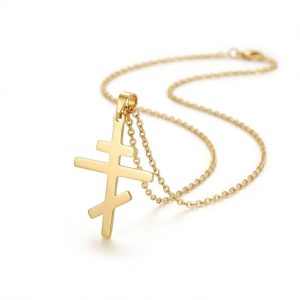
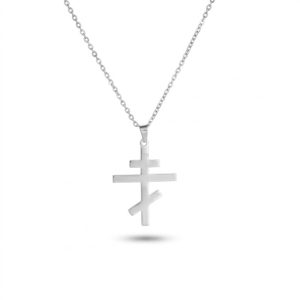
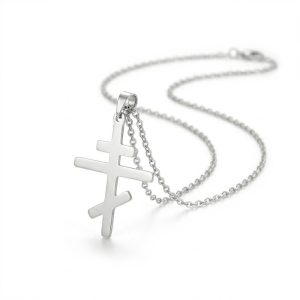
The Orthodox cross, also known as the three-barred cross, Russian cross, or Stavrotico (from the Greek word for cross), is the defining symbol of Eastern Orthodox Christianity. Unlike the simple Latin cross most Western Christians are familiar with, the Orthodox cross features three distinct horizontal bars stacked on a vertical post.
Each of the three bars has a specific purpose and meaning, which we will break down in detail below. What matters most right now is understanding that this is not just a stylistic variation. The three-barred design is theologically intentional. Every bar communicates something specific about Christ, the crucifixion, and the Orthodox understanding of salvation.
You will find Orthodox crosses on churches, icons, tombstones, vestments, and, increasingly, on necklaces, bracelets, and other jewelry. The design has spread well beyond its traditional Russian, Greek, Serbian, and Romanian origins to become a globally recognized symbol of faith and heritage.
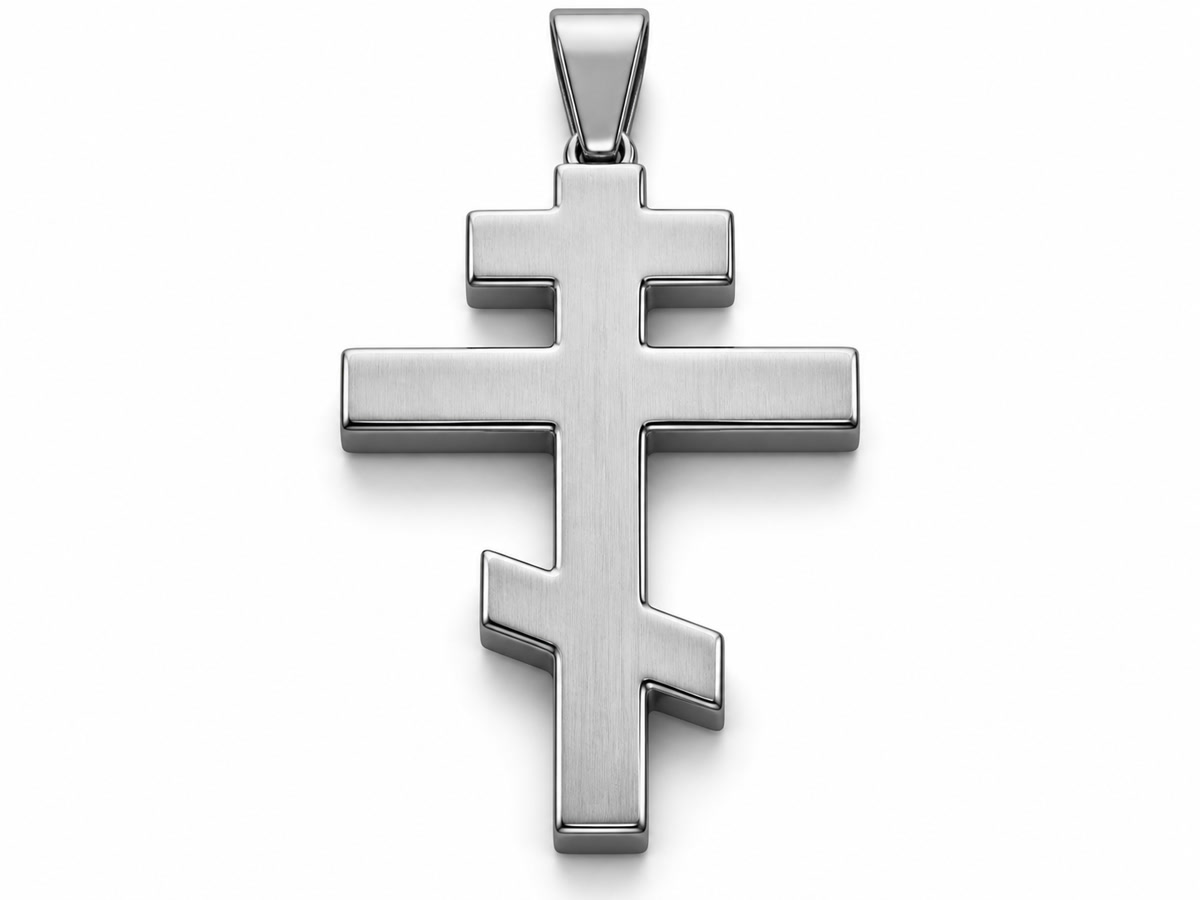
The three horizontal bars of an Orthodox cross each carry distinct theological meaning.
A Brief History of the Orthodox Cross
The Orthodox cross did not appear overnight. Its evolution spans centuries of theological debate, artistic tradition, and cultural identity across Eastern Christendom.
The Earliest Three-Barred Designs
The earliest known depictions of a cross with three horizontal bars appear in Byzantine art from the sixth and seventh centuries. At this stage, the design was not yet standardized. Some early Byzantine crosses showed a small bar above the main crossbar, while others included a footrest that was sometimes straight and sometimes angled. The three-bar form was one of several cross variations used in the Eastern Roman Empire.
What made these early Eastern crosses distinct from their Western counterparts was a growing emphasis on depicting the historical details of the crucifixion. While Western churches were moving toward the empty cross (symbolizing resurrection), Eastern Christian art was incorporating specific elements from the Gospel accounts: the sign above Christ’s head, the placement of his feet, and the instruments of the Passion.
Key Dates in Orthodox Cross History
- 6th–7th century – Earliest three-barred cross depictions appear in Byzantine church art and icons
- 988 CE – Christianization of Kyivan Rus’ under Prince Vladimir spreads the Orthodox cross across Eastern Europe
- 12th–14th century – The slanted footrest bar becomes a standard feature in Russian and Balkan Orthodox crosses
- 15th–17th century – Orthodox crosses appear prominently on church domes, iconostases, and metalwork across the Russian Empire
- 19th century – The three-barred cross becomes a defining symbol of Russian Orthodox identity, appearing on military medals, architecture, and personal jewelry
- 20th century – Eastern Orthodox diaspora communities bring the symbol worldwide, embedding it in multicultural jewelry traditions
The slanted footrest bar, arguably the most recognizable feature of the Orthodox cross, became a consistent element roughly between the 12th and 14th centuries. Before that period, footrests on Eastern crosses were sometimes straight. The standardization of the slanted bar coincided with the development of a more distinctly Russian Orthodox artistic tradition, separate from broader Byzantine models.
The Three Bars: Anatomy of the Orthodox Cross
Every Orthodox cross has three horizontal bars. Here is what each one represents:
The Top Bar: The Titulus
The small horizontal bar at the very top is called the titulus (Latin for “inscription”). According to the Gospel of John (19:19), Pontius Pilate ordered a sign to be placed above Christ’s head reading: “Jesus of Nazareth, King of the Jews”, or in Latin, INRI (Iesus Nazarenus, Rex Iudaeorum). The titulus bar represents this sign. On many Orthodox crosses, the letters IC XC (abbreviations for “Jesus Christ” in Greek) appear on either side of the cross just below the titulus, while INRI or its Church Slavonic equivalent is inscribed on the bar itself.
The Middle Bar: The Crossbar
The main horizontal bar is the crossbar itself, the beam to which Christ’s hands were nailed. This is the bar that appears on every form of Christian cross. On the Orthodox cross, it typically sits at or slightly above the vertical center, representing the moment of crucifixion and Christ’s outstretched arms embracing the world.
The Bottom Bar: The Footrest (Suppedaneum)
The most distinctive feature of the Orthodox cross is the slanted bar near the bottom, called the suppedaneum (Latin for “footrest”). On most Orthodox crosses, this bar tilts with the left side higher than the right. The tilt carries a powerful symbolic meaning:
In Orthodox theology, the slanted footrest represents the two thieves crucified alongside Christ. The thief on Christ’s right side (Dismas, the “good thief”) repented and was promised paradise. The thief on the left side (Gestas) rejected Christ. The footrest tilts toward the righteous and away from the unrepentant, symbolizing the choice every person faces between salvation and rejection. It is a visual reminder that the cross is not just a symbol of suffering, but of judgment and hope.
Some Orthodox traditions also interpret the slanted footrest as representing Christ’s ascension (the raised side) and descent (the lowered side), or the balance between mercy and justice. Regardless of the specific interpretation, the slanted bar is the element that immediately identifies a cross as Orthodox.
Orthodox Cross Symbolism
Beyond the individual bars, the Orthodox cross as a whole communicates several layered meanings:
Faith Rooted in History
Where the Latin cross is abstract and universal, the Orthodox cross is specific and historical. It points to a particular moment in time, the crucifixion of Christ, and includes details that anchor the symbol in the Gospel narrative. The titulus, the crossbar, the footrest, each corresponds to a concrete event. For Orthodox Christians, this specificity is not a limitation but a strength: the cross tells a story, and wearing it keeps that story present.
A Visual Theology of Choice
The slanted footrest introduces the concept of spiritual choice into the symbol itself. Every time someone looks at an Orthodox cross, they are reminded that faith involves a decision, to move toward God or away from him. This is a central theme in Orthodox spirituality, and the cross makes it visible and portable.
Cultural Identity
For millions of people of Russian, Greek, Serbian, Romanian, Bulgarian, Ukrainian, and Georgian descent, the three-barred cross is also a marker of cultural heritage. It connects them to centuries of tradition, to family churches, to grandmother’s icon corner, to a way of life that has survived empires, revolutions, and diaspora. Wearing an Orthodox cross necklace can be as much about identity and belonging as it is about personal faith.
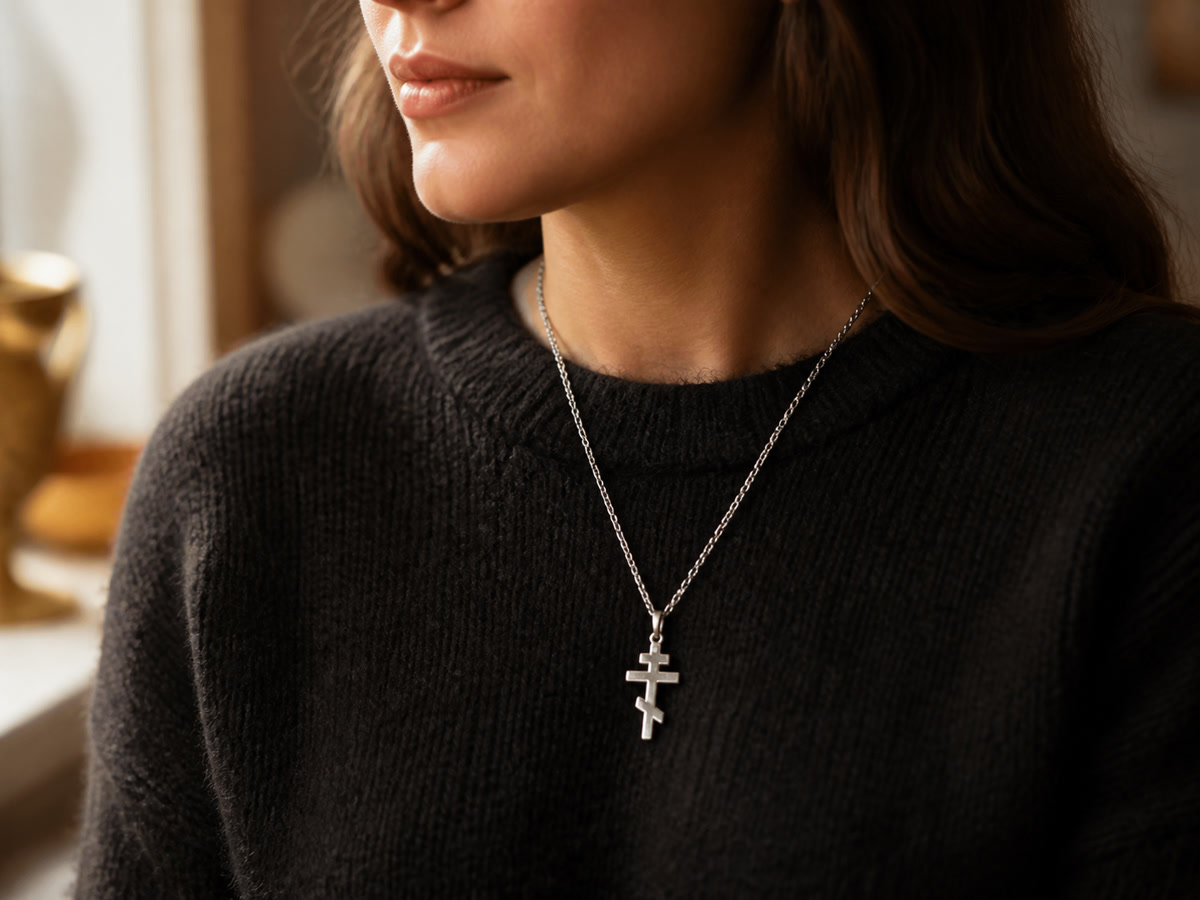
An Orthodox cross necklace works equally well as a daily faith piece or a statement accessory.
How to Style an Orthodox Cross Necklace
An Orthodox cross pendant is a bold piece. The three-bar design has more visual complexity than a plain cross, so how you style it matters. Here are practical guidelines:
Choosing the Right Material
- Sterling silver – The classic choice. Silver Orthodox crosses pair well with both casual and formal wear and age beautifully with a natural patina.
- Stainless steel – Ideal for everyday wear. Durable, hypoallergenic, and resistant to tarnish. A great option if you want a cross you never have to take off.
- Gold-plated – Adds warmth and richness. Gold is traditional in Orthodox iconography and liturgical art, so a gold-toned Orthodox cross connects to that heritage visually.
Chain Length and Pendant Size
For a visible, statement look, wear your Orthodox cross on a 24-inch chain so the pendant sits at mid-chest. This is the most traditional placement for men. For women, a 20-inch chain that places the cross just below the collarbone works well for both casual and layered looks. Smaller pendants (under 1 inch) read as subtle and everyday; larger pendants (1.5 inches or more) become the focal point of your outfit.
What to Wear It With
The Orthodox cross’s geometric design gives it a surprisingly versatile look. It works with:
- Dark clothing – Black, navy, or charcoal backgrounds make the cross pop. A silver Orthodox cross on a black t-shirt or dark sweater is a clean, striking look.
- Layered necklaces – Pair a smaller Orthodox cross with a simple chain or beaded necklace for a modern, bohemian style.
- Traditional attire – For religious services, cultural events, or family gatherings, the Orthodox cross naturally complements traditional dress from Eastern European and Mediterranean cultures.
Orthodox Cross vs Other Cross Types
Understanding how the Orthodox cross compares to other cross designs helps clarify what makes it unique:
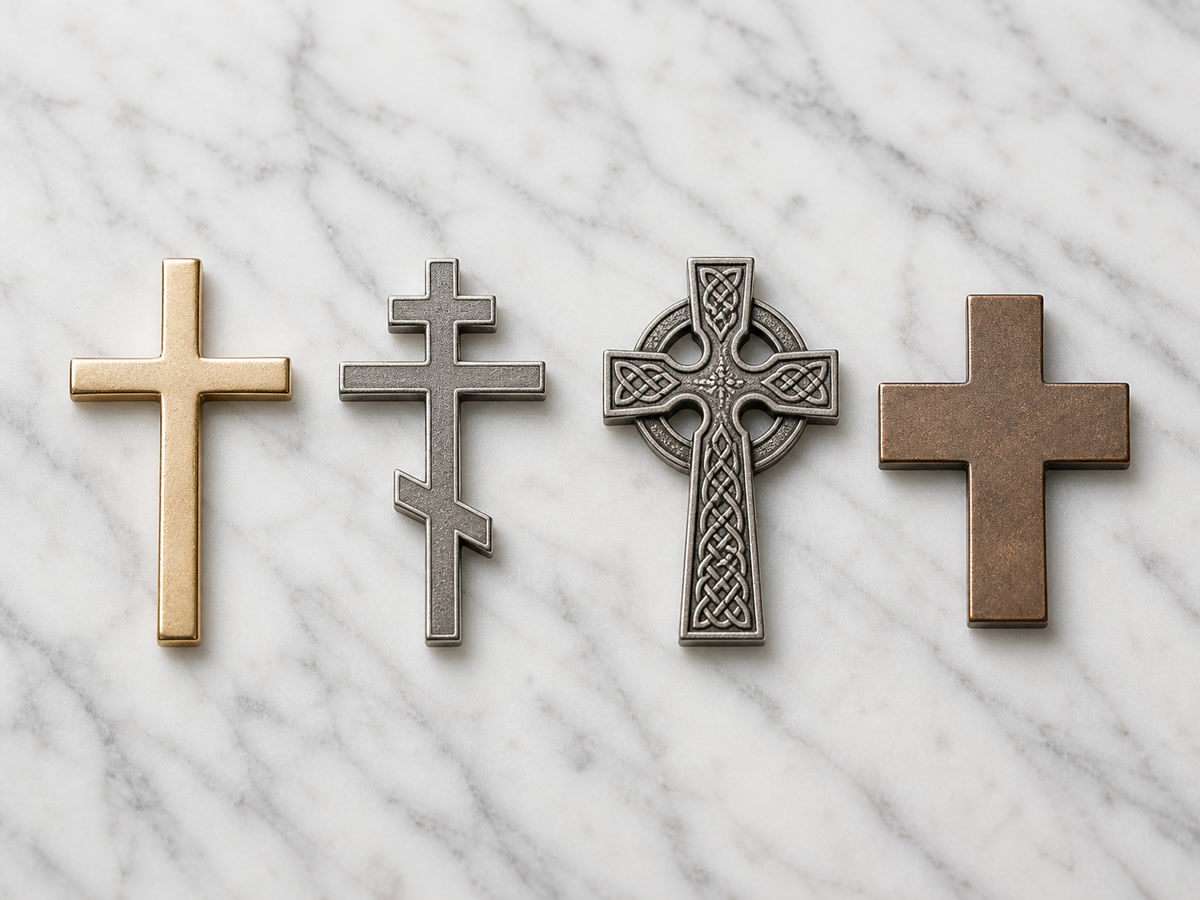
The Latin cross has one horizontal bar and is the most widely recognized Christian cross in the West. The Greek cross has four equal-length arms. The Celtic cross adds a ring around the intersection. The crucifix includes the body of Christ on the cross. The Orthodox cross stands apart with its three distinct horizontal bars, each carrying its own theological weight.
For a deeper dive into all these variations, check our guide to 12 Types of Crosses in Christianity.
Related Cross Guides
- The Latin Cross: History, Symbolism & Meaning
- The Greek Cross: History, Symbolism & Meaning
- Crucifix vs Cross: What’s the Difference?
- 12 Types of Crosses in Christianity
- Celtic Cross Necklace Meaning (coming soon)