What Does a Sideways Cross Necklace Mean? (And Why It’s Trending)
TL;DR – A sideways cross necklace is a traditional cross pendant worn horizontally, with the crossbar running parallel to the chain. Unlike the vertical Latin cross, the horizontal orientation suggests humility, submission to God, and the idea of laying one’s faith across the chest close to the heart. It’s been embraced by celebrities and everyday wearers alike for its clean, modern look that still carries deep spiritual meaning.
You’ve probably noticed sideways cross necklaces everywhere lately, from red carpets to Instagram feeds. They look different from the traditional vertical cross pendant, and that difference is intentional. The horizontal orientation carries its own symbolism, and understanding it helps you appreciate why this particular style has resonated with so many people. This guide explores the meaning behind the sideways cross, traces its roots, explains why it’s become a modern favorite, and helps you decide if it’s the right piece for you.
What Exactly Is a Sideways Cross?
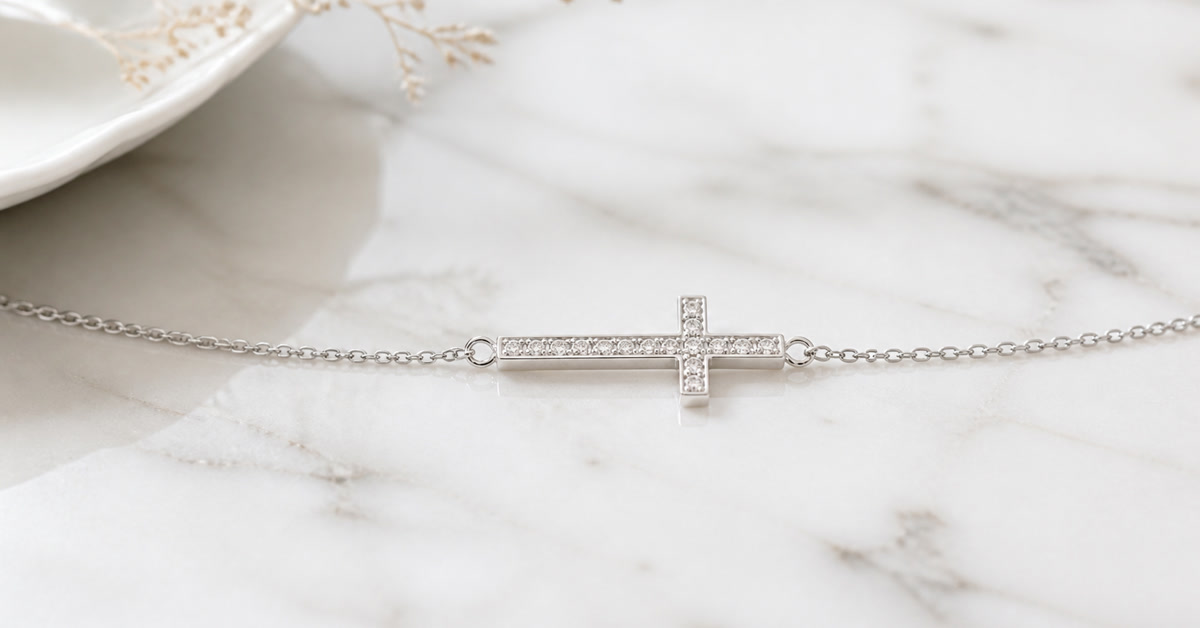
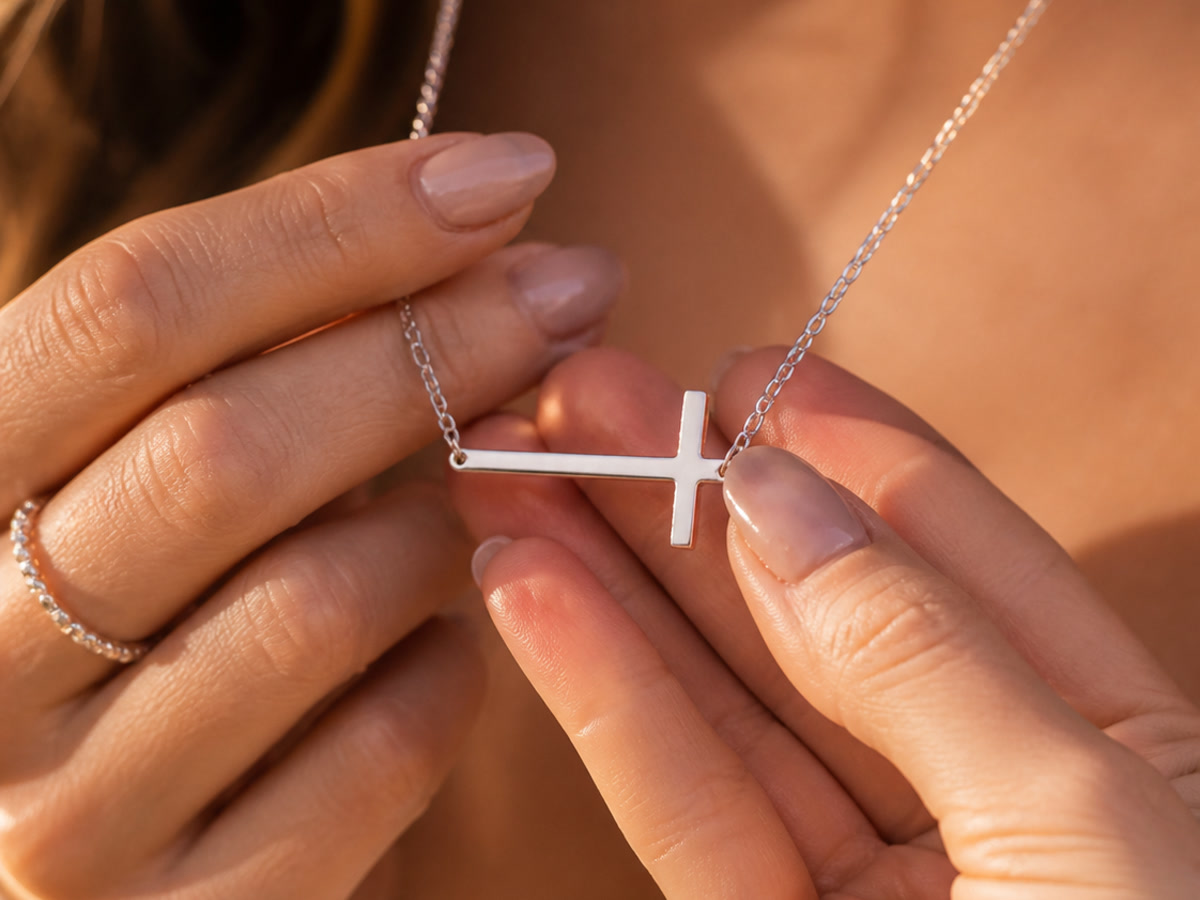
The concept is straightforward. A sideways cross is a Christian cross that is oriented horizontally rather than vertically. The vertical bar, which normally points upward toward heaven, is rotated ninety degrees so that the entire cross lies flat. The crossbar runs parallel to the chain, creating a clean horizontal line across the chest.
Traditional Cross vs. Sideways Cross
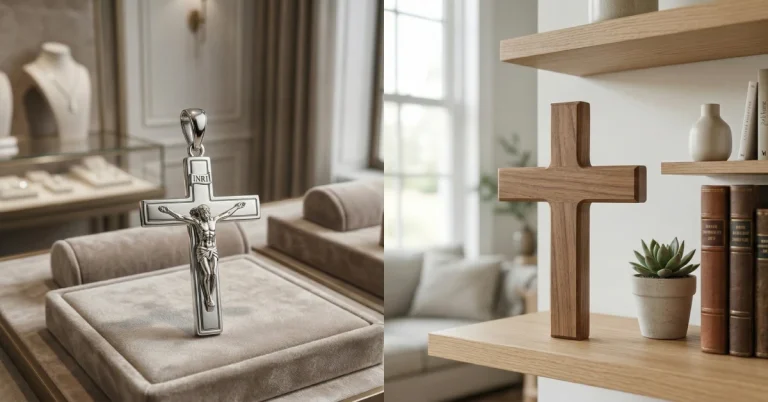
The traditional Latin cross has one vertical bar and one shorter horizontal bar crossing it near the top. When you wear it vertically, the long end points downward. This orientation has been the dominant Christian symbol for centuries, representing Christ’s sacrifice on the cross and the vertical connection between earth and heaven.
A sideways cross takes that same shape and turns it on its side. The longer bar now runs horizontally, and the shorter bar crosses it vertically. The result is a pendant that looks more like a modern geometric design than a traditional religious icon, which is part of its appeal for people who want their faith jewelry to blend with contemporary fashion.
Some people also refer to this style as a “horizontal cross” or “lying cross.” The terms are interchangeable, though “sideways cross” has become the most common way to describe it in jewelry contexts.
The Meaning Behind the Horizontal Orientation
The sideways cross is not just a design choice. The horizontal orientation carries specific symbolic meaning that resonates with many Christians and jewelry lovers alike.
Humility and Laying Down the Cross
One of the most widely accepted interpretations is that a sideways cross represents the cross being laid down, as if resting on the ground rather than standing upright. This connects to the Christian concept of humility. Jesus told his followers to “take up your cross and follow me” (Matthew 16:24), and a cross lying flat can symbolize the act of surrendering oneself to God’s will, placing your faith at the center of your life rather than holding it up as a badge of pride.
The horizontal position also evokes the image of the cross lying across the wearer’s chest, close to the heart. This proximity suggests a personal, intimate relationship with faith, one that is carried quietly and close rather than displayed prominently.
A Modern Expression of Faith
For many wearers, the sideways cross is simply a way to express their Christian faith in a contemporary, understated style. The horizontal orientation feels less formal and less immediately recognizable as a religious symbol compared to the traditional vertical cross, which makes it appealing to people who want their jewelry to work across contexts: at church, at work, at a night out, without feeling out of place.
This versatility is a key part of why the style has gained traction. It doesn’t sacrifice meaning for aesthetics or the other way around. It manages to be both a genuine expression of belief and a piece that looks at home in a modern wardrobe.
Other Interpretations
Some people associate the sideways cross with the idea that Christ’s sacrifice is “complete” and “at rest,” no longer an active, upright symbol of suffering but a peaceful reminder of redemption. Others see it as a representation of the world lying flat, with the cross spread across it, symbolizing the universality of Christ’s message. While these interpretations vary, they all point in the same direction: the sideways cross is a thoughtful, intentional symbol, not a random design.
A Brief History of the Sideways Cross
The sideways cross doesn’t have the same ancient lineage as the vertical Latin cross or the crucifix, but its roots go back further than you might expect.
Early Christian Art and Architecture
Horizontal crosses appear in early Christian mosaic art, particularly in Byzantine and Eastern Orthodox traditions. In some church floor mosaics, crosses are oriented horizontally to face the congregation entering the building, creating a visual experience of the cross “lying” before the worshipper. This was not about fashion but about the spatial relationship between the believer and the symbol.
The Jesuit missionary cross, a specific variant used by Jesuit priests, sometimes featured a horizontal orientation as well. In these contexts, the sideways cross carried institutional and theological weight, not just personal devotion.
From Sacred Symbol to Fashion Statement
The transition of the sideways cross from religious art to wearable jewelry happened gradually throughout the twentieth century. By the 1990s and 2000s, cross jewelry of all kinds was appearing in mainstream fashion, driven by designers who drew on religious iconography for its visual power. The sideways cross stood out because it looked different. It broke the visual pattern of every other cross necklace on the market.
Celebrities adopted it. Red carpet appearances featured sideways cross pendants in gold and platinum. Music artists wore them in music videos and album art. The combination of religious meaning and striking design made it a natural crossover piece, equally at home in a church pew and a fashion magazine.
Why the Sideways Cross Is Trending Now
Several factors have converged to push the sideways cross into the spotlight over the past few years.
Celebrity Influence and Pop Culture
High-profile musicians, actors, and athletes have been spotted wearing sideways cross necklaces, often pairing them with layered chains and casual streetwear. When someone with millions of followers wears a piece, it creates a ripple effect. Fashion blogs pick it up, jewelry brands respond, and suddenly the sideways cross is on everyone’s wish list.
The Rise of Layered Necklace Trends
Modern jewelry styling is all about layering. Multiple chains of different lengths, mixed metals, varied pendant sizes. The sideways cross fits perfectly into this aesthetic. Its horizontal shape creates visual contrast when stacked with vertical pendants, and its sleek profile doesn’t compete with other pieces in a layered look. It sits at the intersection of meaning and trend, which is exactly where the best jewelry lives.
Demand for Subtle Religious Jewelry
There’s a growing preference for faith jewelry that doesn’t scream “religious” from across the room. The sideways cross meets that demand. To someone unfamiliar with the style, it looks like an interesting geometric pendant. To someone who recognizes it, it carries a clear message. This dual function, subtle to some, meaningful to others, is a powerful attribute in contemporary jewelry design.
How to Style a Sideways Cross Necklace
The sideways cross is one of the more versatile cross jewelry styles you can own. Here’s how to get the most out of it.
Pairing with Chains and Layers
The horizontal orientation works beautifully when layered with a vertical pendant on a longer chain. A short-chain sideways cross paired with a longer chain holding a small cross, medallion, or initial pendant creates a balanced, curated look. Stick to similar metal tones for a cohesive feel, or mix gold and silver intentionally for a more eclectic vibe.
Choosing the Right Metal
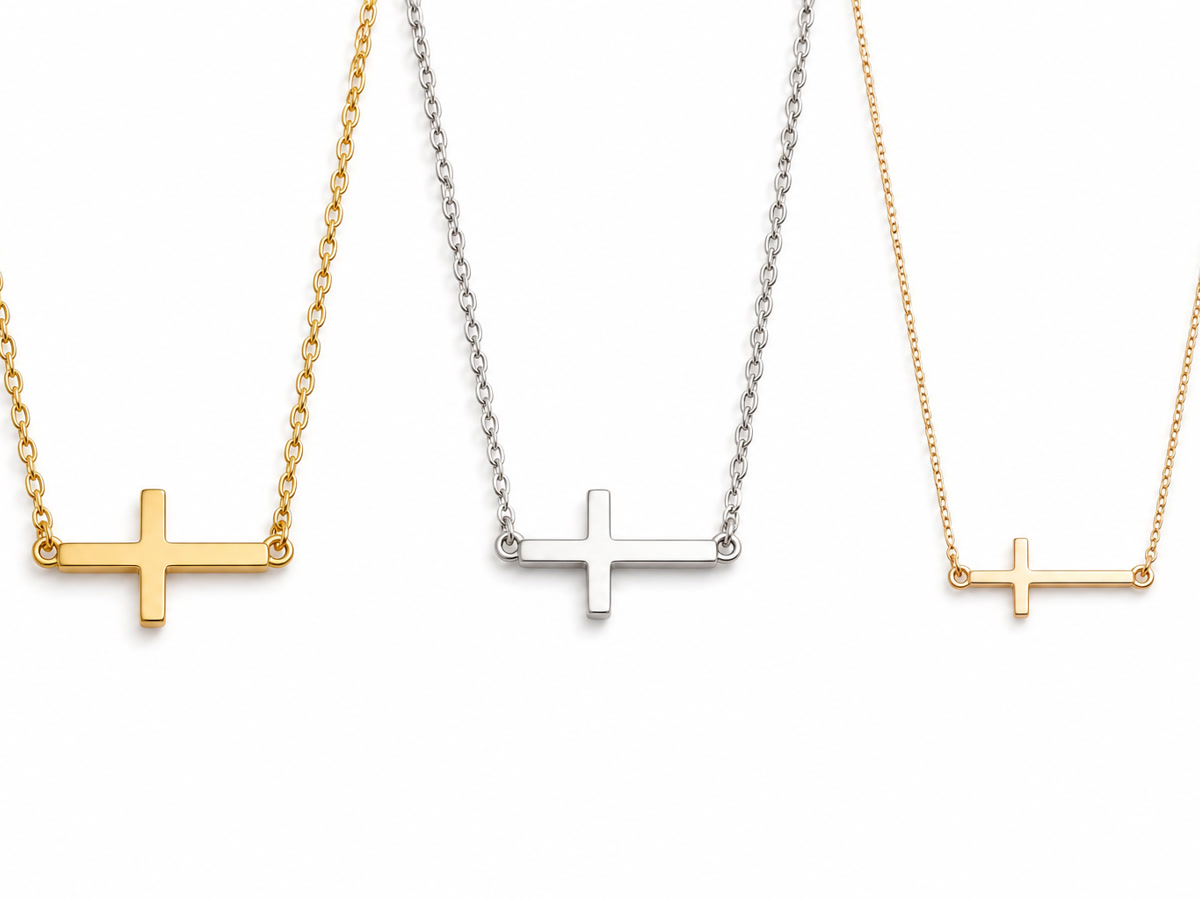
Sterling silver sideways crosses have a cool, modern feel that works well with minimalist and monochrome outfits. Gold or gold-plated versions add warmth and a touch of luxury, making them suitable for dressier occasions. Stainless steel options are durable, affordable, and ideal for everyday wear. The metal you choose should match how you plan to wear the piece: daily staple or special occasion.
Chain Length Considerations
Because the sideways cross sits horizontally, the chain length matters more than with a vertical pendant. A shorter chain (16 to 18 inches) keeps the cross high on the chest, creating a clean, modern line. A longer chain (20 to 24 inches) lets the cross sit lower, which works well for layering or for a more relaxed, casual look. Most sideways cross pendants are designed to be lightweight, so they hang well at any length without pulling or twisting.
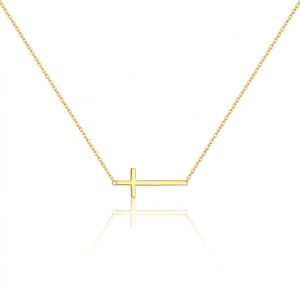
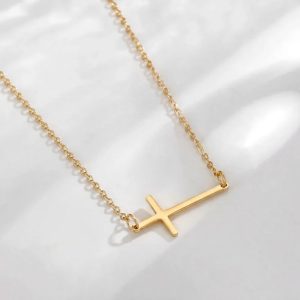
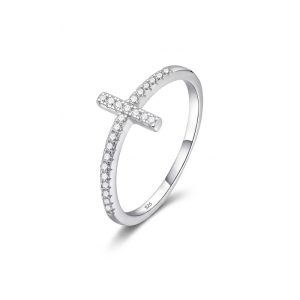
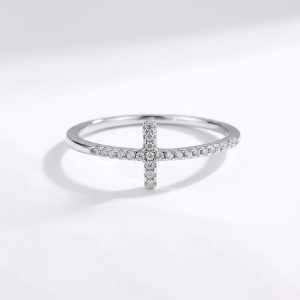
Shop Sideways Cross Necklaces
Whether you’re drawn to the spiritual meaning or the clean, modern look, these sideways cross pieces are designed to work with your everyday style.


Related Cross Guides
Want to learn more about cross symbolism, history, and care? These guides cover the most popular cross types and help you choose the right piece for your faith and style.
- 12 Types of Crosses in Christianity: History, Meaning & Jewelry Guide
- The Latin Cross: History, Symbolism & Meaning
- The Greek Cross: History, Symbolism & Meaning
- Orthodox Cross: History, Symbolism & How to Style It
- Crucifix vs Cross: What’s the Difference?
- How to Clean Silver Jewelry at Home Without Ruining It