The Greek Cross: History, Symbolism & Meaning of the Four Equal Arms
TL;DR – The Greek cross has four arms of exactly equal length, forming a balanced, square-like silhouette. It predates Christianity as a symbol in several ancient cultures, became central to Byzantine and Eastern Orthodox art, and is widely used in heraldry, flags, and jewelry. This guide covers its history from antiquity to today, its symbolism, how it differs from the Latin cross, and how to choose a Greek cross necklace.
Look at a Byzantine church, a national flag, a heraldic shield, or a delicate pendant and you may spot the same balanced shape: four arms of equal length meeting at the center. That is the Greek cross. It is older than Christianity itself, richer in history than most people realize, and it remains one of the most elegant cross designs in jewelry. This guide tells its full story.
What Is the Greek Cross?
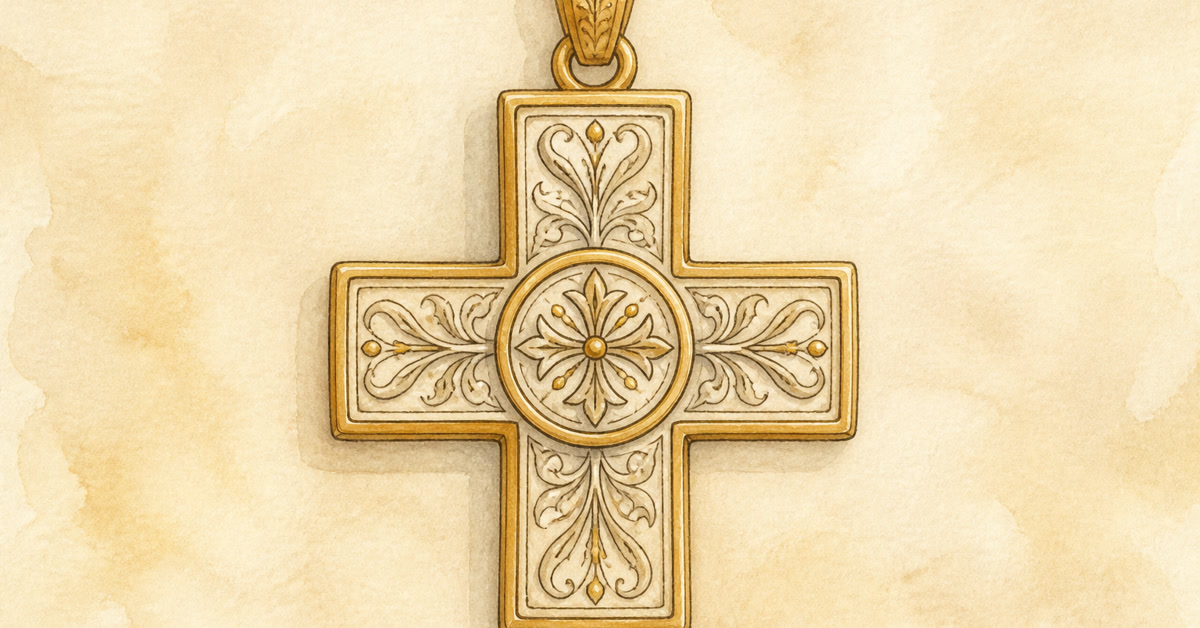
The Greek cross is a cross with four arms of exactly equal length, all meeting at right angles in the center. Its proportions form a perfect square in negative space, which gives it a sense of balance, stability, and harmony that no other cross design quite matches. The name refers to its prominence in Greek and Byzantine Christianity, not to a specific origin in Greece alone.
In geometry, the Greek cross is sometimes called a plus sign or a four-pointed cross. In Christian art, it is the standard form used in Eastern Orthodox iconography, on church domes, and in the center of many Byzantine mosaics.
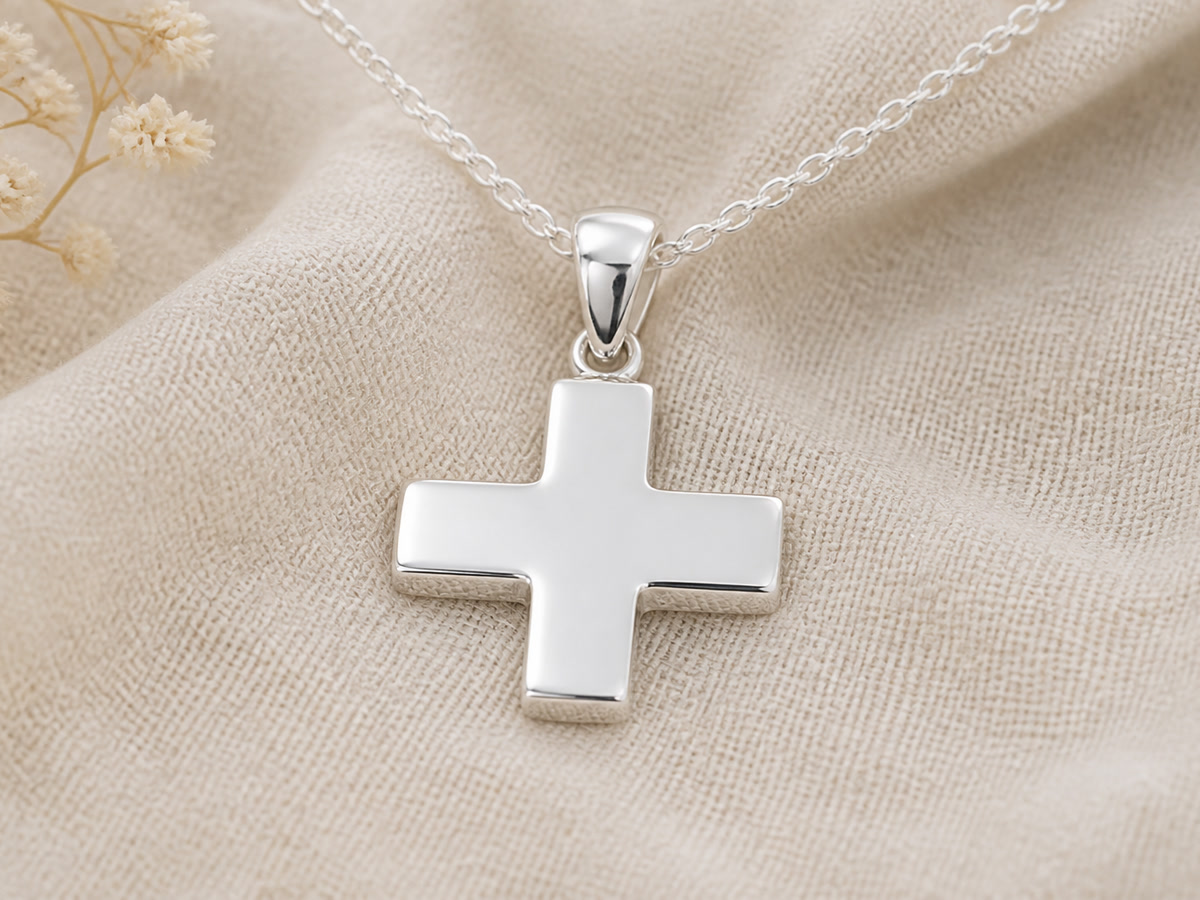
The Greek cross pendant: four arms of exactly equal length, perfectly balanced around the center.
Greek Cross vs Latin Cross vs Orthodox Cross
The easiest way to tell them apart is the proportions. The Latin cross has a long vertical beam and a shorter horizontal beam placed above the midpoint; it is the shape of the traditional crucifixion cross. The Greek cross has four arms of equal length, with no long lower arm. The Orthodox cross keeps the long vertical beam but adds a short titulus bar near the top and a slanted footrest at the bottom. In short: Latin cross is tall, Greek cross is square, Orthodox cross has three bars.
For a complete tour of all the main designs, see our guide to 12 types of crosses in Christianity.
The History of the Greek Cross
The Greek cross is one of the oldest cross shapes in human history, with a story that begins long before the Christian era.
Before Christianity: A Symbol of the Sun and the Four Directions
Long before the cross became the central Christian emblem, the equal-armed cross appeared in ancient cultures around the world. In Mesopotamia, the Mediterranean, and the Americas, the four-pointed cross represented the sun, the four cardinal directions, and the meeting point of the cosmos. Ancient Greek coins, pottery, and temple carvings display the equal-armed cross as a solar symbol.
The Byzantine Golden Age
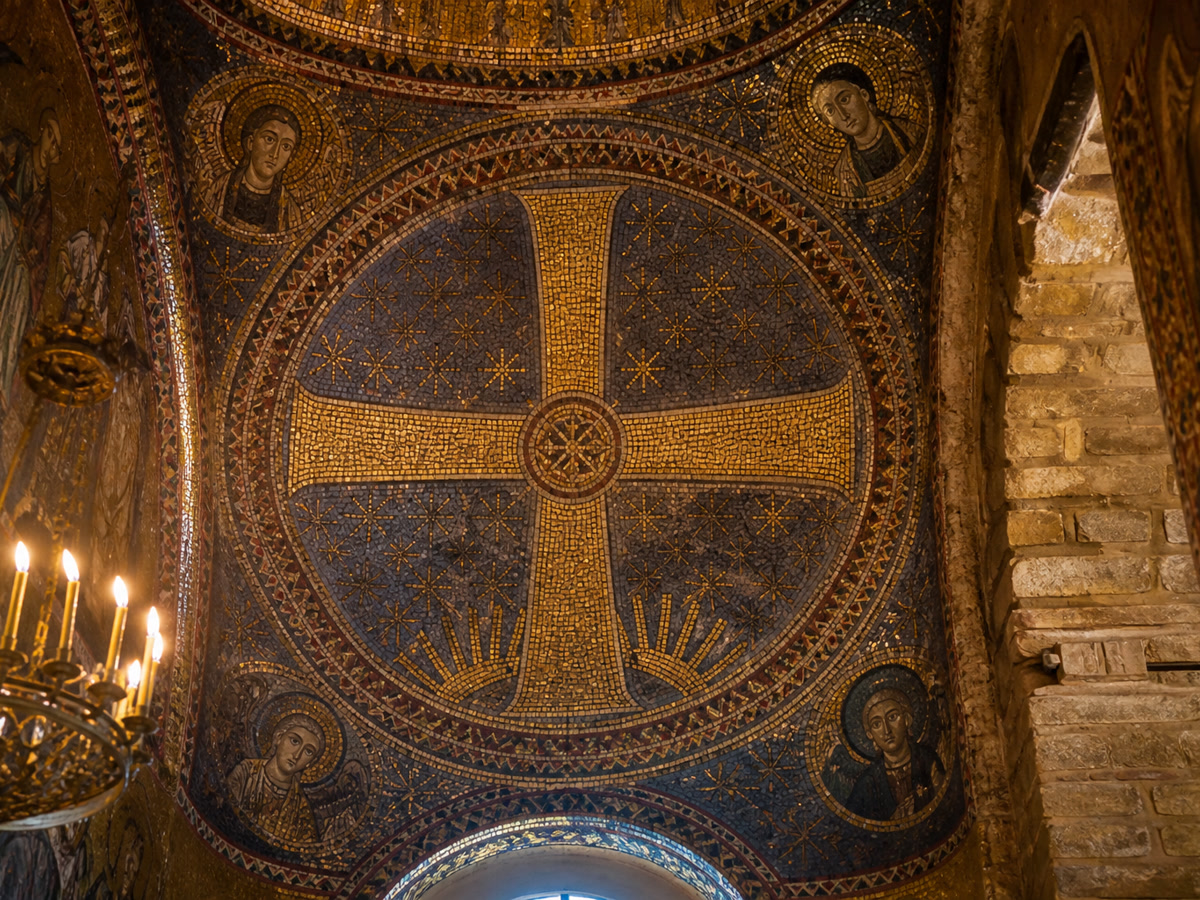
When Christianity became the religion of the Roman Empire in the fourth century, the Greek cross rose to prominence in the Eastern half of the empire, which we now call the Byzantine Empire. Centered on Constantinople, Byzantine Christianity adopted the equal-armed cross as a primary symbol of the faith. It appeared in golden mosaics, on church domes, in illuminated manuscripts, and on imperial regalia. The Greek cross became the visual signature of Byzantine art and theology.
From Flags to Modern Design
The equal-armed cross spread far beyond the church. It appears on the national flags of Greece, Switzerland, and several other nations, in the heraldry of medieval orders such as the Knights Templar, and in the design of modern medals, emblems, and jewelry. Today it remains a favorite for its clean geometry and timeless balance.
Key Dates in the Story of the Greek Cross
- Antiquity – The equal-armed cross appears in ancient Mesopotamia, Greece, and the Mediterranean as a solar and directional symbol.
- 4th century – Christianity becomes the religion of the Roman Empire. The Greek cross begins its rise in the Eastern, Byzantine half.
- 5th to 6th centuries – Byzantine churches, mosaics, and manuscripts are decorated with the equal-armed cross.
- Middle Ages – The cross appears in heraldry, on the shields of crusading orders, and in European coats of arms.
- 19th to 20th centuries – The Greek cross becomes part of national flags, including Greece and Switzerland, and of modern medals and emblems.
- Today – The equal-armed cross is a beloved design in jewelry, appreciated for its perfect symmetry and spiritual heritage.
The Symbolism of the Greek Cross
The perfect symmetry of the Greek cross carries meaning that has resonated across cultures and centuries.
Balance and Harmony
Because all four arms are equal, the Greek cross embodies balance. It suggests equilibrium between the four directions, between heaven and earth, and between the physical and the spiritual. This is why it feels so calm and grounded compared to the asymmetric Latin cross.
The Four Directions of the Gospel
In Christian interpretation, the four equal arms are often read as the gospel spreading to the four corners of the world: north, south, east, and west. The equal reach of each arm mirrors the universal call of the faith, offered equally in every direction.
The Sun, Light, and New Life
The ancient solar meaning never fully disappeared. In Christian art, the Greek cross is associated with light and resurrection, carrying forward the older idea of the sun rising and renewing life. It is a symbol of hope, of Christ as the light of the world.
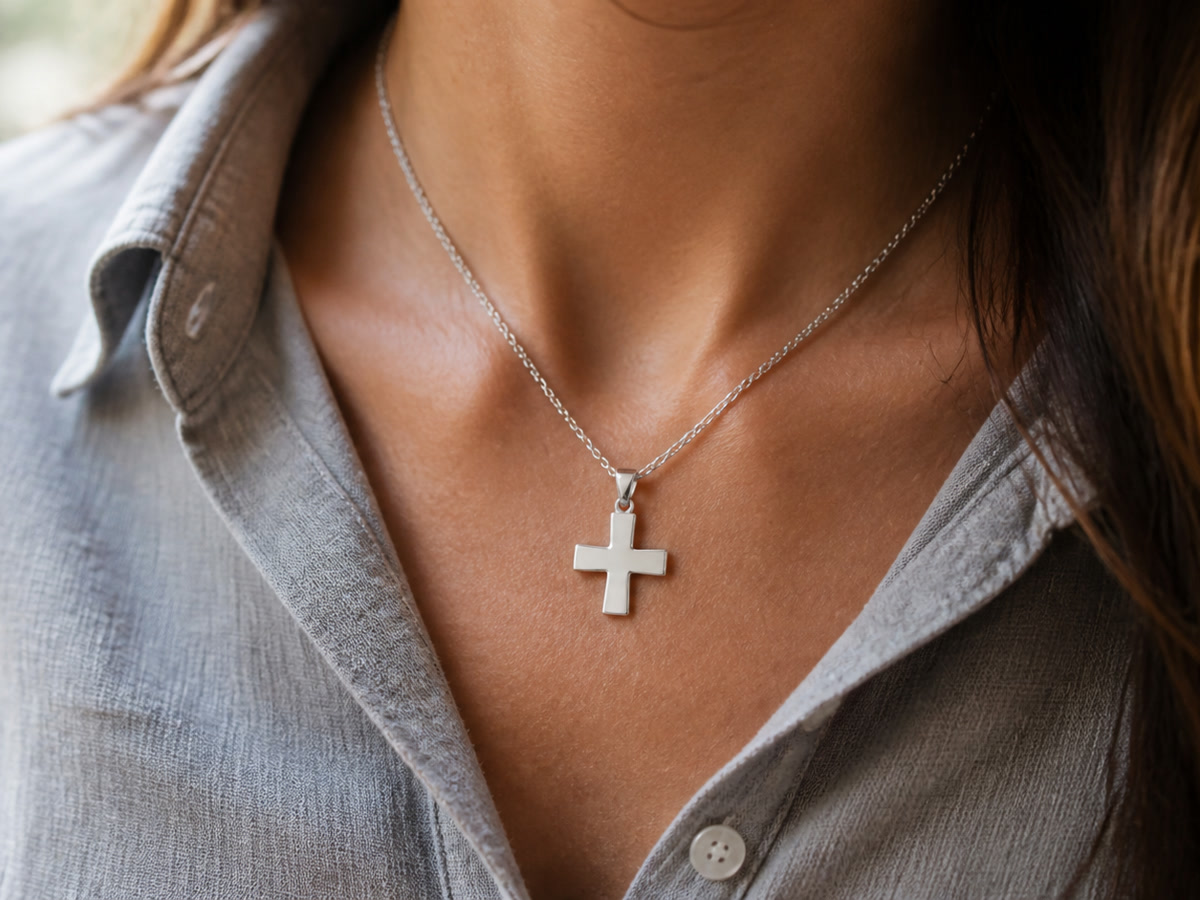
Wearing a Greek cross: balanced, elegant, and quietly meaningful.
Greek Cross Jewelry: What to Look For
The Greek cross shape is defined by clean lines and balanced proportions. When choosing a piece, whether a Greek cross or another design, pay attention to the symmetry of the arms, the finish of the metal, and the quality of the materials. While we do not currently carry a dedicated Greek cross pendant, the same care applies to every cross we offer.
Stainless Steel: Modern and Durable
A stainless steel Greek cross handles daily wear without tarnish or fuss. Its cool silver tone suits the clean geometry of the design, and it works for anyone who wants an affordable, hard-wearing everyday piece.
Sterling Silver: Classic and Refined
Sterling silver (925) gives the Greek cross the weight and luster it deserves. The bright surface catches the light evenly across all four arms, highlighting the perfect symmetry. It is an excellent choice for baptism, confirmation, and gift-giving.
Gold Plated: Warm and Ornate
Gold-plated Greek crosses bring warmth and a touch of Byzantine splendor. A gold finish echoes the golden mosaics of the ancient churches where the Greek cross flourished, making it a beautiful nod to history.
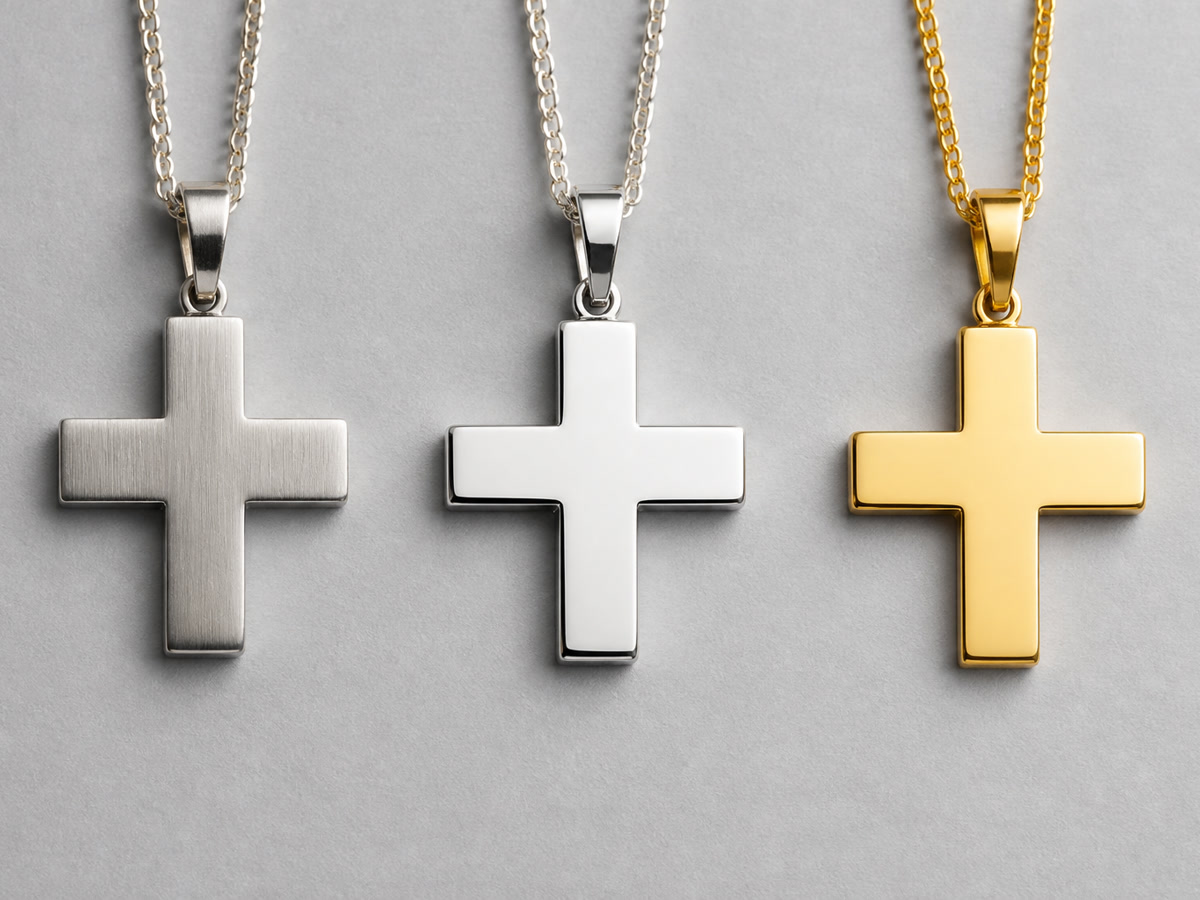
The Greek cross shape works beautifully across materials, from polished silver to warm gold.
How to Wear a Greek Cross Necklace
The balanced silhouette of the Greek cross makes it one of the easiest pendants to style.
Understated Daily Wear
A small Greek cross on a 16 or 18 inch chain sits neatly at the collarbone. Its symmetrical shape works with t-shirts, blouses, and office wear alike, adding a quiet, balanced focal point without overwhelming the outfit.
Layered Looks
The Greek cross layers beautifully with other chains. Because its arms are equal, it reads clearly even when combined with longer pendants. Mix a silver Greek cross with a gold bar necklace for a modern, balanced look.
Gifts and Milestones
Greek cross jewelry is a thoughtful gift for baptisms, First Communion, Confirmation, graduations, and holidays. Its ancient heritage and balanced beauty carry meaning that suits both religious milestones and purely personal celebrations.
Caring for Your Greek Cross Jewelry
Greek cross jewelry is easy to maintain. Stainless steel needs only a soft cloth and occasional washing with mild soap. Sterling silver should be polished regularly with a dedicated cloth to remove tarnish and stored in a soft pouch. Gold-plated pieces last longest when kept away from perfume, lotion, and chlorine; put your jewelry on last and remove it before swimming. For more detail, see our jewelry care guide.
Related Cross Guides
The Greek cross is one member of a large and fascinating family. Explore the other types to find the design that speaks to you.
- 12 Types of Crosses in Christianity: The Complete Guide
- The Latin Cross: History, Symbolism & Meaning
- Crucifix vs Cross: What’s the Difference?
- Celtic Cross: History, Symbolism & Meaning (coming soon)
- Orthodox Cross: History, Symbolism & Meaning (coming soon)
- Sideways Cross: The Modern Trend Explained (coming soon)