
Stainless Steel Jewelry Care: The No-Fuss Guide
TL;DR – Stainless steel is one of the toughest materials in jewelry, but it still collects oils, soap residue, and dust. Warm water, mild dish soap, and a soft cloth handle 90% of cleaning. Avoid bleach, chlorine, and abrasive cleaners. Store pieces individually to prevent scratches.
You bought a stainless steel cross necklace because it looks great and practically takes care of itself. And that reputation is well earned, stainless steel resists rust, tarnish, and corrosion far better than silver or gold-plated pieces. But “low maintenance” does not mean “no maintenance.” Soap scum builds up, skin oils dull the shine, and a little routine care keeps your piece looking as sharp as the day you got it. This guide covers everything you need to know, from a 30-second daily wipe to a deep clean that handles even stubborn buildup.
Why Stainless Steel Needs Less Care (But Not Zero)
Stainless steel owes its durability to a chromium oxide layer that forms naturally on the surface. This invisible film is self-healing: when scratched, it reforms almost immediately, protecting the metal underneath from oxidation. That is why stainless steel cross necklaces do not turn your skin green, do not develop that dark tarnish you see on silver, and survive daily wear, gym sessions, and showering without complaint.
What stainless steel does accumulate, however, is surface grime. Body oils, lotion residue, sweat, soap scum, and environmental dust all settle on the metal. Over time, this film makes even a high-polish piece look dull and cloudy. The good news: it takes almost nothing to fix.
The Everyday Wipe (30 Seconds)
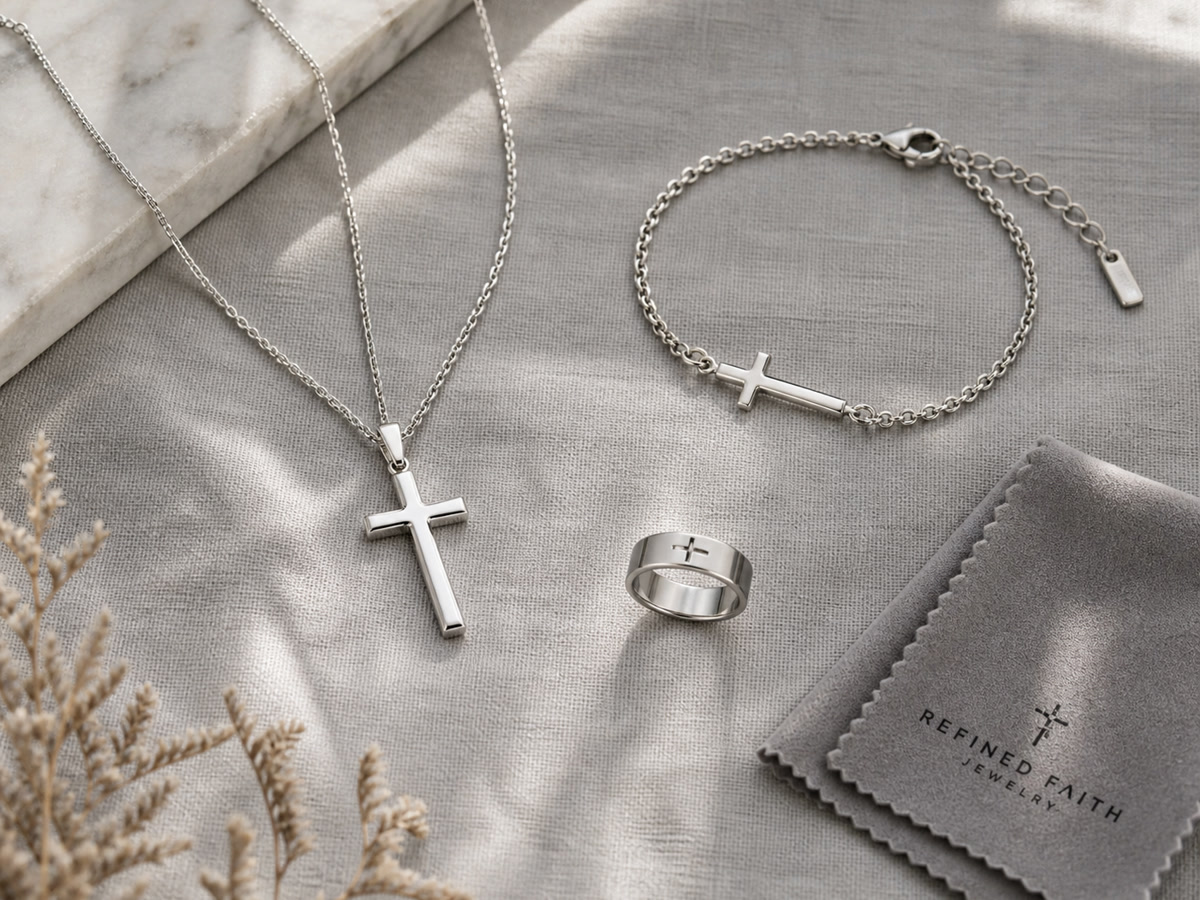
This is the habit that makes the biggest difference. After wearing your cross necklace, bracelet, or ring, give it a quick wipe with a soft, dry microfiber cloth. This removes skin oils and sweat before they have time to settle into the surface texture. It takes half a minute and dramatically extends the time between deeper cleans.
If you wear your piece daily, make this part of your routine right after taking it off. Store it in a pouch or separate compartment while you are at it.
How to Deep Clean Stainless Steel Jewelry
When the everyday wipe is not enough, when you notice dullness, water spots, or stubborn residue, this is the method that works every time.
What You Need
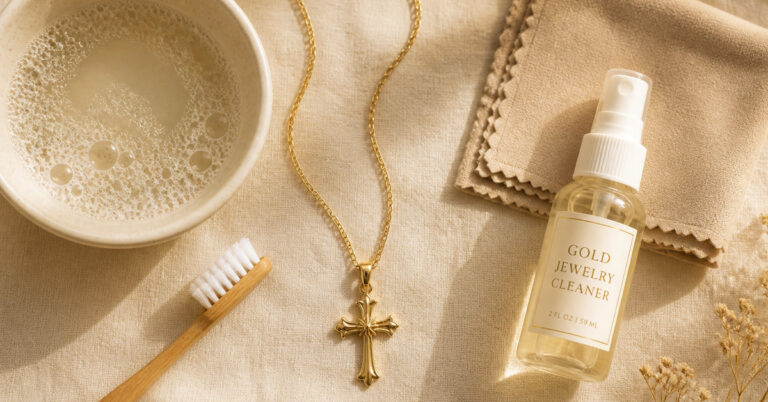
- A few drops of mild dish soap (the kind you use for hand-washing dishes, nothing abrasive)
- A bowl of warm (not boiling) water
- A soft-bristle toothbrush or jewelry brush
- A soft microfiber or lint-free cloth
The Step-by-Step
1. Mix the solution. Add a few drops of dish soap to a bowl of warm water. Swirl to combine. You do not need much, just enough to make the water slightly soapy.
2. Soak for 5-10 minutes. Place your stainless steel piece in the soapy water and let it sit. This softens any dried-on residue, oil buildup, or grime trapped in chain links and clasp mechanisms.
3. Gently brush. Use the soft toothbrush to work around details, engraved areas, chain links, and the back of the pendant where grime tends to hide. Stainless steel is hard, but you still want to be gentle around any plated or textured surfaces.
4. Rinse thoroughly. Hold the piece under clean running water to remove all soap residue. Soap left on the surface can leave its own film, which defeats the purpose.
5. Dry completely. Pat dry with a microfiber cloth, then let it air dry for a few minutes before wearing or storing. Trapped moisture in chain links can harbor bacteria, even on stainless steel.
This method works for cross necklaces, bracelets, rings, keychains, and earrings. The entire process takes about 15 minutes, most of which is just the soak.
Handling Stubborn Spots and Scratches
Hard Water Stains
If you live in an area with hard water, mineral deposits can leave white spots on your stainless steel jewelry. These are not damage, just calcium and lime buildup on the surface. Soaking in equal parts white vinegar and warm water for 5 minutes dissolves them. Brush gently, rinse, and dry. The vinegar will not harm stainless steel, but do not use this method on pieces with gold plating, as vinegar can wear down the coating over time.
Light Surface Scratches
Stainless steel is hard (around 5.5-6.5 on the Mohs scale), but not scratch-proof. Light surface marks from daily wear are normal. A jewelry polishing cloth designed for stainless steel can buff these out in most cases. For deeper scratches, a professional jeweler can refinish the surface, but for everyday pieces, the soap-and-water routine keeps things looking sharp enough that minor scratches are barely noticeable.
Oils and Lotions
Hand lotions, sunscreen, perfume, and hairspray are the most common culprits behind dull-looking stainless steel. These products leave a film that builds up gradually. The fix is simple: apply these products first, let them absorb into your skin for a minute, then put on your jewelry. This one habit eliminates most buildup before it starts.

What to Avoid
Stainless steel is forgiving, but a few things can still cause problems:
- Bleach and chlorine. These can pit and discolor the surface over time. Remove your jewelry before cleaning with bleach or swimming in chlorinated water.
- Abrasive cleaners. Baking soda scrubs, toothpaste, and harsh jewelry dips are designed for softer metals. On stainless steel, they can leave fine scratches that dull the finish.
- Ultrasonic cleaners. These are great for diamond and plain gold jewelry, but they can loosen prong settings on pieces with inlaid stones and are unnecessary for stainless steel, which cleans easily by hand.
- Harsh chemical jewelry cleaners. Many liquid jewelry cleaners contain ammonia or acid that works on silver tarnish but is overkill (and potentially damaging) for stainless steel.
Storage Tips That Prevent Most Problems
Where and how you store your stainless steel jewelry matters more than most people realize.
Separate pieces from each other. Stainless steel is hard, but it can still scratch other metals and vice versa. A stainless steel cross rubbing against a gold ring will leave marks on both. Use individual pouches, a lined jewelry box with compartments, or at minimum, wrap each piece in a soft cloth.
Avoid humid environments. While stainless steel resists rust, it is not completely immune. Prolonged exposure to high humidity, especially with salt air near the ocean, can eventually cause pitting on lower-grade stainless steel. Keep pieces in a dry place when not wearing them.
Remove before swimming. Chlorinated pool water and salt water are both harder on jewelry than fresh water. A quick rinse after exposure is enough, but removing the piece entirely is better.
Stainless Steel vs Other Metals: Care Comparison
It helps to understand where stainless steel sits on the maintenance spectrum compared to other common jewelry metals:
Sterling silver tarnishes from exposure to air, humidity, and sulfur compounds. It needs regular polishing and often benefits from anti-tarnish bags and strips. Maintenance is high.
Gold-plated jewelry looks beautiful initially, but the thin plating wears off over time, especially with frequent exposure to water, sweat, and chemicals. Maintenance is moderate to high, and re-plating may be needed.
14K/18K solid gold resists tarnish well but scratches easily due to its relative softness. It needs periodic professional polishing but otherwise holds up well. Maintenance is low to moderate.
Stainless steel resists tarnish, rust, and corrosion naturally. It scratches less than gold, holds its finish longer, and cleans up with just soap and water. Maintenance is genuinely low, the lowest of the common jewelry metals.
Shop Stainless Steel Cross Necklaces
Built to last, easy to maintain, and designed with meaning, our stainless steel cross collection is made for everyday wear.
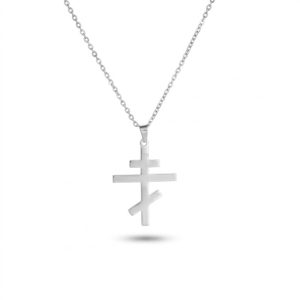
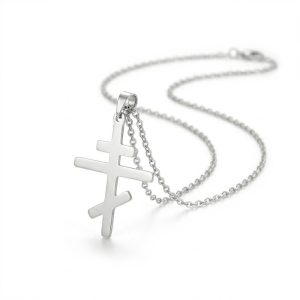
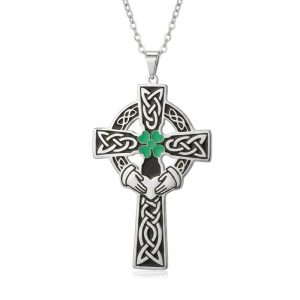

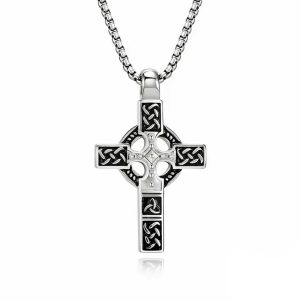
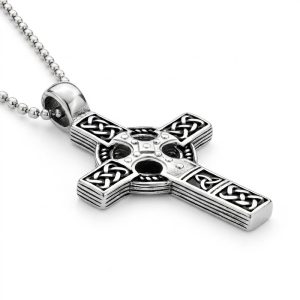
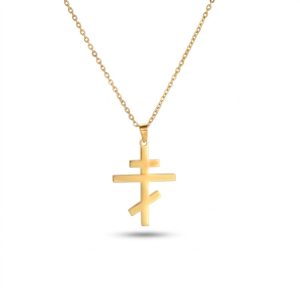
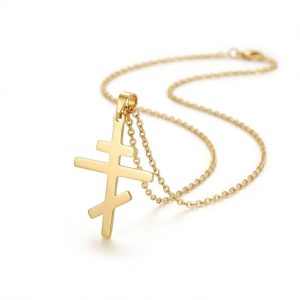
From Celtic crosses to Orthodox designs, these pieces combine the durability of stainless steel with styles that carry real significance.
Pearl and Gemstone Accents on Stainless Steel
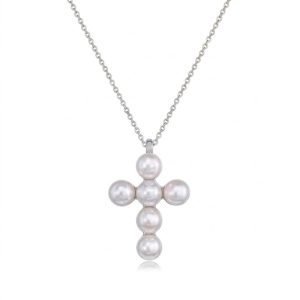
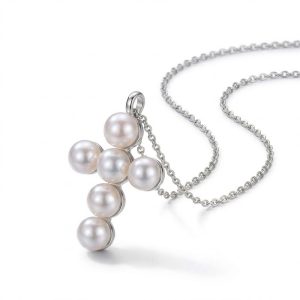
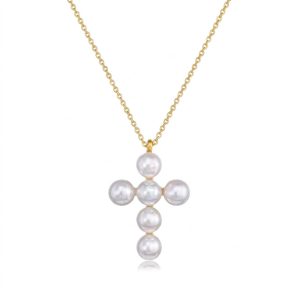
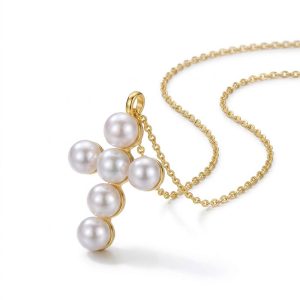
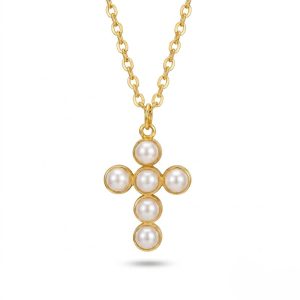
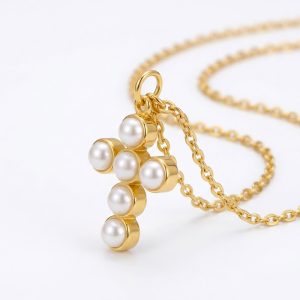
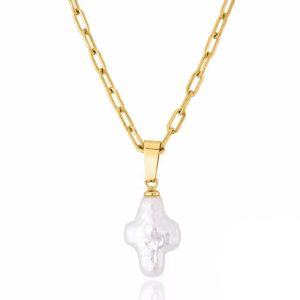
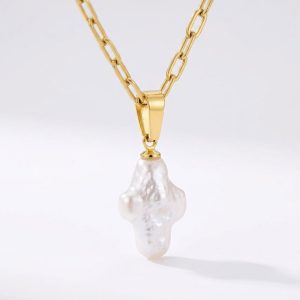
Many stainless steel cross necklaces from Crystia feature pearl accents, opals, or crystal details. When cleaning these pieces, a small adjustment to the routine goes a long way.
Pearls and opals are delicate. Never soak pieces with these stones. Instead, use a barely damp cloth to wipe the stainless steel parts, then dry the stone separately with a separate soft cloth. Avoid getting pearls wet, as prolonged moisture can damage their luster.
Crystals and cubic zirconia are more durable, but ultrasonic cleaners and harsh chemicals can still loosen their settings. Stick with the warm soapy water method, and use a soft brush around the stone settings to clean without dislodging anything.
Diamonds set in stainless steel are extremely durable and can handle the full soapy water soak without worry. A quick brush around the setting removes the oils that dull their sparkle.
Related Cross Guides
Want to learn more about cross jewelry, styles, and care? Check out these guides:
- 12 Types of Crosses in Christianity: History, Meaning & Jewelry Guide
- Crucifix vs Cross: What’s the Difference?
- Sterling Silver vs Stainless Steel Cross Jewelry: Pros, Cons & Prices
- Gold vs Silver Cross Necklace: Which One Should You Pick?
- How to Clean Silver Jewelry at Home Without Ruining It (5 Methods)