
What Does a Double Cross Necklace Mean? Symbolism, History & Style
TL;DR – A double cross necklace features two horizontal bars on a single vertical stem. It traces back to the Byzantine patriarchal cross, where the upper bar represents the inscription above Christ and the lower bar represents the crossbeam itself. Today, it symbolizes doubled faith, a bond between two people, or the connection between the earthly and the divine. It is both a meaningful religious symbol and a distinctive style choice.
You might have spotted a double cross necklace on a friend, in a jewelry store window, or on your social feed and wondered what makes it different from every other cross pendant. The design looks simple at first glance, but those two horizontal bars carry centuries of history and several layers of meaning. This guide covers where the double cross comes from, what it symbolizes, the styles you will find today, and how to choose the right piece for yourself or as a gift.
What Makes a Cross a “Double Cross”?
The term “double cross” can refer to two different things, and it is worth knowing which one you are looking at before you buy.
The Two-Bar Design (Patriarchal Cross)
In jewelry, a double cross most commonly refers to a cross with two horizontal bars crossing the vertical stem. The upper bar is shorter than the lower one. This design is also called a patriarchal cross, a Crux Orthodoxa, or a Lorraine cross depending on the context. The upper bar represents the titulus, the inscription Pilate placed above Christ reading “Jesus of Nazareth, King of the Jews.” The lower bar is the main crossbeam where Christ’s arms were nailed.
Visually, the two bars create a layered, stacked look that sets it apart from the standard single-bar Latin cross. The proportions vary between designs, but the ratio of a shorter upper bar to a longer lower bar is the defining feature.
The Overlapping Double Cross
A second interpretation features two complete crosses layered on top of each other, often slightly offset. This style appears in fashion jewelry and does not carry the same religious lineage as the patriarchal cross. It tends to represent personal duality, balance, or the merging of two lives. If the spiritual meaning matters to you, look for the two-bar patriarchal design. If you are drawn to the aesthetic of two overlapping shapes, the fashion version is equally valid as a style statement.
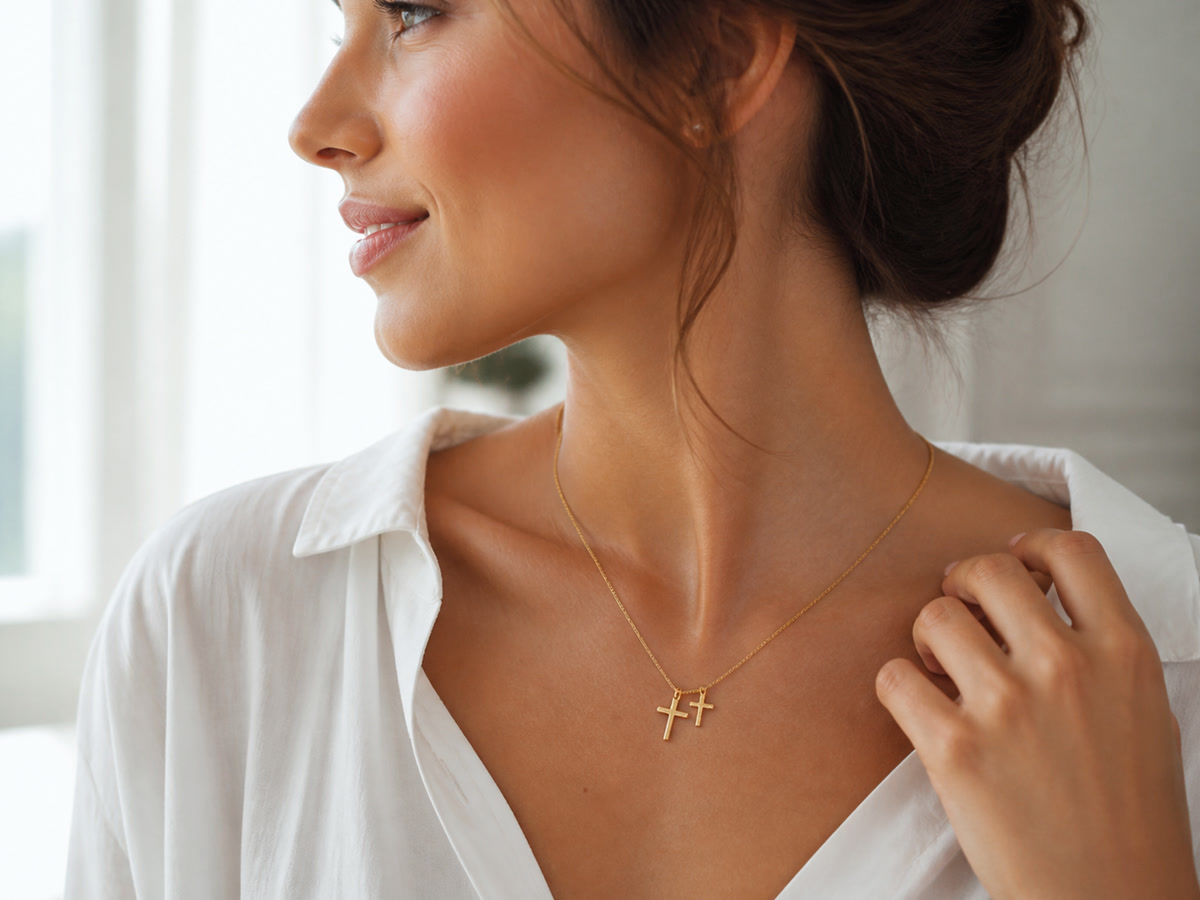
A double cross necklace adds a subtle, layered look to any outfit while carrying deep spiritual roots.
The History Behind the Two-Bar Cross
The double-bar cross did not appear out of nowhere. Its roots run deep through early Christian art and the political landscape of medieval Europe.
Byzantine Origins
The patriarchal cross first gained prominence in the Byzantine Empire during the early medieval period. Byzantine Christians used the two-bar design in church architecture, manuscript illumination, and liturgical objects. The upper bar was understood as the titulus, while the lower bar held the body. This was not just an artistic choice, it was a theological one, visually encoding the full narrative of the crucifixion into the cross itself.
The Byzantine Empire spread this symbol across Eastern Europe and into the Caucasus. You can still find patriarchal crosses on churches, national flags, and religious art in countries like Hungary, Slovakia, and Lithuania.
The Cross of Lorraine
In Western Europe, the two-bar cross became associated with the Duchy of Lorraine (now part of France) during the medieval period. The Cross of Lorraine features two equal-length horizontal bars, unlike the Byzantine version where the upper bar is shorter. During World War II, the Cross of Lorraine was adopted as a symbol of French resistance against occupation. General Charles de Gaulle used it as his personal emblem, and the Free French Forces carried it as a sign of defiance.
This historical layer means the double cross carries different weight depending on where you are from. In Eastern Europe, it reads as deeply religious. In France, it carries patriotic and resistance overtones. In the United States, most people see it primarily as a jewelry design with spiritual meaning.
From Churches to Necklaces
The transition from architectural and heraldic symbol to personal jewelry happened gradually. By the 19th century, the double cross appeared in Victorian mourning jewelry and religious pendants. The 20th century brought it into mainstream fashion, particularly in the 1990s and 2000s when layered, symbolic necklaces gained popularity. Today, it is one of the more distinctive cross designs available, balancing tradition with a modern silhouette.
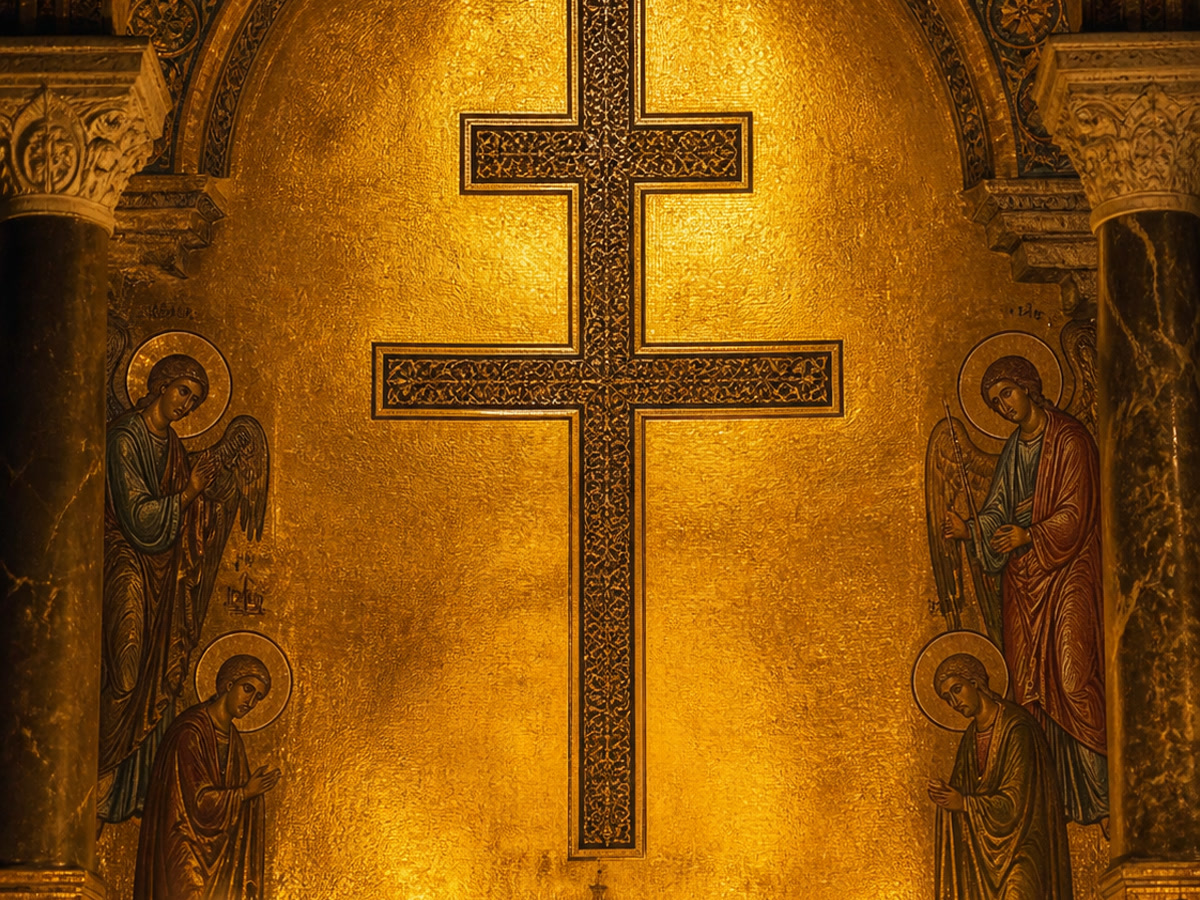
The patriarchal cross in Byzantine art: two horizontal bars encoding the full crucifixion narrative.
What Does the Double Cross Symbolize?
The meaning of a double cross necklace shifts depending on who is wearing it and why. Here are the most common interpretations.
Doubled Faith and Devotion
The most direct reading is that the second bar doubles the faith message of the cross. Where a single cross declares belief, the double cross reinforces it. For many wearers, it represents a deeper or more intentional expression of their Christian faith, a way of saying “I believe, and I want that to be visible.”
A Bond Between Two People
Because there are two bars, the double cross naturally evokes connection. Couples sometimes exchange double cross necklaces as a symbol of their shared faith and their bond. It can represent a parent and child, two friends, or any relationship where spiritual connection matters. This makes it a popular choice for anniversary gifts, mother-daughter pieces, or tokens between close friends.
The Intersection of Earth and Heaven
Some interpret the two bars as representing two realms: the earthly and the divine. The lower bar stands for life on earth, while the upper bar reaches toward the heavenly. Wearing the double cross is a reminder that these two dimensions are always present, always connected. It is a symbol of hope, of looking upward, of living with awareness of something greater.
Resilience and Protection
In some traditions, the double cross is considered a protective symbol. The extra bar acts as a spiritual shield, warding off negative energy. While this belief is more folk tradition than formal theology, it persists in many cultures, particularly in Eastern Europe where the patriarchal cross has deep cultural roots.
Styles of Double Cross Necklaces
The double cross comes in a range of materials and finishes, from understated daily wear to statement pieces for special occasions.
Sterling Silver Double Cross
Sterling silver is the most popular material for double cross necklaces. It offers a clean, polished look that works with everything from a t-shirt to a blazer. The 925 hallmark ensures you are getting real silver, not plated base metal. Silver also develops a gentle patina over time, which many people find adds character to a piece they wear daily.
Gold and Gold-Plated Options
Gold double cross necklaces bring warmth and a richer visual presence. Gold-plated versions over sterling silver give you the look at a lower price point, while solid gold pieces are investment-grade jewelry that hold their value. The golden finish pairs especially well with the patriarchal design, evoking the Byzantine origins of the symbol.
Minimalist vs. Ornate
Minimalist double crosses use clean lines, thin bars, and no embellishment. They are subtle and modern, ideal for everyday wear or layering with other necklaces. Ornate versions add gemstones, intricate metalwork, or textured finishes. These pieces make a stronger visual statement and tend to work better as standalone pendants rather than layered pieces.
Chain Length and Pendant Size
Most double cross necklaces come in 16-inch or 18-inch chains. A 16-inch chain sits close to the collarbone, making it ideal for V-neck tops or for layering under a longer necklace. An 18-inch chain hangs a bit lower, offering a more relaxed look. Pendant sizes range from dainty (under 0.75 inches) to bold (over 1.5 inches). For a first double cross necklace, a medium-sized pendant on an 18-inch chain is a safe starting point.
How to Choose the Right Double Cross Necklace
Finding the right piece comes down to three considerations: the meaning you want, the style you prefer, and the quality you expect.
Start With the Meaning
If you are buying the necklace for its spiritual significance, the patriarchal (two-bar) design is the one to look for. It carries the historical and theological weight. If you are drawn to the visual of two overlapping crosses, the fashion interpretation is equally beautiful, just less rooted in religious tradition. Neither is wrong, but knowing the difference helps you choose intentionally.
Match Your Everyday Style
A minimalist double cross in silver works with casual and professional outfits alike. A gold or ornate piece makes more impact and suits someone who wants their jewelry to be a focal point. Think about what you wear most often and choose a finish that complements your existing wardrobe.
Check the Materials
Look for the 925 stamp on silver pieces, confirming sterling silver content. For gold-plated jewelry, check that the base is also sterling silver rather than brass or nickel. Stainless steel is another durable option, especially for everyday wear, though it has a cooler, more industrial look. Avoid pieces with no material information, as they are likely low-quality alloy that will irritate skin or tarnish quickly.
Consider It as a Gift
A double cross necklace makes a meaningful gift for baptisms, confirmations, weddings, anniversaries, or just because. The two-bar symbolism of connection and shared faith makes it particularly appropriate for gifts between people who share a spiritual bond. If you are unsure of the recipient’s religious background, the double cross reads as elegant and intentional without being overly specific, which makes it a versatile gift choice.
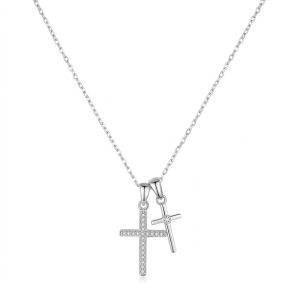
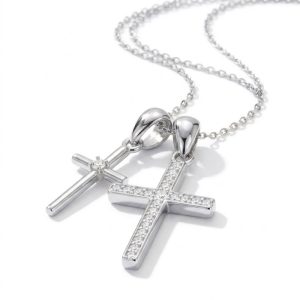
Explore our double cross necklace collection:


Related Cross Guides
Want to learn more about cross jewelry? These guides cover the history, symbolism, and buying advice for different cross types and care techniques.
- 12 Types of Crosses in Christianity: History, Meaning & Jewelry Guide
- The Latin Cross: History, Symbolism & Meaning
- The Greek Cross: History, Symbolism & Meaning
- Orthodox Cross: History, Symbolism & How to Style It
- Crucifix vs Cross: What’s the Difference and Which One Should You Wear?
- Celtic Cross Necklace Meaning (coming soon)
- What Does a Horizontal Cross Necklace Mean? (coming soon)
- Gold vs Silver Cross Necklace: Which One Should You Pick?
- Sterling Silver vs Stainless Steel Cross Jewelry: Pros, Cons & Prices
- How to Clean Silver Jewelry at Home Without Ruining It (5 Methods)
- Crystia Jewelry Care Guide