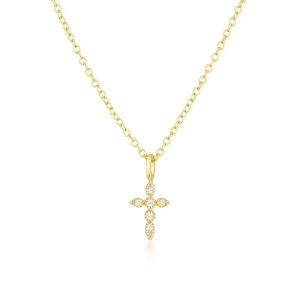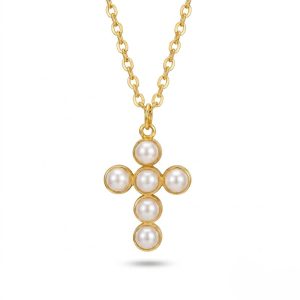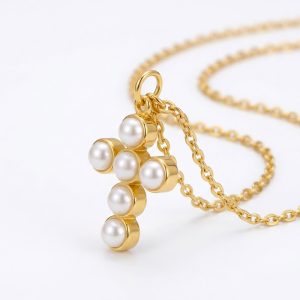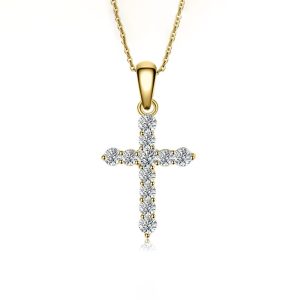
How to Clean Gold Jewelry: The Complete Beginner’s Guide
TL;DR – Gold jewelry loses its shine from oils, lotion, perfume, and everyday wear. The safest at-home method: warm water + a few drops of mild dish soap + a soft brush. Soak 15–20 minutes, gently scrub, rinse, and pat dry. Gold plated pieces need extra care — never soak them and avoid abrasives. Clean every 2–4 weeks for pieces you wear daily.
Your gold cross necklace, ring, or bracelet is one of those pieces you reach for every day. It goes through coffee spills, gym sessions, showers, and everything in between. Over time, all that living leaves a thin film of grime, oils, and residue that dulls the gold’s natural luster. The good news: cleaning gold jewelry at home is straightforward, safe, and takes less than 30 minutes. Here’s exactly how to do it without damaging your favorite pieces.
Why Gold Jewelry Needs Special Care
Gold is one of the most durable precious metals. It doesn’t rust, tarnish easily, or react with most substances. But “doesn’t tarnish easily” doesn’t mean “never needs cleaning.” Gold is soft enough that everyday particles embed in its surface over time.
Here’s what builds up on gold jewelry:
- Body oils and sweat — the most common culprit. Your skin naturally produces oils that leave a film on metal.
- Lotion and sunscreen — these leave a waxy residue that attracts dust and dirt.
- Perfume and cologne — alcohol-based sprays can dull the surface and leave chemical residue.
- Soap scum — from hand washing, showering, or cleaning with gloves on.
- Hard water deposits — mineral buildup from tap water, especially in areas with high calcium content.
The result? Your gold piece looks cloudy, dull, or slightly discolored even though it’s perfectly fine underneath. A proper cleaning restores that warm glow without any risk to the metal itself.
What You’ll Need
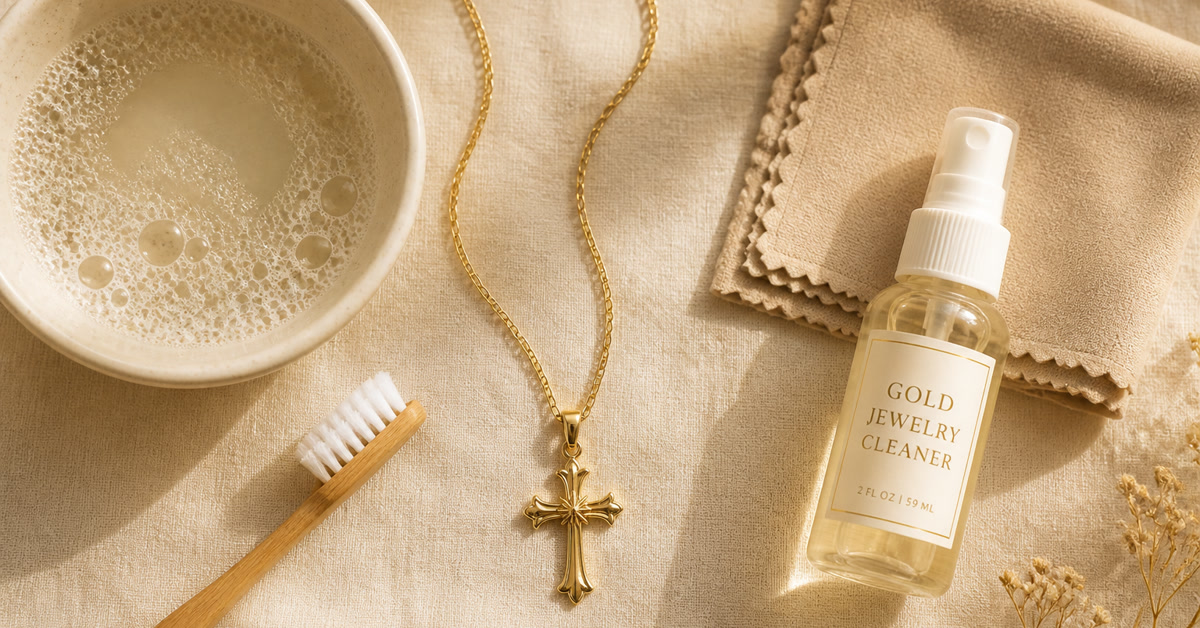
You don’t need fancy products or professional equipment. Most of what you need is already in your kitchen:
- A small bowl (glass or ceramic, not metal)
- Warm water (not hot — lukewarm is perfect)
- Mild dish soap (like Dawn, without added moisturizers or abrasives)
- A soft-bristle toothbrush (baby toothbrush works great)
- A lint-free microfiber cloth
- A soft, dry towel
Optional but helpful: a jewelry polishing cloth (the kind treated with a mild polishing compound), and a small strainer if you’re cleaning a delicate chain or a piece with small stones.
Step-by-Step: How to Clean Gold Jewelry at Home
Step 1: Prepare the Cleaning Solution
Fill your bowl with warm (not hot) water. Add 2–3 drops of mild dish soap and stir gently to create a light, soapy solution. You want bubbles, not a chemical bath.
Step 2: Soak the Jewelry
Place your gold piece in the solution and let it soak for 15 to 20 minutes. This softens the accumulated grime so it lifts away easily. For heavily tarnished or dirty pieces, you can soak up to 30 minutes, but no longer — extended soaking is unnecessary and can weaken settings on pieces with stones.
Step 3: Gently Scrub
Take the soft-bristle toothbrush and gently scrub the jewelry. Focus on crevices, chain links, and the back of pendants where grime collects. Use small circular motions and light pressure. Gold is soft — you don’t need force.
If your piece has gemstones (diamonds, sapphires, etc.), scrub around the settings where dirt accumulates. If it has pearls or opals, skip the scrub entirely and just soak — these stones are too delicate for any brushing.
Step 4: Rinse Thoroughly
Rinse the jewelry under clean, lukewarm running water. Make sure all soap residue is removed — leftover soap leaves a film that dulls the shine. If you’re worried about losing a small piece down the drain, rinse it over the bowl or use a strainer.
Step 5: Dry and Buff
Pat the jewelry dry with a soft, lint-free cloth. Don’t rub aggressively — patting prevents scratches. For an extra shine, buff gently with a jewelry polishing cloth. Let the piece air-dry completely before wearing or storing.
Gold Plated vs Solid Gold: Handle Them Differently
This is where most beginners go wrong. Not all gold jewelry is created equal, and cleaning methods that work for solid gold can destroy gold plated pieces.
Solid Gold (10K, 14K, 18K, 24K)
Solid gold is durable and can handle the full soak-and-scrub method described above. Higher karat gold (18K, 24K) is softer and more scratch-prone, so use lighter pressure. Lower karat gold (10K, 14K) is harder and more resistant to daily wear.
Gold Plated and Gold Filled
Gold plated jewelry has a thin layer of gold over a base metal (usually stainless steel or brass). That gold layer is thin — typically less than 1 micron. Aggressive cleaning, soaking, or abrasives will strip it right off.
For gold plated pieces:
- Never soak — wipe instead. Dampen your microfiber cloth with the soapy water and gently wipe the surface.
- No toothbrush — the bristles can scratch through the plating.
- No harsh chemicals — bleach, ammonia, chlorine, and acetone will dissolve gold plating fast.
- Rinse with a damp cloth only — never run gold plated jewelry under a tap.
Want to know more about the differences between gold and other metals? Check our guide on Gold vs Silver Cross Necklace to see how each material holds up over time.
5 Common Mistakes That Damage Gold Jewelry
Avoid these and your gold pieces will last for decades:
1. Using Toothpaste
Toothpaste contains micro-abrasives designed to scrub enamel. On gold, these abrasives create micro-scratches that dull the surface permanently. It’s the number one DIY mistake people make with gold jewelry.
2. Cleaning with Bleach or Chlorine
Chlorine is gold’s worst enemy. It chemically reacts with the alloy metals in gold (especially in 14K and lower), causing structural damage and discoloration. Never clean gold with bleach, chlorine-based cleaners, or even swimming pool water.
3. Using Hot Water
Hot water can cause thermal shock, especially on pieces with stones or multiple metals. Warm water is plenty effective and much safer.
4. Skipping the Rinse
Soap residue left on gold creates a film that attracts more dirt. Always rinse thoroughly after cleaning.
5. Storing While Still Wet
Trapped moisture promotes tarnish on the base metals in gold alloys and can damage settings. Always let jewelry dry completely before putting it away.
How Often Should You Clean Your Gold Jewelry?
There’s no universal rule, but here’s a practical schedule based on how often you wear the piece:
- Daily wear (rings, everyday necklaces): every 2–4 weeks
- Occasional wear (special occasion pieces): every 2–3 months
- Gold plated pieces: wipe with a soft cloth after each wear, full clean once a month
You’ll also notice when it’s time — the piece starts looking dull or feels slightly gritty when you run your finger across it. Trust your eyes and your hands.
Store-Bought Cleaners vs DIY: Which Works Better?
DIY Cleaning (Soap and Water)
The soap-and-water method is the safest, cheapest, and most recommended approach by jewelers. It removes everyday buildup without any risk to the metal, stones, or settings. It’s what professional jewelers do for routine cleaning between services.
Commercial Jewelry Cleaners
There are two main types:
- Dip cleaners — these dissolve tarnish quickly but often contain harsh chemicals. They’re fine for solid gold without stones, but can damage gold plating, loosen stone settings, and strip rhodium plating from white gold.
- Ultrasonic cleaners — these use sound waves to shake loose dirt. Great for solid gold with hard stones (diamonds, sapphires). Not recommended for gold plated jewelry, pieces with pearls/opals, or jewelry with glue-set stones.
For most people, the DIY method handles 90% of cleaning needs. Save commercial cleaners for the occasional deep clean on durable pieces.
When to Take It to a Professional
Home cleaning handles everyday maintenance. But certain situations call for a professional jeweler:
- The piece has significant tarnish or discoloration that soap and water won’t fix
- It has loose stones or a damaged clasp
- It’s an heirloom or antique with delicate settings
- You want a professional polish to remove fine scratches
A professional cleaning typically costs $20–$50 and includes ultrasonic cleaning, steam cleaning, and a polish. Most jewelers recommend a professional clean once a year for pieces you wear daily.
Curious about how gold compares to other metals in durability and maintenance? Our guide on Sterling Silver vs Stainless Steel breaks down the pros and cons of each material.
Gold pieces that shine with proper care: