What Does It Mean When Your Cross Necklace Breaks? The Spiritual Side
TL;DR – A broken cross necklace doesn’t always mean something bad. In many spiritual traditions, it signals protection (absorbing negative energy), transformation (a chapter closing), or simply wear and tear. Some believe the cross broke because it fulfilled its purpose. Whether you see it as a sign or a coincidence depends entirely on your faith and perspective.
You reach for your cross necklace one morning and find the chain snapped, the clasp gone, or the pendant cracked. It’s a jarring moment. Your first instinct might be disappointment, frustration, or even a flicker of unease. What does it mean? Is it a warning? A sign? Or just life doing what life does to metal and chain?
The truth is, cultures and spiritual traditions have interpreted this moment very differently for centuries. Some see deep symbolic weight in a broken cross. Others see a piece of jewelry that needs repair. This guide walks through both sides, so you can decide what it means for you.
The Spiritual Interpretations: Why Some Believe It Matters
Across different faith traditions and spiritual beliefs, a broken cross necklace carries meaning that goes beyond the physical. Here are the most commonly cited interpretations.
It Absorbed Negative Energy
One of the most widespread beliefs is that a cross necklace acts as a spiritual shield. When it breaks, it has taken on damage that was meant for you. Think of it as a spiritual airbag. The cross absorbed the blow so you didn’t have to. In this view, the break is not a loss, it is evidence that the cross protected you. Many people who hold this belief choose to bury the broken cross respectfully rather than throw it away, thanking it for its service before letting it go.
This interpretation is common in folk Christianity, particularly in Latin American, Mediterranean, and Eastern European traditions. It also appears in certain African and Caribbean spiritual practices where protective amulets are expected to show wear when they have done their job.
A Chapter Is Closing
In some spiritual frameworks, objects carry energy tied to the period of your life during which you wore them. A cross that breaks may signal the end of a phase, a relationship, a habit, or a way of thinking. It is not necessarily negative. Endings make room for beginnings. The break becomes a marker, a threshold between who you were and who you are becoming.
If you have been going through major life changes, a breakup, a career shift, a move, or a period of deep personal growth, this interpretation can feel particularly resonant. The cross did not fail. It accompanied you through one chapter and its physical form gave out as that chapter closed.
The Cross Fulfilled Its Purpose
Some believers view a broken cross as a sign that it has completed its spiritual mission. It was given to you, or you chose it, at a specific moment in your life of faith. Over time, it carried prayers, witnessed moments of devotion, and served its role. When it breaks, that role is complete. This is not failure. It is fulfillment.
In this view, you might replace the cross with a new one, marking a fresh start in your spiritual practice. The old cross is honored and retired, much like a well-worn prayer book that has been read so many times its pages fall out.
A Call to Pay Attention
Some spiritual teachers suggest that a broken cross is an invitation to pause and reflect. Not because something is wrong, but because something wants your attention. Perhaps you have been moving too fast, neglecting your spiritual life, or ignoring a gut feeling. The break becomes a nudge, a physical interruption that asks you to stop and check in with yourself.
The Practical Side: Why Jewelry Actually Breaks
Before diving deeper into symbolism, it is worth understanding the mundane reality. Necklaces break. Chains snap. Clasps wear out. This is normal, and it happens to every piece of jewelry eventually, regardless of spiritual significance.
Chain Fatigue and Metal Stress
Every time you put on or take off a necklace, you apply tension to the chain links and the clasp. Over months and years, this repeated stress weakens the metal at its thinnest points. Sterling silver is softer than stainless steel, so silver chains tend to show wear faster. Gold-plated chains have a thin layer of gold over a base metal, and that base metal can fatigue and snap. Even high-quality chains have a lifespan.
Environmental Factors
Moisture, chlorine, salt water, perfume, and even the acidity of your skin accelerate metal degradation. If you wear your cross necklace in the shower, while swimming, or during workouts, you are exposing it to conditions that speed up wear. Tarnish weakens silver over time. Sweat corrodes clasps. These are physical processes with physical explanations.
Accidental Impact
Sometimes a necklace catches on something. A drawer handle, a seatbelt, a piece of equipment. A sudden force on a chain that was already weakened will snap it. This is not destiny. It is physics.
Understanding these causes does not diminish the spiritual meaning if you choose to find one. It simply provides context. A chain that broke after ten years of daily wear probably broke because of metal fatigue. A chain that snapped the day after you prayed about a major life decision? That one might carry more weight for you personally.
Different Faiths, Different Meanings
The meaning of a broken cross varies significantly depending on which Christian tradition or spiritual framework you come from. Here is how different communities tend to interpret the event.
Catholic Perspective
In Catholic tradition, a cross or crucifix is a sacramental, an object set apart for spiritual purposes. If a crucifix breaks, many Catholics view it as a sign that the cross took on suffering meant for the wearer. The remedy is straightforward: bring the broken cross to a priest, who can bless a replacement and dispose of the old one properly. Some parishes have specific protocols for retiring broken sacramentals, often involving burial in blessed ground.
Protestant Perspective
Most Protestant traditions place less emphasis on the spiritual power of objects themselves. A broken cross necklace is typically seen as a broken piece of jewelry, not a spiritual event. The response is practical: repair it or replace it. That said, many Protestant believers do find personal meaning in these moments, interpreting them through their own relationship with God rather than through institutional theology.
Orthodox Perspective
Eastern Orthodox Christianity holds that blessed objects carry real spiritual significance. A broken cross is treated with respect. The recommended course of action is to return the broken piece to the church, where it can be properly disposed of, often through burning. A new cross is then blessed and given to the wearer. This is not superstition. It is a structured way of honoring the spiritual life of the object.
Non-Denominational and Personal Spirituality
For many people today, spiritual meaning is personal rather than institutional. A broken cross might be interpreted as a sign from the universe, a message from a loved one who has passed, or simply a moment of reflection. There is no single right answer. What matters is whether the interpretation brings you comfort, clarity, or a sense of direction.
What to Do When Your Cross Necklace Breaks
Whether you lean toward the spiritual or the practical, there are a few sensible steps to take when this happens.
Assess the Damage
Look at exactly what broke. Is it the chain, the clasp, the pendant itself, or a soldered connection? Some breaks are easy to repair. A jeweler can replace a clasp in minutes. A snapped chain can be re-soldered or replaced entirely. If the pendant is cracked or chipped, a skilled jeweler might be able to restore it, depending on the material and the extent of the damage.
Decide What It Means to You
This is the part that no jeweler can help with. Do you want to repair the cross and keep wearing it? Replace it with a new one? Retire it with a ritual that feels meaningful? There is no wrong answer. Some people repair the cross and feel that its spiritual significance has been renewed. Others feel strongly that a broken cross should not be worn again and choose to replace it. Both responses are valid.
Handle the Old Cross with Respect
If you decide not to repair or wear the cross again, consider what feels right for disposal. Catholics can bring it to their parish. Others might bury it in a meaningful place. Some people wrap it in cloth and keep it in a box as a memento. The key is intention. Treating the object with respect, regardless of what you believe about its spiritual properties, honors the meaning it held for you.
Tips to Prevent Your Cross Necklace from Breaking
Whether you see your cross as a spiritual protector or a beautiful accessory, you probably want it to last. Here are practical ways to extend its life.
Choose the Right Material
Stainless steel is the most durable option for everyday wear. It resists scratching, tarnishing, and bending. Sterling silver is beautiful but softer, requiring more care. Gold-plated pieces look stunning but the plating wears off over time, especially with exposure to water and chemicals. If you want a cross necklace that can handle daily life without constant worry, stainless steel is your best bet.
Take It Off When Appropriate
Remove your cross necklace before showering, swimming, working out, or doing anything that involves heavy physical contact. This is not weakness. It is basic jewelry care. Even the toughest chain benefits from being given a rest occasionally.
Store It Properly
When you are not wearing your cross, lay it flat in a soft pouch or jewelry box. Hanging necklaces on hooks can put constant stress on the chain. Tossing them into a drawer with other jewelry creates tangles and snags. A few seconds of careful storage can add years to your necklace’s life.
Get Regular Checkups
Once or twice a year, look closely at your clasp, chain links, and any soldered connections. If you see thinning metal, a loose clasp, or a link that looks distorted, take it to a jeweler before it breaks. Prevention is always easier than repair.
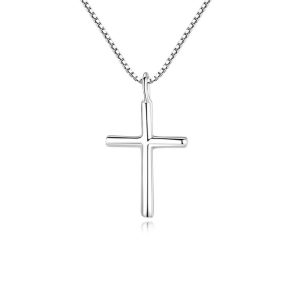
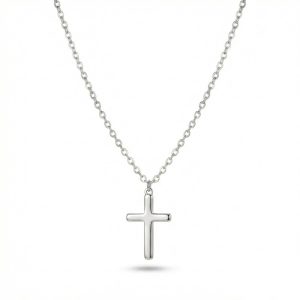
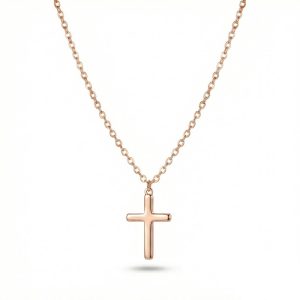
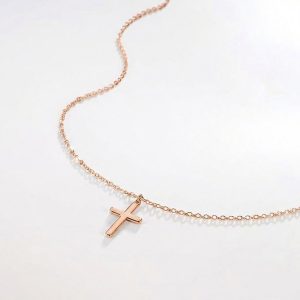
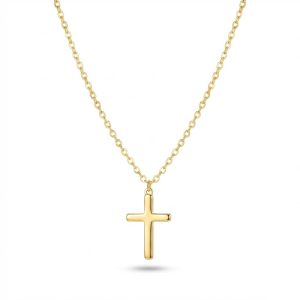
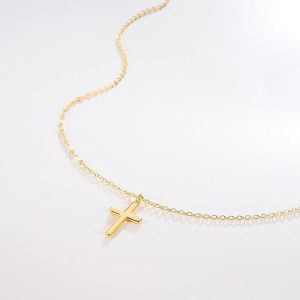
Browse our collection of durable cross necklaces built to last. :
Related Cross Guides
Explore more about cross symbolism, care, and choosing the right piece for your walk of faith.