
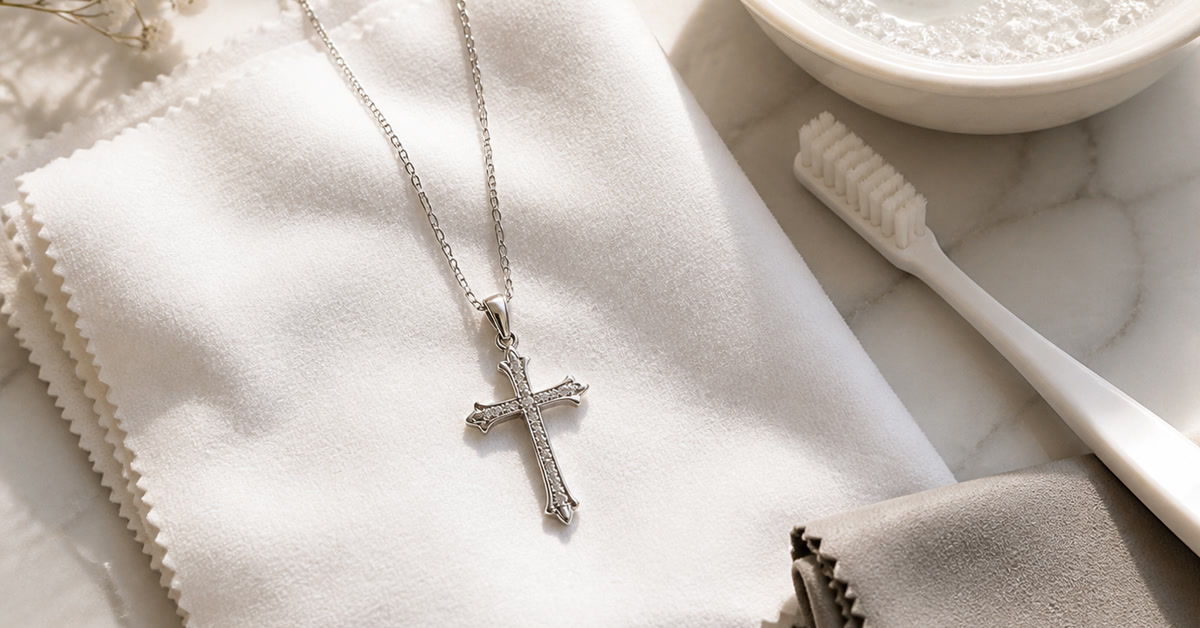
Cross Necklace Care 101: Keep Your Cross Looking New for Years
TL;DR – Clean your cross necklace weekly with mild soap and warm water, dry it immediately, and store it in a separate soft pouch. Sterling silver needs a polishing cloth every few weeks. Gold plated pieces should never touch perfume or chlorine. Stainless steel is the most forgiving but still benefits from regular wiping. Skip these habits and you will watch tarnish, scratches, and fading eat away at a piece you love.
You wear your cross necklace almost every day. It goes through showers, workouts, humidity, and long commutes. Most people never think about caring for it until the shine is gone, the chain is stiff, or the plating has started to peel. The truth is, a few simple habits can add years to the life of any cross necklace, whether it is sterling silver, stainless steel, or gold plated. This guide walks you through exactly what to do, what to avoid, and how to match your care routine to the material of your piece.
Why Cross Necklace Care Actually Matters
A cross necklace is not just an accessory. For many people, it is a daily reminder of faith, a gift from someone who matters, or a piece they chose to mark a specific moment. When it loses its luster, it stops feeling like the meaningful item it was meant to be. The good news is that cross jewelry does not require professional maintenance to stay in great shape. It just needs consistency.
The Real Cost of Skipping Care
Sterling silver tarnishes when it reacts with sulfur in the air and on your skin. Without regular polishing, that tarnish turns from a faint yellow into a dark gray that is much harder to reverse. Gold plating wears thin when exposed to chemicals, friction, and moisture, and once the base metal shows through, replating is the only fix. Even stainless steel, which is remarkably resilient, can accumulate oils and grime that dull its surface over time. None of these problems appear overnight. They build quietly, and by the time you notice, the damage takes real effort to undo.
Daily Habits That Make a Difference
You do not need a complicated routine. The best cross necklace care comes down to two moments in your day: when you put it on and when you take it off.
Before You Leave the House
Apply perfume, cologne, sunscreen, and hair products before you put on your necklace. These substances contain chemicals that corrode metal finishes and accelerate tarnishing on silver. Let your skin dry fully, then clasp your cross necklace on last. This single habit prevents more damage than any cleaning product on the market.
End-of-Day Routine
When you get home, remove your necklace before changing clothes, showering, or going to bed. Tugging a chain off over your head stretches the links and weakens the clasp. Sleeping on a necklace presses it against your skin and bedding for hours, trapping moisture and oils that cause discoloration. Make it a habit: clasp off, soft cloth wipe, pouch. Thirty seconds is all it takes.

How to Clean Your Cross Necklace by Material
Not all cross necklaces are made the same, and the cleaning method that works for one material can damage another. Here is what actually works for each type.
Sterling Silver Cross Necklaces
Sterling silver is beautiful but reactive. It tarnishes naturally over time, and the best defense is regular attention rather than waiting until it looks dull.
For routine cleaning, mix a few drops of mild dish soap into a bowl of warm water. Dip a soft cloth or a baby toothbrush into the solution and gently scrub the cross and chain. Rinse under clean running water, then dry immediately with a lint-free cloth. Never air dry silver, because water spots leave marks that are harder to remove than the dirt you just cleaned off.
For deeper tarnish, use a silver polishing cloth. These are treated with a mild compound that lifts oxidation without scratching the surface. Rub in straight lines, not circles, to avoid creating swirl marks. For heavily tarnished pieces, a silver dip solution works, but follow the instructions carefully and do not soak for longer than recommended. You can read more detailed methods in our guide on how to clean silver jewelry at home.
Stainless Steel Cross Necklaces
Stainless steel is the easiest material to maintain. It does not tarnish, rust, or react with skin the way silver does. But it does collect oils, soap residue, and dust that dull its shine over time.
Wipe your stainless steel cross necklace with a damp microfiber cloth once a week. For stuck-on grime, use warm water with a drop of dish soap and a soft brush. Dry thoroughly. That is genuinely all it takes for stainless steel to stay looking sharp for years.
Gold Plated Cross Necklaces
Gold plated jewelry is the most delicate when it comes to cleaning. The gold layer is thin, and aggressive scrubbing or harsh chemicals will wear it away.
Use only a soft, slightly damp cloth to wipe the surface. No abrasive materials, no baking soda pastes, no ultrasonic cleaners. Avoid contact with chlorine, salt water, and acidic foods, all of which break down plating faster. If your gold plated cross starts to fade, the plating has worn through and the only restoration option is replating by a jeweler.
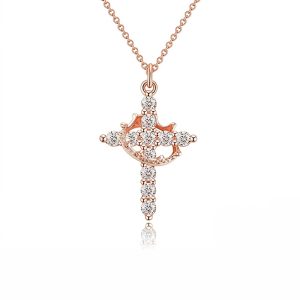
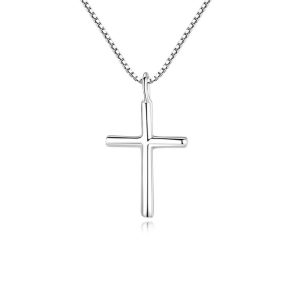
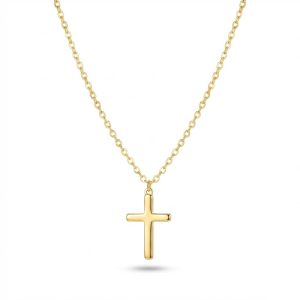
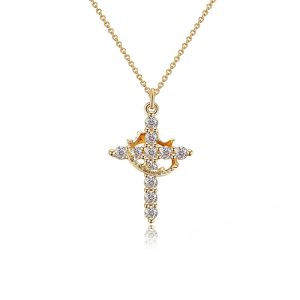
Cross necklaces built to last, in every material. :



Storage Tips That Actually Work
How you store your cross necklace matters just as much as how you clean it. Tossing it in a drawer with other jewelry guarantees scratches and tangled chains.
The Velvet Pouch Rule
Store each cross necklace individually in a soft pouch or a lined jewelry compartment. The pouch protects the surface from rubbing against harder metals, gemstones, or zippers. If you have multiple necklaces, keep them separated. A single tangle can kink a chain beyond repair, especially on delicate sterling silver links.
Keep your storage area cool and dry. Humidity accelerates tarnishing on silver and can weaken adhesive settings over time. A bedroom dresser is fine. A bathroom counter is not.
What to Avoid
A few common storage mistakes cause real damage:
- Plastic bags. They trap moisture against the metal and cause tarnish to build faster, not slower.
- Rubber bands or elastic ties. Rubber contains sulfur compounds that accelerate silver tarnishing.
- Bathroom storage. Steam from showers creates the exact humid environment that tarnish thrives in.
- Stacking multiple necklaces. Chains scratch each other, and clasps catch on adjacent links, creating weak points.

When to Seek Professional Cleaning
Most cross necklaces never need professional cleaning if you maintain them regularly. But certain situations call for expert help:
- Heavy tarnish that does not respond to polishing. If a silver polishing cloth cannot restore the shine, a jeweler has ultrasonic and steam cleaning equipment that can.
- Plating wear on gold pieces. A jeweler can replate the gold layer, restoring the original finish.
- Clasp issues. If your clasp feels loose or does not click securely, have a jeweler inspect and tighten it before you lose the necklace.
- Engraving or detail restoration. Intricate cross designs with carved details can accumulate grime in grooves that a cloth cannot reach.
Related Cross Guides
Want to learn more about cross jewelry? These guides cover the history, meaning, and buying advice you need to make informed choices.
- 12 Types of Crosses in Christianity: History, Meaning and Jewelry Guide
- Crucifix vs Cross: What’s the Difference and Which One Should You Wear?
- Gold vs Silver Cross Necklace: Which One Should You Pick?
- Sterling Silver vs Stainless Steel Cross Jewelry: Pros, Cons and Prices
- How to Clean Silver Jewelry at Home Without Ruining It (5 Methods)
- Crystia Jewelry Care Guide