

How to Clean Gold Plated Jewelry Without Damaging the Finish
TL;DR – Gold plated jewelry loses its shine over time because the thin gold layer reacts with oils, moisture, and air. The safest way to clean it is with warm water, a drop of mild soap, and a soft cloth. Avoid harsh chemicals, baking soda directly on the surface, and ultrasonic cleaners. With proper care, your gold plated cross necklace or bracelet can stay bright for years.
Gold plated jewelry is one of the most popular choices for cross necklaces, bracelets, and pendants. It gives you the warm glow of gold at a fraction of the cost. But here is the catch: that beautiful gold layer is thin, and it does not behave like solid gold when it comes to cleaning. Use the wrong method, and you can strip the plating entirely, leaving behind a dull base metal that looks nothing like what you bought. This guide walks you through three safe cleaning methods, explains what to avoid, and covers how to maintain that bright finish long term.
Why Gold Plating Tarnishes (and Why It Is Not Your Fault)
Gold plating is a process where a thin layer of gold, usually between 0.5 and 2.5 microns, is electroplated onto a base metal like sterling silver, stainless steel, or brass. The gold layer is real gold, but it is extremely thin. That thinness is what makes gold plated jewelry affordable, but it also means the surface is vulnerable.
Every time you wear your gold plated cross necklace, it comes into contact with your skin’s natural oils, perfume, sweat, and the air around you. Over time, these reactions cause the gold layer to dull, discolor, or develop a dark film. This is not a defect. It is a natural chemical process that happens to all gold plated jewelry, regardless of quality.
The good news is that most of this tarnishing is surface level and reversible. The gold is still there. It just needs the right cleaning approach to bring back its shine without wearing through the plating.
What You Need Before You Start
You do not need a professional jewelry cleaning kit or expensive solutions. In fact, the simpler the supplies, the safer they are for gold plating. Here is what you should gather:
- A bowl of warm (not hot) water
- A few drops of mild dish soap or baby shampoo
- A soft, lint-free microfiber cloth or a jewelry polishing cloth
- Cotton swabs for detailed areas
- A soft-bristle toothbrush (optional, for textured surfaces only)
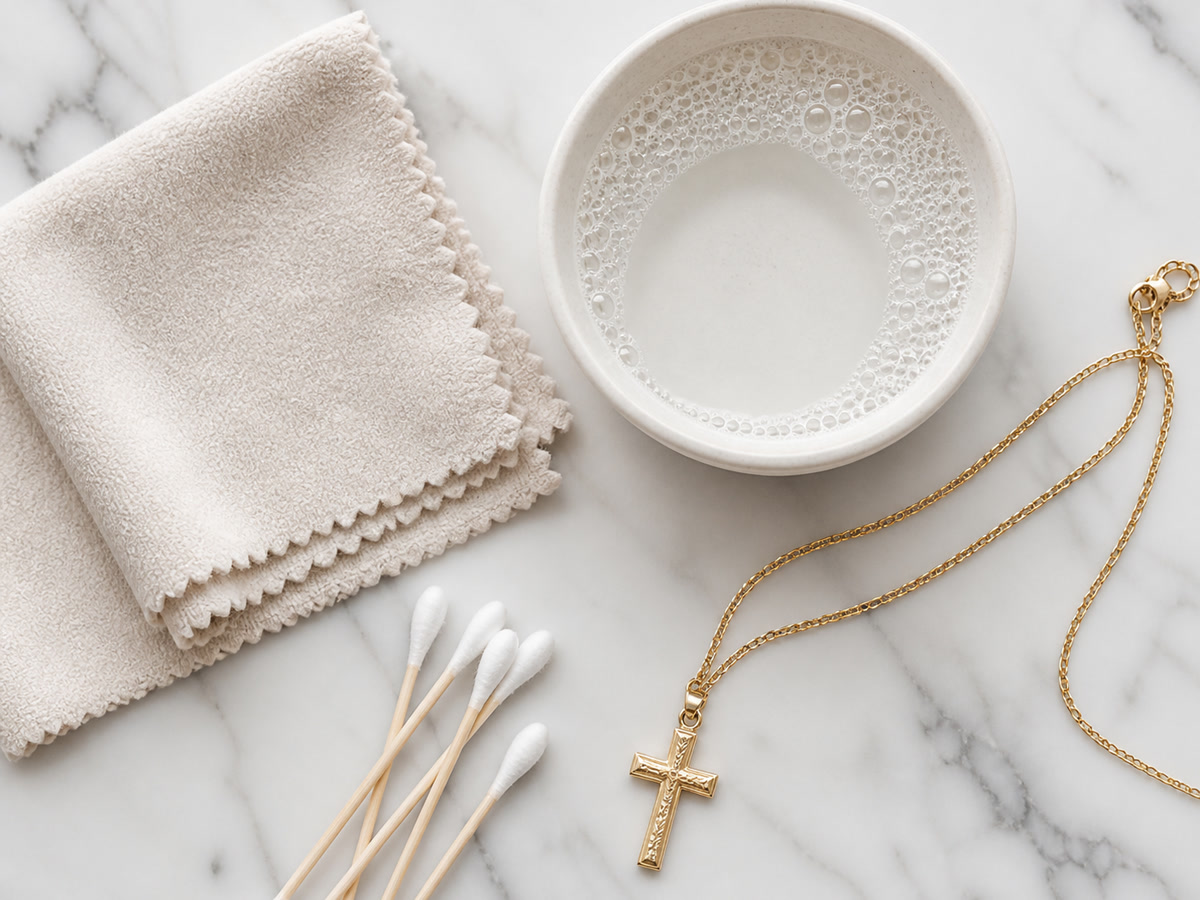
Everything you need to clean gold plated jewelry at home: warm water, mild soap, microfiber cloth, and cotton swabs.
Method 1: The Warm Water and Mild Soap Method
This is the safest, most recommended method for cleaning gold plated jewelry. It works for daily tarnish, light discoloration, and general dullness.
Step-by-Step
Step 1: Fill a small bowl with warm water. The water should be comfortable to touch, not hot. Hot water can weaken the bond between the gold layer and the base metal.
Step 2: Add two or three drops of mild dish soap or baby shampoo. Stir gently to create a light, soapy solution. Avoid anything with added moisturizers, exfoliants, or strong fragrances.
Step 3: Place your gold plated jewelry in the bowl and let it soak for two to three minutes. This loosens dirt and oils without requiring scrubbing.
Step 4: Remove the piece and gently wipe it with a soft microfiber cloth. For chain links or textured areas, use a cotton swab dipped in the soapy water to reach crevices.
Step 5: Rinse briefly under lukewarm running water to remove soap residue. Do not let the water pressure hit the jewelry directly, as it can push moisture into chain links.
Step 6: Pat dry immediately with a clean, lint-free cloth. Never let gold plated jewelry air dry, as water spots can form and dull the finish.

Gently wiping a gold plated cross necklace with a microfiber cloth restores its shine without damaging the plating.
Method 2: The Baking Soda Paste Method (For Stubborn Tarnish)
If your gold plated jewelry has heavier tarnish that the soap method did not fully remove, a gentle baking soda paste can help. Use this method sparingly, as baking soda is mildly abrasive and can wear down the plating if used too often.
Step-by-Step
Step 1: Mix one tablespoon of baking soda with two teaspoons of water to form a thick paste. The consistency should be like toothpaste, not runny.
Step 2: Dip a soft cloth or cotton swab into the paste and apply it to the tarnished areas of your jewelry. Do not rub aggressively. Use gentle, circular motions.
Step 3: Let the paste sit for one to two minutes maximum. Leaving it longer increases the risk of the baking soda scratching the gold layer.
Step 4: Rinse the piece thoroughly under lukewarm water to remove all traces of baking soda. Any residue left behind can continue to abrasively wear at the plating.
Step 5: Pat dry immediately with a microfiber cloth. Inspect the piece. If tarnish remains, repeat once more, but do not exceed two applications in a single session.
Method 3: The Baby Oil Method (For Restoring Shine)
Baby oil is a surprisingly effective way to restore the luster of gold plated jewelry. It fills in micro-scratches on the surface and creates a thin protective barrier that slows future tarnishing.
Step-by-Step
Step 1: Make sure your jewelry is already clean and dry. This method works best as a finishing step after the soap method, not as a standalone cleaner.
Step 2: Put one or two drops of baby oil on a soft microfiber cloth. You need very little, just enough to barely dampen the cloth.
Step 3: Gently rub the gold plated surface in one direction. Avoid back-and-forth scrubbing, which can create micro-abrasions. Work in smooth, even strokes.
Step 4: Buff with a clean section of the cloth to remove excess oil. The jewelry should feel smooth, not greasy.
Step 5: Let the piece rest for five minutes before wearing. This allows the oil to settle into the surface and form that protective layer.
What NOT to Do: Common Mistakes That Strip Gold Plating
Knowing what to avoid is just as important as knowing the right methods. These are the most common mistakes people make when cleaning gold plated jewelry:
Do not use toothpaste. This is one of the most widespread myths about jewelry cleaning. Toothpaste contains silica particles that act as an abrasive. On solid gold, they cause micro-scratches. On gold plated jewelry, they can strip the plating right off.
Do not use vinegar or lemon juice. These acids are effective on solid gold and sterling silver, but they are too harsh for gold plating. The acid can dissolve the thin gold layer, especially with repeated use.
Do not use an ultrasonic cleaner. Those small ultrasonic machines that vibrate dirt loose? They are great for solid metals, but the vibrations can cause the gold plating to flake or peel, particularly on pieces with intricate designs.
Do not use ammonia-based cleaners. Glass cleaners, window sprays, and many household cleaners contain ammonia. This chemical attacks gold plating aggressively and can cause permanent discoloration in a single exposure.
Do not scrub with rough materials. Paper towels, abrasive sponges, and stiff-bristle brushes can scratch the gold surface. Always use soft, lint-free materials.
How to Keep Gold Plated Jewelry Shining Longer
Cleaning is only half the equation. The way you store and wear your gold plated pieces determines how often you need to clean them in the first place.
Apply Perfume and Lotion Before Jewelry
Chemicals in perfume, sunscreen, and body lotion are among the fastest accelerators of gold plating deterioration. Always put on your fragrance and skincare products first, let them dry for a minute, then add your jewelry. This simple habit can extend the life of your plating significantly.
Remove Before Swimming, Showering, or Exercising
Chlorine in pools, salt in ocean water, and minerals in tap water all react with gold plating. Sweat contains salts and acids that speed up tarnishing. Take your gold plated cross necklace or bracelet off before any activity that exposes it to water or heavy perspiration.
Store Properly
Keep gold plated jewelry in a soft pouch or a lined jewelry box, away from direct sunlight and humidity. If you have multiple pieces, store them separately to prevent scratching. Air-tight bags with anti-tarnish strips are an affordable way to protect pieces you do not wear daily.
Wipe After Each Wear
A quick 30-second wipe with a soft cloth after taking off your jewelry removes the oils and sweat that accumulated during the day. This single habit prevents more tarnish buildup than any cleaning session.

A well-maintained gold plated cross necklace keeps its warm glow and stays looking like new for years.
When to Consider Re-Plating
No matter how careful you are, gold plating does eventually wear through. The typical lifespan of gold plated jewelry is one to two years with regular daily wear, longer with occasional use and proper care. Here are the signs that it might be time to re-plate or replace:
- The base metal is visible in high-friction areas like the back of a pendant or the clasp of a chain
- The color has shifted from warm gold to a patchy, uneven tone
- Cleaning no longer restores the shine, even after the baking soda method
- The surface feels rough or textured where it used to be smooth
Re-plating is a service offered by most jewelers and typically costs between $30 and $80 depending on the piece and the thickness of the new gold layer. For some jewelry, especially at the lower price points, it may be more economical to purchase a new piece rather than re-plate.
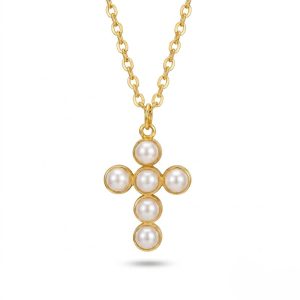
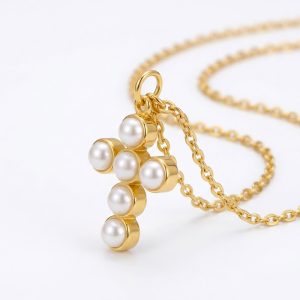
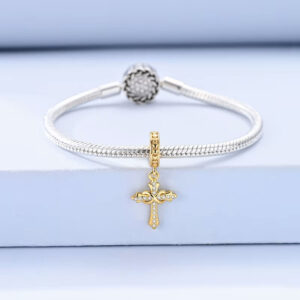
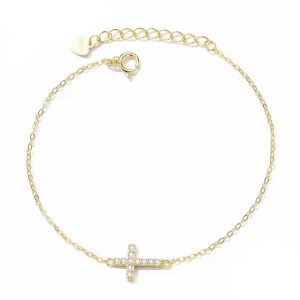
Explore our gold plated cross collection:



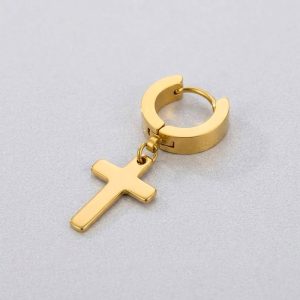
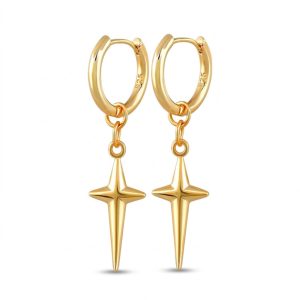
Gold plated earrings and bracelets to match:


Related Cross Guides
Want to learn more about cross jewelry? These guides cover everything from the history of different cross types to care tips for every material.