Ankh Cross Meaning: Egyptian Symbol or Christian Jewelry?
TL;DR – The ankh is an ancient Egyptian hieroglyph meaning “life,” long predating Christianity. Today it appears in jewelry as both a historical-cultural symbol and, for some, a spiritual emblem. It is not a traditional Christian cross, though some modern faith communities have adopted it. When choosing ankh jewelry, it comes down to what the symbol means to you personally.
The ankh is one of the most recognizable symbols in the world, instantly conjuring images of ancient Egypt, pharaohs, and mystery. Yet in modern jewelry stores and online shops, it sits right alongside Latin crosses, crucifixes, and Celtic knots, often grouped under “faith jewelry.” This creates a question that comes up more often than you might expect: is the ankh a Christian symbol? Does it belong in a faith-based jewelry collection? And if you wear one, what are you actually saying?
Where the Ankh Comes From
The ankh is an ancient Egyptian hieroglyphic symbol that represents “life.” It appears in Egyptian art and writing dating back to the Early Dynastic Period, roughly 3000 BCE, making it one of the oldest symbols still in use in jewelry today. The symbol consists of a T-shape topped with a loop, sometimes described as a cross with a handle or a mirror shape. Its exact origin is debated among Egyptologists, but its meaning in Egyptian culture is well established.
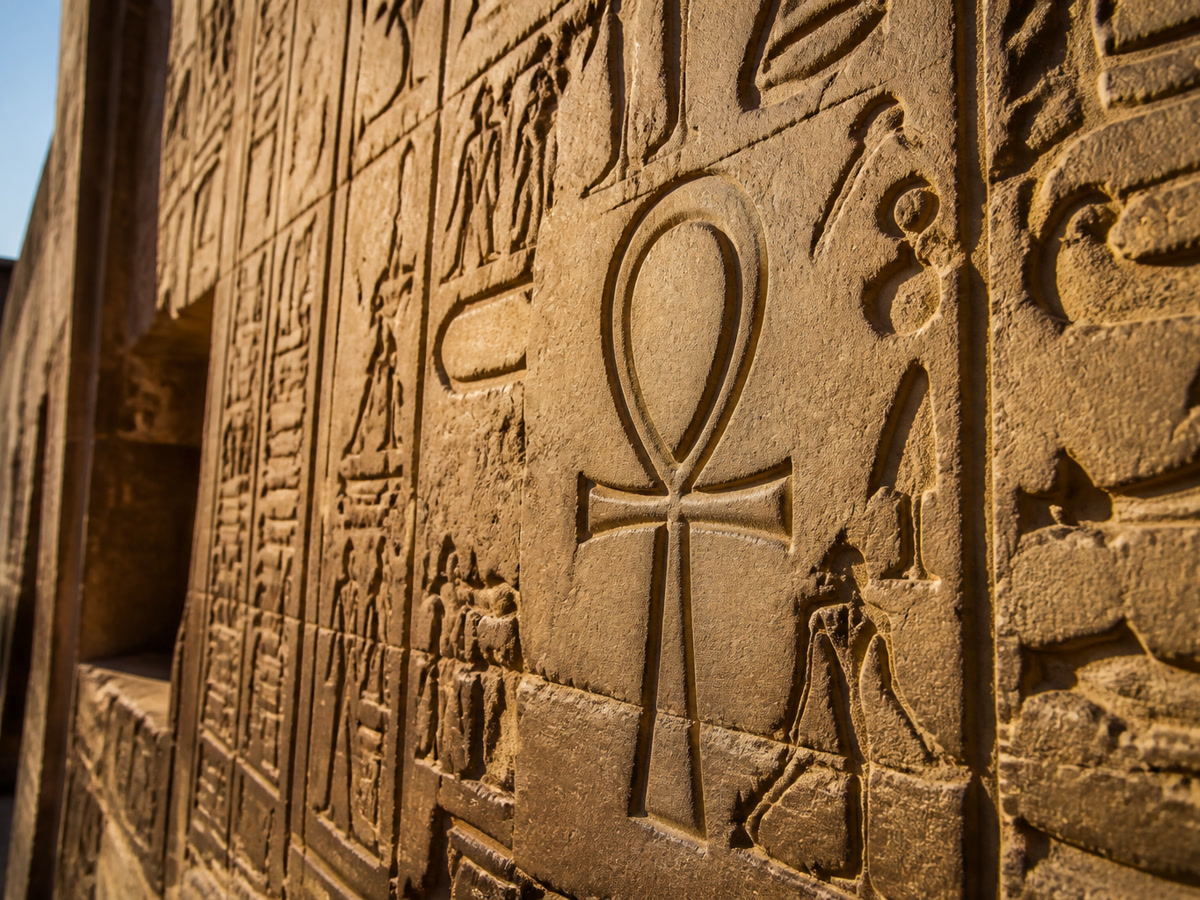
In ancient Egypt, the ankh was everywhere. Pharaohs held it in ritual scenes. Gods and goddesses, particularly Isis and Osiris, are depicted offering it to the living or to the dead. It appeared on temple walls, sarcophagi, jewelry, and everyday objects. The symbol represented not just biological life but eternal life, divine breath, and the sustaining power of the gods. It was, in many ways, the Egyptian equivalent of a prayer for immortality.
The Shape and Its Possible Origins
Several theories attempt to explain the ankh’s distinctive shape. Some scholars suggest it represents a sandal strap, which when viewed from the side, forms a loop above a T-shape. Others propose it mirrors the human spine and head, symbolizing the union of body and spirit. A third theory connects it to the concept of the sunrise, with the loop representing the sun on the horizon and the T-shape the path of light. None of these theories is universally accepted, and the truth may involve elements of all three.
Ankh in Everyday Egyptian Life
The ankh was not reserved for royalty or priests alone. Archaeologists have found ankh amulets in modest tombs, ankh-shaped mirrors (mirrors themselves symbolizing life and truth in Egyptian culture), and ankh motifs on household items. Wearing an ankh in ancient Egypt was both a fashion statement and a spiritual declaration, much like wearing a cross necklace today.
What makes the ankh especially interesting is that it never truly disappeared. Even after Christianity became the dominant religion in Egypt, the Coptic Church adopted the ankh-like Coptic cross as one of its symbols. This is where the story gets more complicated, and more relevant for anyone choosing between ankh and cross jewelry.
The Ankh and Christianity: A Complex Relationship
The question of whether the ankh is a Christian symbol does not have a simple yes or no answer. It depends on who you ask, which tradition you follow, and how you interpret history.
The Coptic Connection
When Christianity spread through Egypt in the first few centuries CE, Egyptian Christians (known as Copts) needed to express their new faith using symbols that felt meaningful in their cultural context. The ankh, already deeply embedded in Egyptian life, provided a natural template. The Coptic ankh cross (also called the Coptic cross or Coptic life cross) retains the loop at the top of the ankh but adds a more structured, cross-like form. It appears in churches, on icons, and in jewelry throughout Egypt and among Coptic diaspora communities worldwide.
This Coptic tradition gives the ankh a legitimate connection to Christianity, but it is specific to one branch of the faith and should not be confused with the Latin cross or crucifix used in Catholic and Protestant traditions. The Orthodox tradition, which includes the Coptic church, has its own rich history, explored in our guide to the Orthodox cross.
Other Spiritual Interpretations
Beyond Coptic Christianity, the ankh has been adopted by various spiritual and cultural movements. In the Afrocentric movement, it represents a connection to African heritage and ancient wisdom. In New Age spirituality, it is associated with metaphysical concepts like the union of male and female energies, the balance of physical and spiritual life. Some practitioners of traditional African religions view it as a symbol of ancestral power.
None of these interpretations make the ankh a “Christian cross” in the traditional sense, but they do make it a symbol with deep spiritual resonance for many people.
Ankh vs. Christian Cross: What Is the Real Difference?
Understanding the distinction between the ankh and the many Christian cross designs helps when choosing jewelry that helps when choosing jewelry that aligns with your values and beliefs. For the full family of designs, see our guide to 12 types of crosses in Christianity.
Historical Timeline
The ankh predates Christianity by roughly 3,000 years. The Christian cross, as a widely recognized symbol of the faith, gained prominence only after Emperor Constantine’s conversion in the 4th century CE. Before that, early Christians used other symbols like the fish (ichthys) and the chi-rho monogram. The ankh was already ancient history when the first Christians began wearing cross-shaped jewelry.
Symbolic Meaning
The ankh represents life in a broad, universal sense: physical existence, spiritual vitality, divine breath, and the continuation of the soul. The Christian cross represents a specific theological narrative: the crucifixion and resurrection of Jesus Christ, salvation, and redemption. While both deal with life and transcendence, they come from fundamentally different worldviews.
Visual Design
The ankh is immediately distinguishable from a standard Christian cross by its loop at the top. The Latin cross is a vertical bar with a shorter horizontal bar near the top. The crucifix adds the body of Christ. The Greek cross has four equal arms. The ankh’s loop sets it apart in any form, and this visual distinction carries meaning. The loop has been interpreted as representing the eternal nature of life, the union of opposites, or the sun on the horizon. The Latin cross, the most common shape, is covered in detail in our Latin cross guide.
For a deeper look at the differences between Christian cross types, check our guide on Crucifix vs. Cross: What Is the Difference and Which One Should You Wear?
Why the Ankh Is Trending in Modern Jewelry
The ankh has seen a major resurgence in popular culture and fashion over the past two decades, and it shows no sign of slowing down. Several factors drive this trend.
Celebrity and Pop Culture Influence
From musicians to actors, the ankh has been worn by public figures who want to signal cultural identity, spiritual openness, or simply a love of bold design. The symbol appears in films, music videos, and on red carpets, bringing it to a global audience that may not know its Egyptian origins but is drawn to its striking visual form.
The Appeal of Ancient Symbols
In an era of mass production and fast fashion, there is a growing appetite for symbols that carry thousands of years of meaning. The ankh, with its deep roots in one of history’s most fascinating civilizations, offers something that a trendy logo simply cannot. It connects the wearer to a tradition that spans millennia and cultures.
Gender-Neutral Design
The ankh’s symmetrical shape and clean lines make it a naturally versatile design element. It works equally well as a delicate pendant, a bold statement piece, a ring, or an earring. Unlike some cross designs that skew masculine or feminine depending on their styling, the ankh adapts to any aesthetic.
How to Choose Ankh Jewelry That Feels Right
Whether you are drawn to the ankh for its history, its spirituality, or its design, a few practical considerations can help you find the right piece.
Know What You Want to Say
Jewelry communicates something, even when we do not intend it to. An ankh pendant worn with awareness of its Egyptian origins tells a different story than one worn as a generic spiritual symbol. Neither is wrong, but knowing your own intention helps you wear the piece with confidence. If faith is part of the reason you wear jewelry, consider how the ankh fits within your personal belief system. For many, it represents a broader spirituality rather than a specific denomination.
Material and Craftsmanship Matter
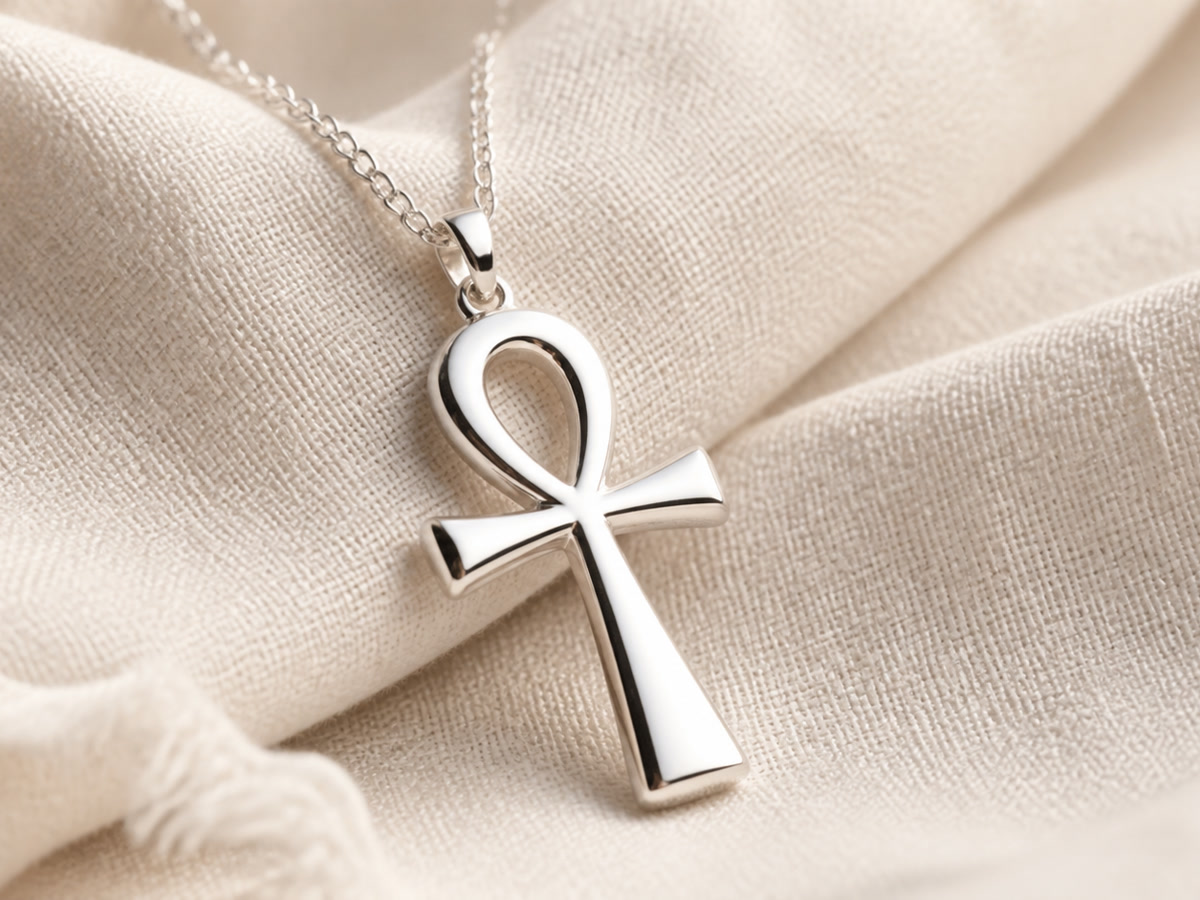
An ankh pendant in sterling silver has a different presence than one in gold-plated stainless steel. The material affects weight, color, longevity, and price. Silver tarnishes over time (which can actually enhance the ancient look of an ankh design), while stainless steel stays bright and requires minimal maintenance. Gold-plated pieces offer the warmth of gold at a more accessible price point, though the plating may wear over time with daily use.
For guidance on choosing between materials, see our comparison of Sterling Silver vs. Stainless Steel Cross Jewelry: Pros, Cons & Prices. And once you own a silver ankh, our guide to cleaning silver jewelry will keep it bright for years.
Chain Length and Pendant Size
An ankh pendant works at virtually any scale. A small, dainty ankh on a thin chain sits close to the collarbone and reads as understated and personal. A larger, bolder ankh on a heavier chain makes a more visible statement. Consider where you want the pendant to rest, how often you plan to wear it, and what outfits you will pair it with.
Ankh Cross Meaning in Different Contexts
The ankh means different things depending on who wears it and why. Here is a quick overview of the most common interpretations.
As a Cultural Heritage Symbol
For many people of African descent, the ankh represents a connection to pre-colonial African civilizations and a reclamation of cultural identity. Wearing an ankh in this context is a statement of pride, heritage, and continuity with one of the world’s oldest sophisticated cultures.
As a Spiritual Emblem
In various spiritual traditions, the ankh represents the balance between the physical and the spiritual, the union of masculine and feminine energies, or the concept of eternal life. It is used in meditation practices, energy work, and personal rituals focused on vitality and renewal.
As a Fashion Statement
Many people wear ankh jewelry simply because it looks striking. The symbol’s bold, geometric form translates beautifully into pendant designs, and it carries an air of mystery and sophistication that few other symbols can match. There is nothing wrong with appreciating a symbol’s aesthetic value, and the ankh’s beauty is part of why it has endured for five millennia.
As a Christian Symbol (Coptic Tradition)
Within the Coptic Christian tradition, the ankh cross holds genuine religious significance. It represents the victory of life over death, a core tenet of Christian faith expressed through an Egyptian lens. For Coptic Christians, wearing an ankh is both a spiritual practice and a cultural tradition that predates most other forms of Christian jewelry.
Related Cross Guides
The ankh is one member of a large and fascinating family of cross designs. Explore the other types to find the symbol that speaks to you.
- 12 Types of Crosses in Christianity: The Complete Guide
- The Latin Cross: History, Symbolism & Meaning
- The Greek Cross: History, Symbolism & Meaning
- The Orthodox Cross: History, Symbolism & Meaning
- Crucifix vs Cross: What’s the Difference?
- Celtic Cross: The Ring, the Knots, and a Thousand Years of Meaning (coming soon)