Perfume and Your Cross: What Actually Damages the Metal
TL;DR – Perfume does not melt silver, gold or steel, but the alcohol dulls plating, and the oil residue left on the metal traps dust and moisture that speed up tarnish. The fix is a habit, not a ban: scent first, cross last, then a dry wipe at night. Solid 925 sterling, 316L stainless and karat gold tolerate daily sprays well. Plated pieces are the ones that pay for it.
You spray, you dress, you grab your keys, and you are gone. Somewhere in those ninety seconds a small cross takes a hit nobody warned you about. The question people actually type into a search bar is blunt: does perfume ruin jewelry? The honest answer is more interesting than a yes or no, because the damage is rarely the dramatic corrosion people fear. It is slow, cumulative, and it targets specific materials while leaving others untouched.
This guide breaks down what fragrance really does to metal, ranks the other daily products that do more harm than perfume, and gives you a routine you can keep in your head. If you would rather skip straight to a piece built for real life, browse our cross necklace collection and come back to the care notes after.
What Perfume Actually Does to Metal
A modern eau de parfum is roughly 70 to 85 percent ethanol, a little water, and a small load of aromatic molecules carried in oils. Each of those three parts behaves differently once it lands on a cross resting against your collarbone.
Alcohol Is a Solvent, Not a Metal Dissolver
Ethanol evaporates in seconds and it cannot dissolve silver, gold or surgical steel. What it can do is dissolve the things sitting on top of them: the thin anti-tarnish film some makers apply, the lacquer on a gold plated piece, the waxes left by polishing compound. Every spray removes a microscopic slice of that protection. On a solid sterling cross the effect is negligible. On a plated item sprayed twice a day for a year, the difference shows up as a duller surface at the highest point of the design, usually the top arm and the bail.
The Residue Is the Real Problem
Once the alcohol is gone, the fragrant oils, fixatives and any colorants stay behind as a thin film. That film is slightly sticky, so it collects dust, fabric fibers and skin cells. It also holds moisture against the metal far longer than bare skin would. Silver tarnishes when it meets sulfur compounds in the air, and a damp organic film sitting on the surface slows evaporation and keeps those compounds in contact with the metal. Tarnish then appears first in the recessed areas of the design, where the film pools and where a cloth cannot easily reach.
There is a second, quieter effect. Fragrance ingredients oxidize. Citrus terpenes and some aldehydes turn yellow or brown as they break down in air, and that color transfers onto the metal and into chain links. It looks like dirt that will not come off with plain water, because it is not dirt. It is oxidized fragrance sitting in microscopic scratches.
How Each Metal Holds Up to a Daily Spritz
The same spray treats four common metals in four different ways. Knowing which one you own tells you how much attention the piece really needs.
925 Sterling Silver
Sterling is 92.5 percent silver and 7.5 percent other metals, usually copper. The silver resists alcohol without complaint. The copper fraction is the reason the alloy tarnishes at all, and it is also why a greasy film matters: hold moisture and sulfur against that surface and the darkening arrives faster. A sterling cross worn daily with perfume will need a wipe every few days and a proper cleaning every few weeks. It will never be damaged beyond repair by fragrance, it will simply look tired sooner if you ignore it.
Gold Plated and PVD Coated Pieces
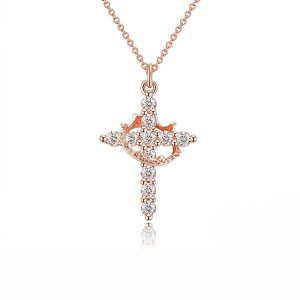
Here the metal underneath is fine. The layer on top is measured in fractions of a micron, and that is what fragrance attacks, not by eating it but by softening the bond with repeated solvent contact and then having it rubbed away by clothing and fingers. The pattern is predictable: the plating goes first on the edges and the bail, where friction already lives. A plated cross worn with perfume directly on it may show a paler halo at the high points within a year or two. The same cross sprayed before dressing and wiped at night usually keeps its color far longer.
316L Stainless Steel
Surgical steel is the low-maintenance option. Ethanol, fragrance oils and sunscreen do not react with it, and it does not tarnish in the usual sense. Two caveats: a black or gold PVD finish on top behaves like plating and can dull, and steel holds onto oily residue stubbornly because its surface is less polished than fine silver. A drop of soap and warm water once a week keeps it looking new.
Solid Karat Gold
Fourteen and eighteen karat gold are effectively inert to perfume. Body chemistry and chlorine are bigger concerns than fragrance. Solid gold needs almost nothing beyond a soft cloth, which is part of why it costs what it costs.
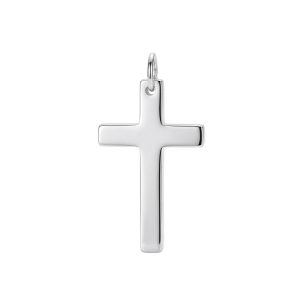
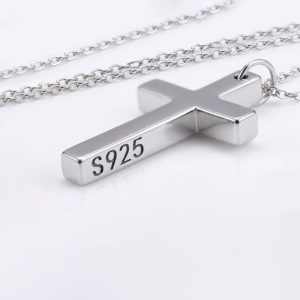
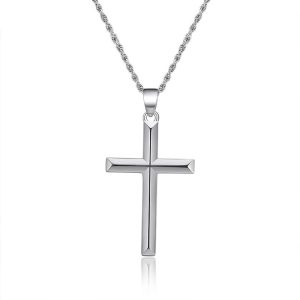
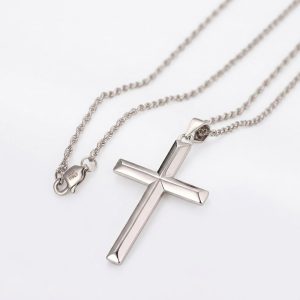
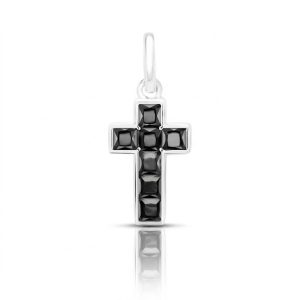
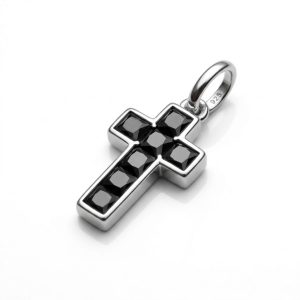
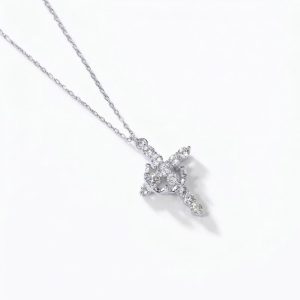
Solid 925 sterling crosses that take a daily spritz without drama :


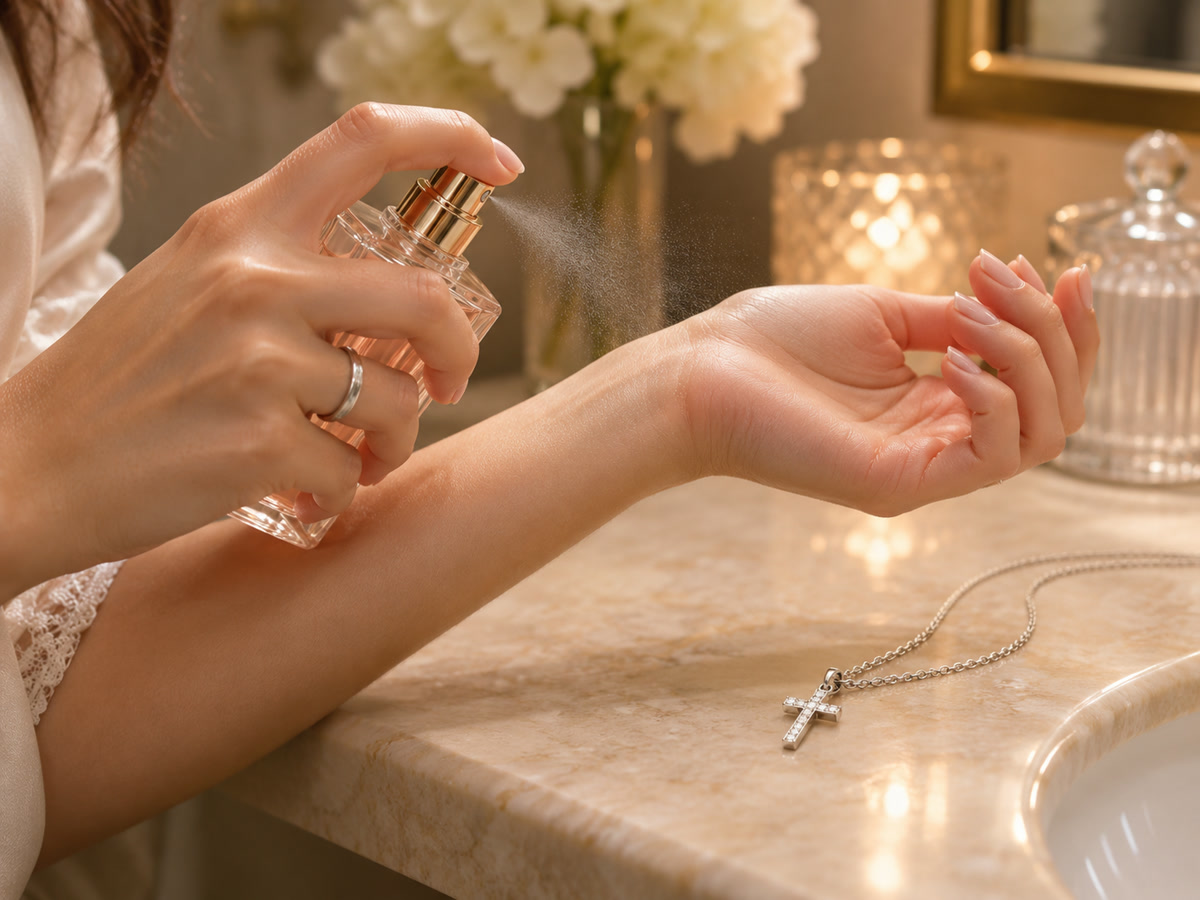
The timing of the spray matters more than the brand of the spray. Fragrance needs a few minutes to dry before metal touches skin.
Ranking the Daily Culprits, Worst First
Perfume takes the blame in most conversations. It is not the worst offender sitting on your dresser. Judged on real damage to a worn cross, the order looks like this.
1. Sunscreen
Mineral filters leave a chalky paste that packs into engraving and stone settings, and chemical filters form an oily film that holds salt and chlorine against the metal. Applied at the beach and never rinsed, sunscreen does more visible harm in one afternoon than perfume does in a month. Rinse the piece with fresh water at the end of the day, dry it fully, and the problem disappears.
2. Hairspray and Styling Products
Hairspray is a polymer dissolved in solvent. It dries into a rigid film that bonds to metal, and that film is genuinely difficult to remove once it sets. It also traps dust and keeps it pressed against the surface. If you spray your hair while wearing a cross, the piece ends up coated in a shellac that no jewelry cloth will lift.
3. Body Lotion
Lotion is mostly water and emollients, so it is gentler than fragrance, but it is applied over a much larger area and often straight over the chest where the cross sits. Repeated layers feed the same sticky film problem. Let it absorb before putting the piece on.
4. Perfume
Alcohol plus aromatic oils plus a small application area. Middle of the list, and the easiest of the four to manage because the fix costs nothing but sequencing.
The Order That Saves the Metal
Nothing here requires a new product. It is a sequence, and once it becomes automatic you stop thinking about it.
Morning: Scent, Wait, Then Metal
Spray where you normally spray, then give it two or three minutes. Alcohol needs to flash off and the oils need to settle into skin. Put the cross on last, after the fragrance has dried and after any lotion has absorbed. If you spray your neck, spray the sides rather than the center, and keep the nozzle at least six inches away so the piece is not in the direct cone. A direct hit leaves a concentrated deposit exactly where the cross will sit all day.
Evening: A Dry Wipe Takes Eight Seconds
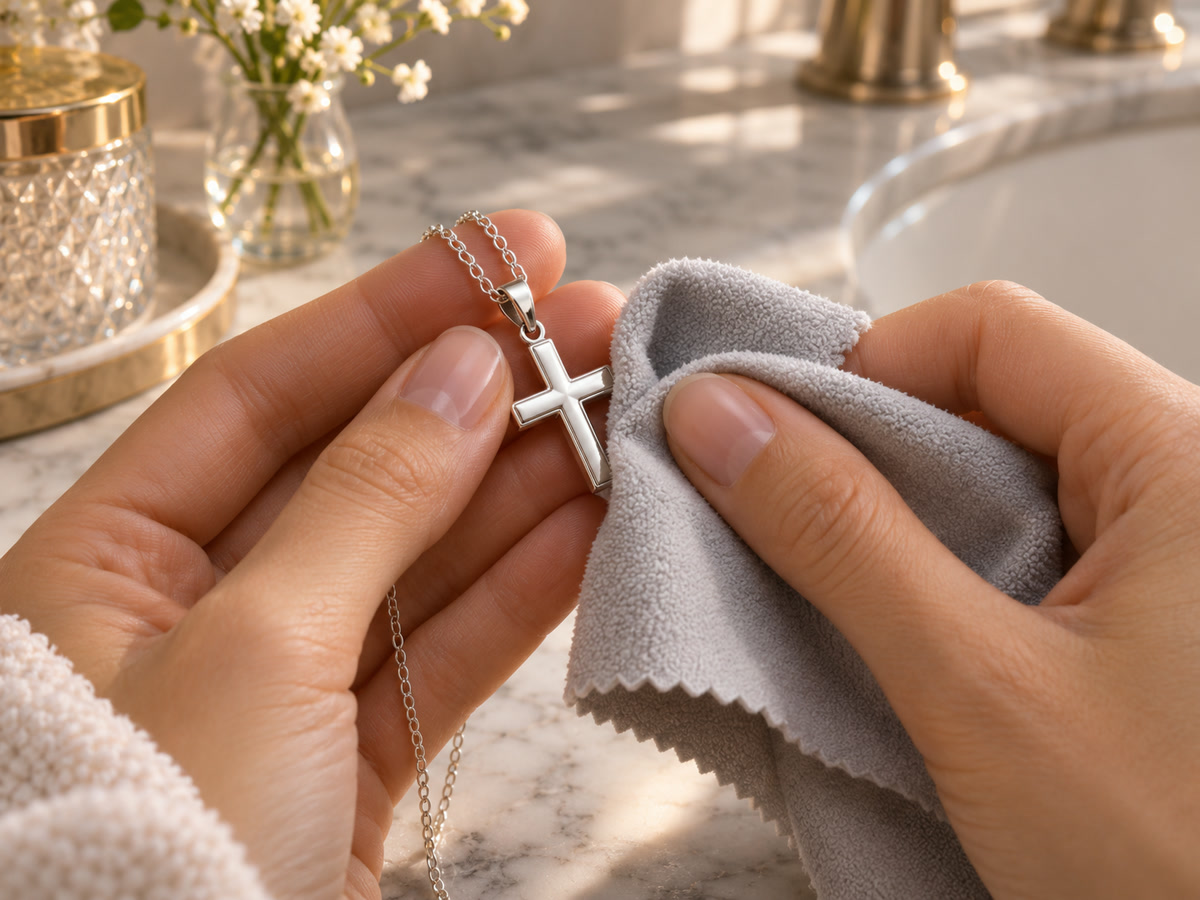
Before you take the piece off, or right after, run a dry soft cloth over the front and back. Dry is the key word: you are lifting oil, not dissolving it, and a damp cloth pushes residue into the crevices. A plain microfiber square works, and so does the inside of a cotton t-shirt in a pinch. This one gesture removes most of the film before it has a night to set.
Weekly: Ten Minutes of Warm Water
Once a week, warm water with one drop of mild dish soap, a soft brush for the chain links, a rinse, and a full dry on a towel before it goes anywhere near a box. Skip this step on plated pieces if the plating is already thinning, and skip it entirely on wood, pearl or opal inlays.
If Your Cross Already Looks Dull
Dullness from product residue is reversible in most cases. Fill a small bowl with warm water, add a drop of mild soap, and let the piece sit for a minute. Work a soft brush along the chain and into the recessed lines of the design, rinse under running water, then dry with a cloth and leave it on a towel for half an hour before storing.
For sterling silver that has gone dark rather than merely dull, a treated polishing cloth restores shine without water. Rub gently along the grain and stop when the cloth stops turning black. Do not use toothpaste or baking soda on a plated surface, since both are mildly abrasive and will take the plating off along with the film. If the piece is gold plated and already showing the base metal at the edges, no cleaning will bring the color back. That is wear, not dirt.
Where You Store It Matters as Much as What You Spray
Most bathrooms concentrate the two things silver hates: humidity and sulfur. A cross left on the shelf next to the perfume bottles sits in a cloud of both, and it will darken whether or not it ever touched fragrance. Store it in a closed pouch or a lined box, away from the shower, and if the bathroom is the only option, put a small anti-tarnish strip in the box and change it twice a year.
For travel, the pouch goes in the toiletry bag rather than the suitcase pocket, and the perfume bottle stays in a separate compartment. A leak in a bag turns a soft cloth into a solvent sponge that presses against the metal for hours.
If your routine keeps eating plated pieces, the simpler answer is a metal that does not need protecting. Brushed and polished steel crosses live through sunscreen, gym sessions and daily sprays without changing color.
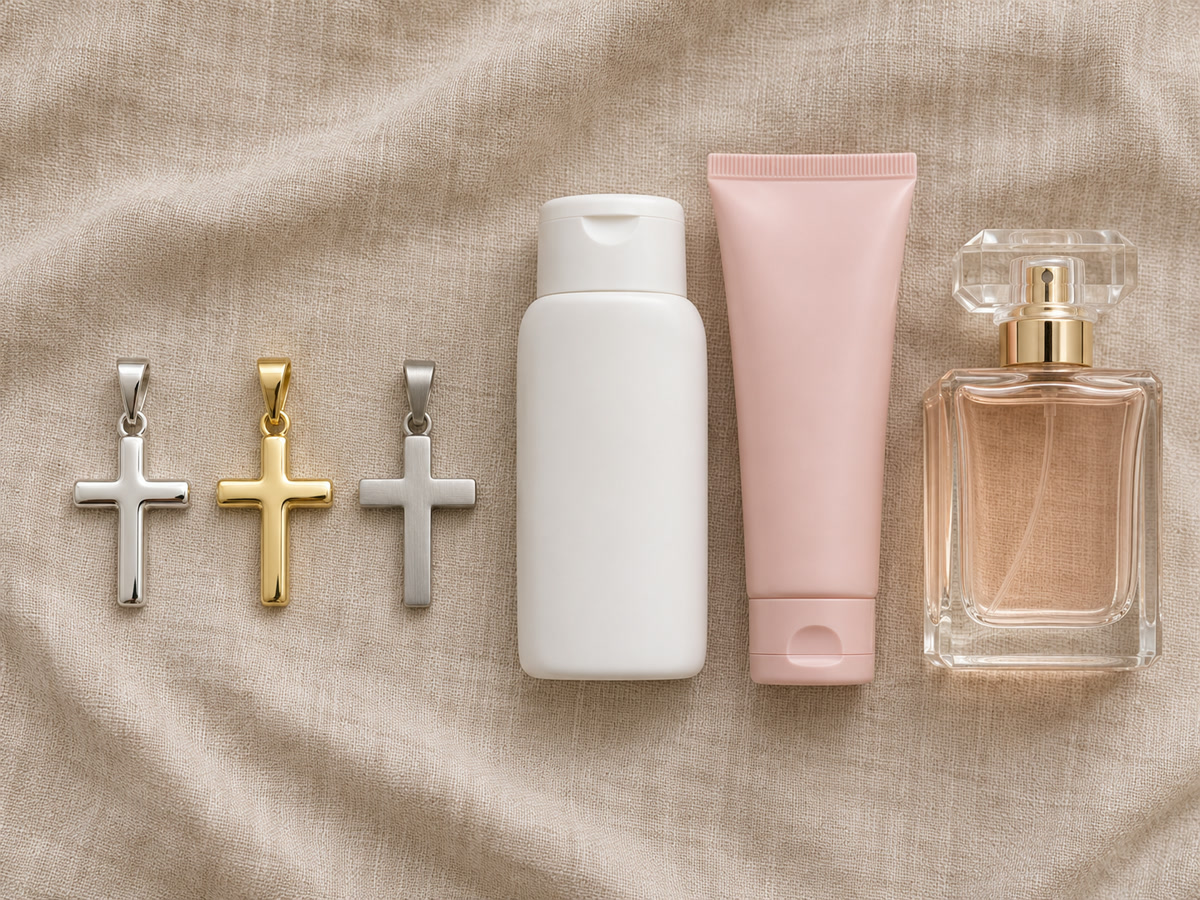
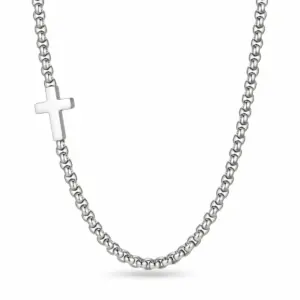
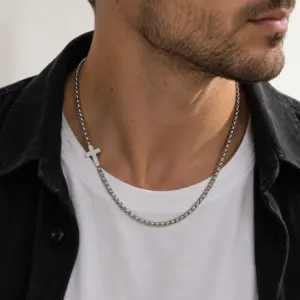
Stainless steel crosses that ignore perfume, sweat and salt water :


Related Cross Guides
If you are still choosing a piece or want the background behind the symbol, these guides cover the rest of the ground.
- 12 Types of Crosses in Christianity: History, Meaning and Jewelry Guide
- Gold vs Silver Cross: Which One Should You Pick?
- Sterling Silver vs Stainless Steel: Pros, Cons and Prices
- How to Clean Silver Jewelry at Home Without Ruining It: 5 Methods
- Crucifix vs Cross: What Is the Difference?
- Crystia Care: How to Keep Your Piece Looking New