Gold Cross Ring

Gold cross rings carry one of jewelry’s oldest symbolic pairings: the cross, Christianity’s defining emblem, rendered in the metal history has consistently associated with the divine. At Crystia, gold cross rings are available in 14K and 18K PVD-plated finishes over a 316L stainless steel core, spanning crucifix silhouettes, scripture-engraved bands, and pavé-set open designs for women and men.


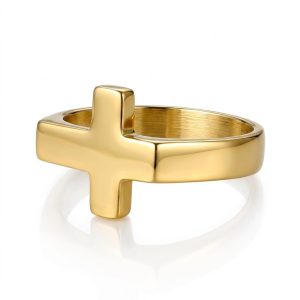
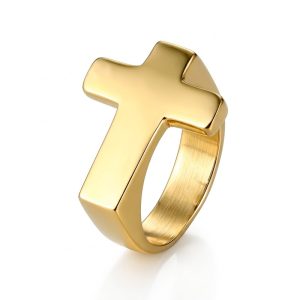
  • gold cross ring mensgold cross ring large for mens

    316L stainless steel, 14K gold PVD finish

    $34.95
  • gold cross ring with diamonds​Gold Cross Ring With Diamonds​ zircon cubic, 18k gold plated

    925 sterling silver, 18K gold-plated, CZ pavé

    $54.95

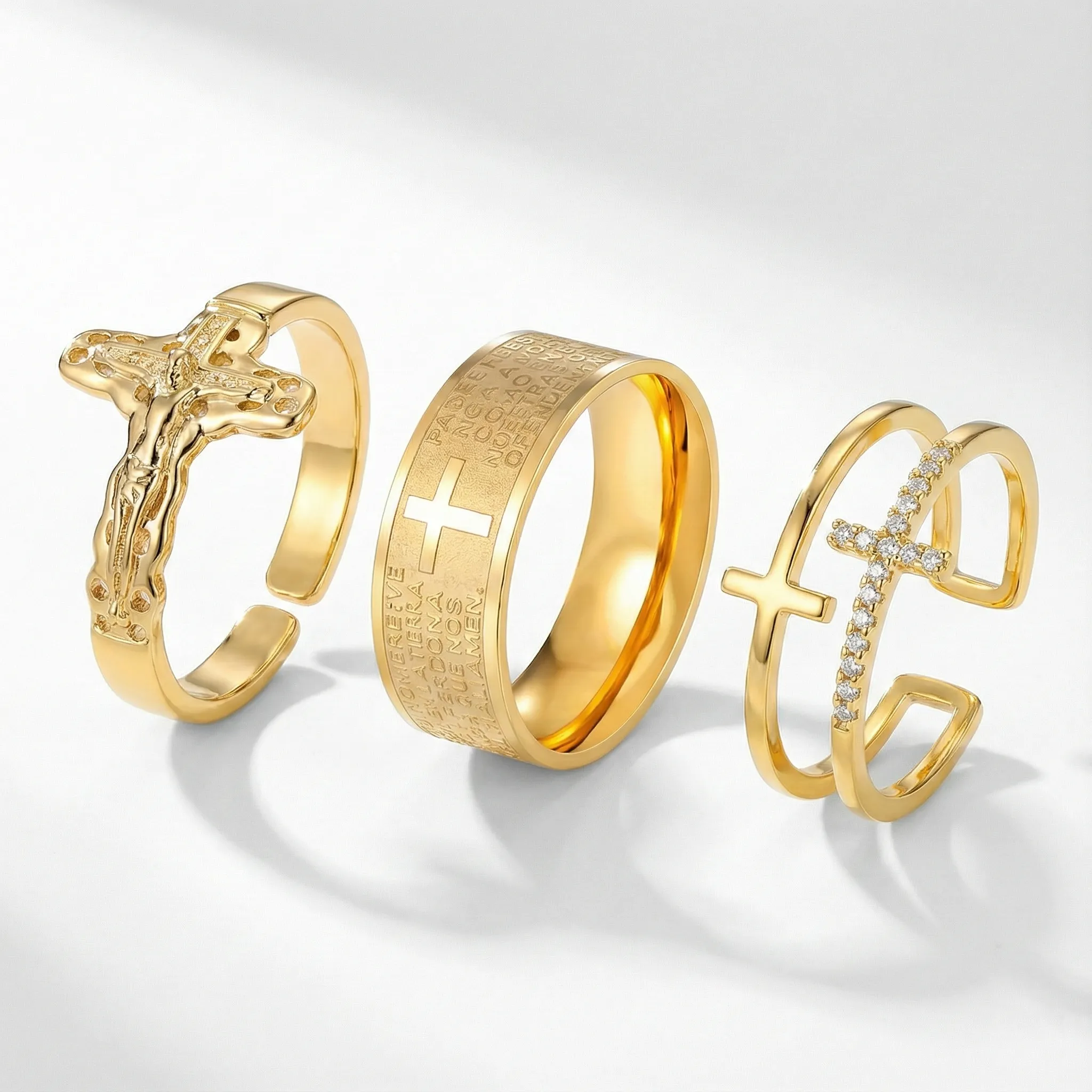
Trio of gold-plated women's cross rings: Detailed Jesus Crucifix adjustable ring, wide band engraved with the Lord's Prayer, and modern double-band crystal pave open ring.

Gold has functioned as the primary material for sacred objects across virtually every major civilization that worked with metal — from Egyptian funerary jewelry to Byzantine reliquaries to medieval European ecclesiastical rings. The specific pairing of gold with the cross symbol follows naturally from that tradition, and it has held continuous presence in American faith jewelry through every shift in fashion and material technology. Within the cross rings collection at Crystia, the gold category addresses both the devotional and the aesthetic dimensions of this pairing. For those whose jewelry wardrobe is built primarily in warm metal tones, a gold cross ring integrates naturally alongside existing pieces; cross rings for women in gold are particularly well represented in pavé and open-band formats, while the men’s and unisex category favors scripture-engraved and crucifix-detailed bands. Those who prefer cooler metal tones without abandoning the cross ring format will find the equivalent range in silver cross rings.

Why Choose a Gold Cross Ring?

The case for a gold cross ring rests on both historical legitimacy and practical material performance. Gold’s symbolic resonance in Christian tradition is unambiguous: gold appears throughout biblical texts as the material of the Ark, the Temple’s interior furnishings, and the crowns of Revelation, making it the most scripturally grounded choice for devotional jewelry. On the technical side, Crystia’s gold cross rings are finished using PVD (Physical Vapor Deposition) plating, a process that deposits 14K or 18K gold ions onto the 316L stainless steel base at a molecular level under vacuum conditions. This bonding method produces a plating layer two to five times thicker than standard electroplating, which translates directly into extended color retention and resistance to surface wear. The 316L stainless steel substrate is hypoallergenic — certified free of the nickel migration that causes contact dermatitis in a significant portion of jewelry wearers — meaning the gold finish sits over a base that is safe for continuous skin contact. Together, these two properties make a PVD gold cross ring a durable choice for daily wear in a way that gold-filled or flash-plated alternatives cannot match.

14K vs. 18K Gold Plating: Understanding the Difference

The karat designation in gold plating describes the gold purity of the deposited layer, not the ring itself. A 14K gold plating contains 58.3% pure gold alloyed with copper, silver, and zinc — the remaining metals improve hardness and adjust color tone toward a slightly warmer yellow. An 18K gold plating reaches 75% pure gold content, which produces the richer, deeper yellow associated with fine jewelry and European goldsmith traditions. In practical terms, 18K plating reads as more luxurious and closer to the color of solid gold pieces; 14K plating is marginally more durable under abrasion due to its harder alloy composition. Both karats are represented in Crystia’s gold cross ring collection, allowing for a choice based on aesthetic preference as much as technical specification. A crucifix ring calling for maximum visual warmth is typically better served by 18K plating; a flat band or scripture ring worn through physical daily activity may benefit from the 14K finish.

Cross Motifs That Define the Gold Category

The gold cross ring encompasses several distinct design languages within a single metal finish. The crucifix format — depicting the corpus of Christ on the cross — reaches its full visual impact in gold, where the warm metal renders the figure’s detail with the clarity the form requires. Scripture-engraved bands carry full prayer text around the circumference of the ring in laser-etched or die-struck characters, often including the Lord’s Prayer or Psalms 23; in gold finish, the text carries an authority that matte silver cannot replicate. Open-band silhouettes with a pavé-set cross face use gold to amplify the brilliance of the stones, as the warm metal beneath the CZ settings pushes the apparent sparkle of each stone. Each motif type occupies a different occasion register: the crucifix is explicitly devotional, the scripture band intimate and personal, and the pavé open-band functional as fashion jewelry that carries faith meaning without announcing it.

Gold Cross Rings as Gifts

The gold finish elevates a cross ring’s readability as a gift across most religious milestone occasions. Confirmation, First Communion, Baptism, and religious graduation gifts all have established conventions for jewelry, and a gold cross ring falls squarely within those conventions while remaining personal enough to feel considered. The open-band and adjustable formats in this collection remove the sizing problem that makes fixed-band ring gifting uncertain — a meaningful advantage for occasions where the recipient’s exact ring size is not known. For gifting to men, the scripture-engraved gold band signals occasion without the delicacy that might make a pavé design feel mismatched to the recipient.

The Crystia Quality Commitment

Every gold cross ring at Crystia is held to the same standards applied across the full collection: PVD plating thickness verified against wear resistance benchmarks, stone settings checked for security before shipping, and interior band surfaces finished smooth for continuous comfort against the skin. The artisans producing these pieces are selected for their precision in working at the intersection of technical plating processes and fine jewelry construction — the combination required to produce a gold cross ring that holds its color and finish through daily life rather than fading within weeks of purchase.

Keep Christ close, always.

Join Crystia for faith-inspired cross jewelry, new drops & exclusive US deals in your inbox.

Gold Cross Ring FAQ

Gold cross rings at Crystia use PVD gold plating applied over a 316L stainless steel base. The plating layer is genuine gold — either 14K (58.3% gold) or 18K (75% gold) — but the ring is not solid gold throughout. This construction delivers the visual appearance and warmth of gold at a price point accessible for daily-wear jewelry, while the PVD process ensures the plating bonds more durably than standard electroplated alternatives.

PVD-plated gold finishes on 316L stainless steel bases outperform standard electroplating by a significant margin, typically maintaining their color through one to three years of daily wear depending on exposure conditions. The primary factors that accelerate fading are contact with chlorinated water, perfume and cosmetics, and abrasive surfaces. Removing the ring before swimming, showering, and applying products, and storing it in a soft pouch when not worn, extends the plating life considerably.

Occasional brief water exposure will not immediately damage a PVD gold cross ring, but prolonged or repeated contact with water — particularly chlorinated pool water or salt water — accelerates the breakdown of the plating layer over time. Showering with the ring on regularly is not recommended. The 316L stainless steel base itself is highly water-resistant and will not rust or corrode, but the gold finish will degrade faster with sustained water exposure than with dry-wear habits.

The karat number refers to the gold purity of the plating layer. An 18K gold plating contains 75% pure gold and produces a richer, deeper yellow tone associated with fine jewelry. A 14K gold plating contains 58.3% pure gold with a harder alloy composition, making it marginally more resistant to surface abrasion. Both finishes are applied via the same PVD process. Choose 18K for the most saturated gold appearance; choose 14K if the ring will see heavier daily contact with hard surfaces.

Yes. The gold plating sits over a 316L stainless steel base, which is a medical-grade alloy certified hypoallergenic and free of nickel migration at levels that cause allergic reactions. This makes the ring safe for continuous wear even for people with documented nickel sensitivities. The gold plating layer itself does not introduce allergens, as both 14K and 18K gold alloys used in the plating process are formulated for skin-contact applications.

Warm water and a small amount of mild dish soap applied with a soft cloth or brush is the safest cleaning method for a PVD gold cross ring. Rinse thoroughly and dry immediately with a lint-free cloth — avoid air drying, which can leave mineral deposits from tap water. Never use abrasive polishing cloths, ultrasonic cleaners, or chemical jewelry cleaners on PVD-plated pieces, as these remove the plating layer or damage its surface. A gentle cleaning once every two to four weeks maintains the finish under regular wear conditions.

Explore Our Cross Jewelry Collections

Find the perfect piece to express your faith. From bold statement crosses to delicate everyday symbols, each collection is designed with premium materials and timeless craftsmanship.