Two Symbols, One Lineage
The pairing of pearls and the cross predates modern jewelry by centuries. In Byzantine and medieval European devotional art, pearls appeared consistently on sacred crosses and reliquaries, valued as much for their rarity as for their association with purity and divine grace in Christian iconography. The Book of Revelation describes the gates of the New Jerusalem as single pearls — a detail that embedded the gem deeply in Western Christian symbolism long before it became a staple of fine jewelry. Today’s pearl cross necklaces inherit that layered meaning without requiring the wearer to explain it.
Three Forms, Three Statements
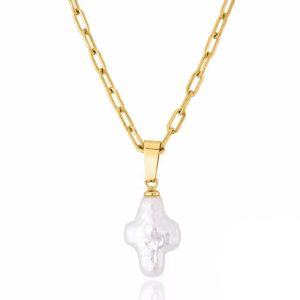
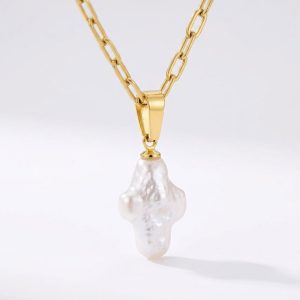
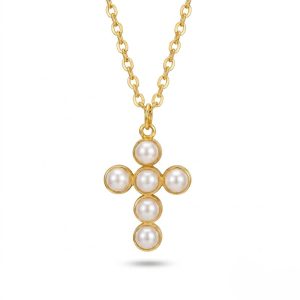
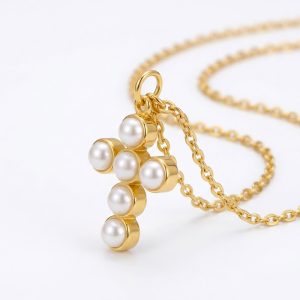
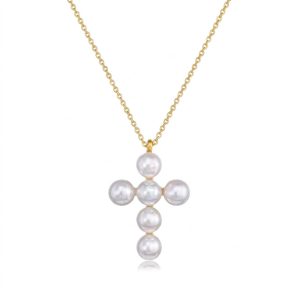
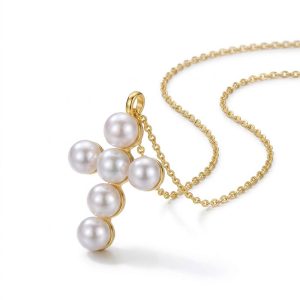
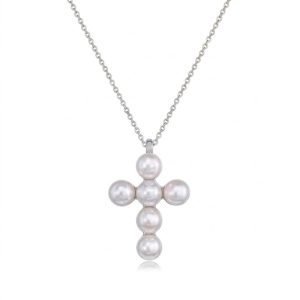
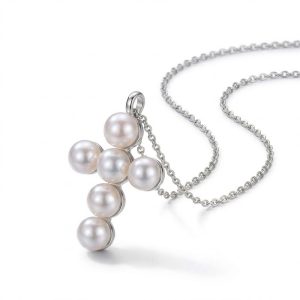
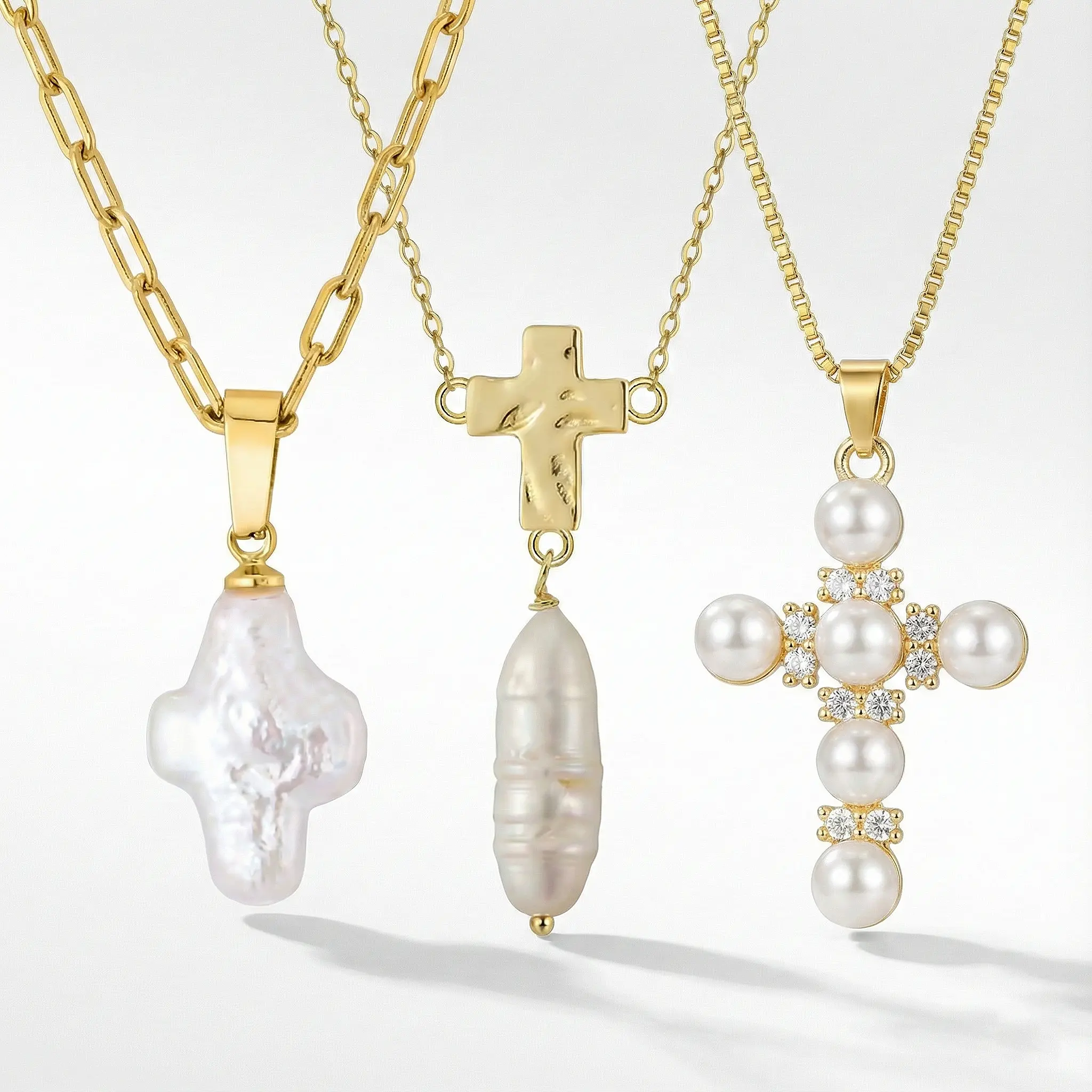
The collection is organized around three distinct design logics. In the first, the pearl is the cross: a baroque freshwater pearl naturally shaped into a cross silhouette, where the gem carries the entire symbolic weight. The second uses the cross as a frame: round cultured pearls set at each arm, in a layout that echoes medieval devotional goldsmithing. The third positions the cross as a pendant on a pearl-accented chain, letting both materials share the visual field. Each approach resolves the same tension between faith and beauty differently, and each reads as intentional rather than incidental.
Who Wears a Pearl Cross Necklace?
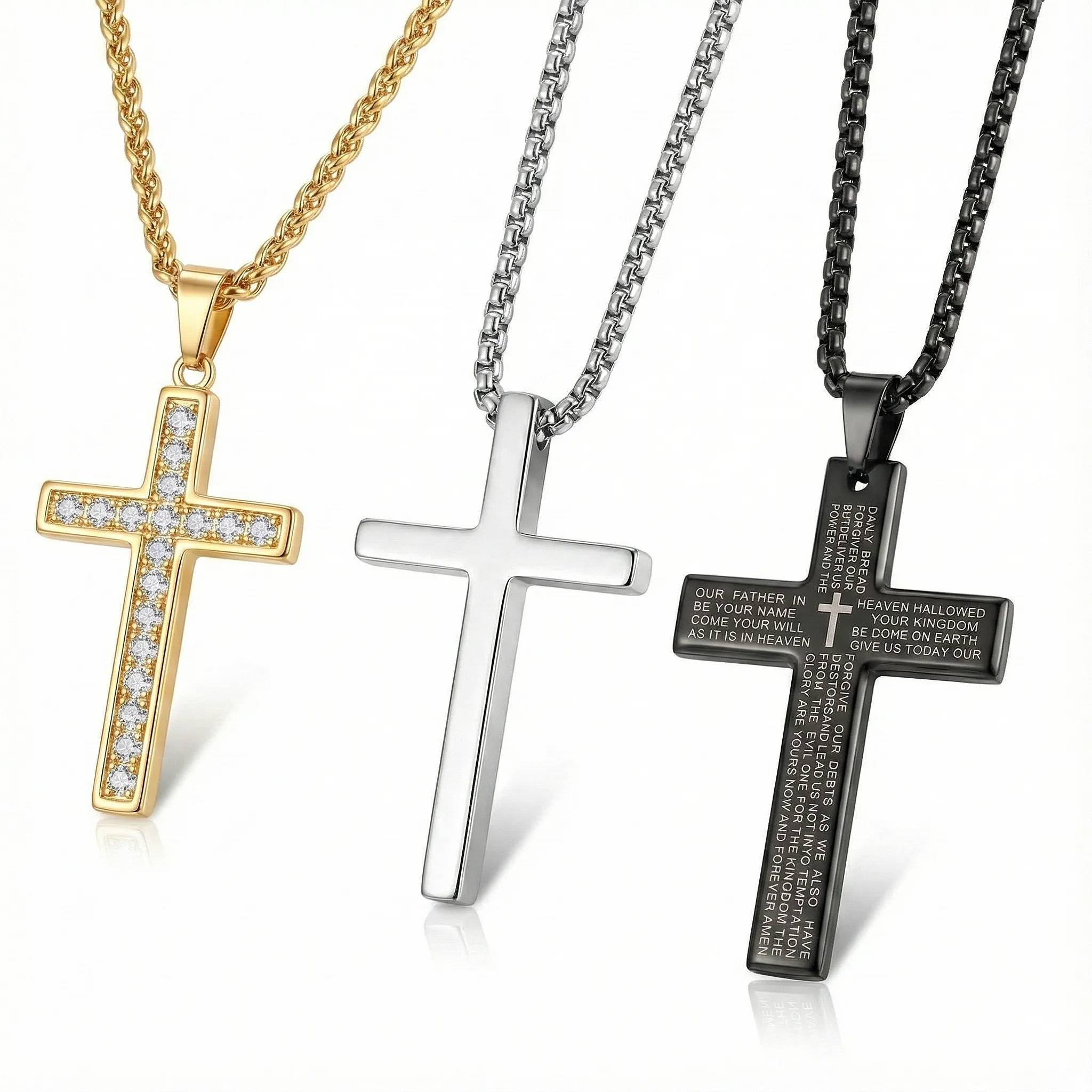
Pearl cross necklaces have historically skewed feminine, but the category has broadened considerably in American jewelry culture. Men’s styles lean toward larger baroque pearls — often keshi or nucleated freshwater — with heavier chain gauges and bolder cross proportions, keeping the piece weighted and assured. Women’s designs span from the minimal single-pearl cross worn at 16″ against the collarbone to layered arrangements at 18″ and 20″ where pearl and gold alternate for visual rhythm. Both markets are served in the Crystia collection, with pendant scale and chain length proportioned accordingly.
Occasions That Call for Pearl and Cross
Few jewelry categories handle the range from First Communion to a contemporary fashion context with equal conviction. A pearl cross necklace worn over a silk shirt at a gallery reads as styled and considered; the same piece at a church ceremony reads as devotional and appropriate. That dual register — sacred and fashion-forward simultaneously — is what makes pearl crosses consistently relevant as gifts, particularly for confirmations, graduations, and milestone birthdays where something lasting and symbolically grounded is expected over something simply decorative.