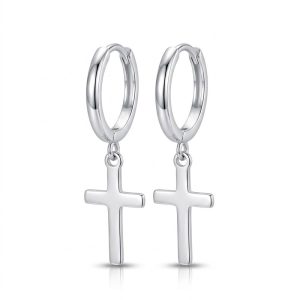
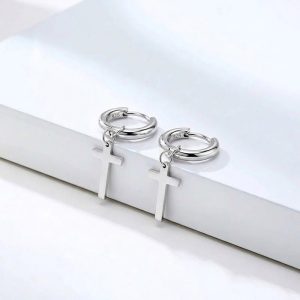
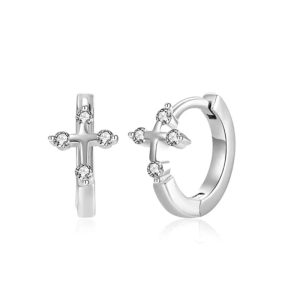
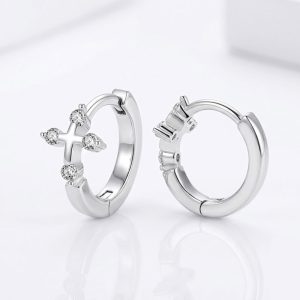
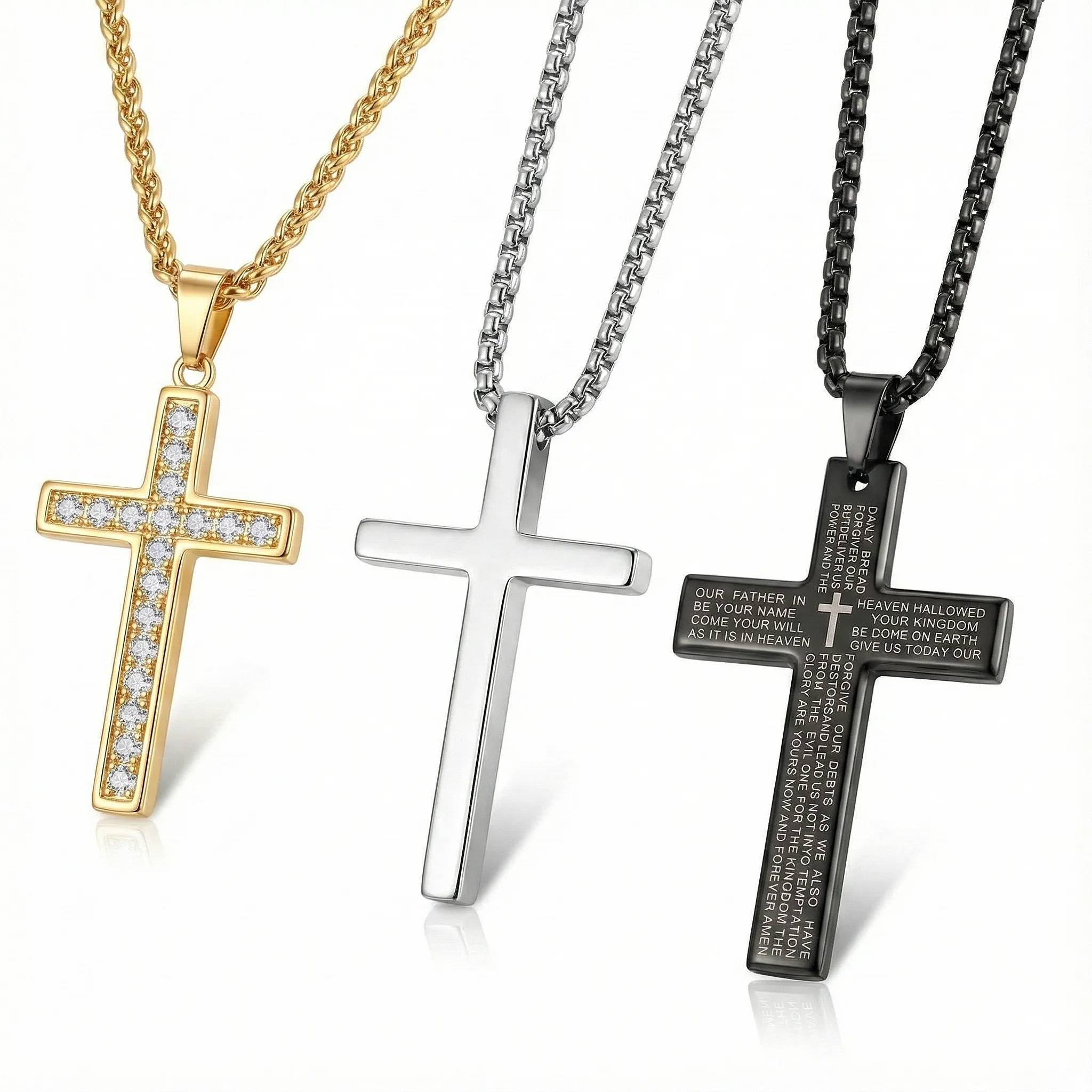
316L surgical-grade stainless steel approaches the same silver aesthetic from an entirely different material logic. Its chromium-molybdenum composition produces passive corrosion resistance at the surface level through a self-regenerating chromium oxide layer that reforms when scratched. With a Vickers hardness of 200 HV or above, it does not tarnish under normal atmospheric exposure, does not react with sweat or skin oils in ways that cause visible surface change, and requires essentially no polishing regimen to maintain its appearance. For wearers in humid climates, those who exercise in their earrings, or those who simply want a piece they can wear and forget, 316L stainless silver-finish earrings deliver a different kind of reliability than sterling. The tradeoff is tactile and visual rather than practical: sterling silver has a warmth and weight in the hand that stainless does not fully replicate, and jewelry connoisseurs typically distinguish between the two by touch before they distinguish by sight.
Both materials in the silver cross earring collection use hypoallergenic post and hoop constructions appropriate for sensitive ears, with nickel content controlled at levels that meet the standard for clinical hypoallergenicity under normal wear conditions.
The Visual Character of Silver on the Cross Form
Silver tone and the cross symbol have a long shared history in Western devotional objects, from early Christian reliquaries to contemporary religious jewelry, and the relationship has produced a design language with its own clear conventions.
A plain polished silver cross earring reflects light in a way that reads as clean and unambiguous. The surface acts as a mirror at low angles, producing a sharp highlight that makes the geometry of the cross visually precise. This is the finish at its most direct, and for wearers who value clarity over decoration, polished plain silver is the strongest expression of the symbol.
Oxidized or antiqued silver treatments deliberately darken the recessed areas of a cross design, leaving the raised surfaces at their natural bright finish. The technique, which accelerates the tarnishing process chemically to achieve a controlled result, gives textured or relief-carved cross designs depth and legibility that a uniformly polished surface does not provide. Gothic cross designs, floral-arm crosses, and ornate ecclesiastical forms benefit most from this treatment because the contrast between oxidized recesses and polished ridges makes each design element read as three-dimensional. The photo captures this quality in one of the hoop-and-cross pieces, where the floral cross arm detail reads with notable sharpness precisely because of that contrast between darkened ground and bright surface.
Silver Across Silhouettes: What the Finish Brings to Each Form
The silver finish does not behave identically across all cross earring silhouettes, and the differences are worth understanding before choosing.
Studs: Precision at the Lobe
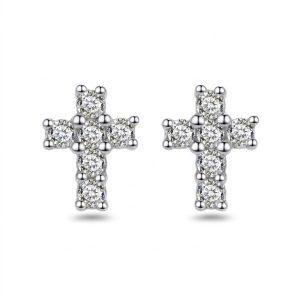
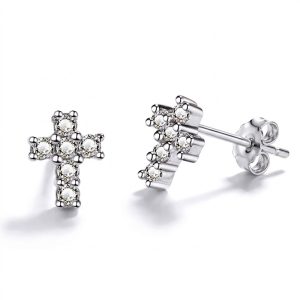
In a silver cross stud, the finish amplifies the geometric precision of the form. A well-cut cross in polished 925 sterling at 10mm across the arms catches directional light cleanly and holds a highlight that smaller or softer metals cannot maintain. For cross stud earrings in the silver range, this means the design detail in the cross arms reads clearly even at conversational distance, which is what makes the stud format in silver particularly suited to restrained, precision-forward dressing.
Hoops: The Contemporary Architecture of Faith
Silver cross hoop earrings in this collection carry the full weight of a contemporary design identity. The cool reflectivity of 316L stainless or 925 sterling silver in a hoop form reads as architectural in a way that gold, with its warmer associations, typically does not. For wearers who approach their jewelry from a fashion-first rather than tradition-first position, silver hoop cross earrings are the format that integrates most naturally into a modern, minimal wardrobe without losing the symbolic legibility that makes the cross a deliberate choice.
Drops: Silver in Motion
A silver drop cross earring moves differently in the light than its gold equivalent. Where gold catches warm ambient tones and glows, polished silver cuts through light with a sharper, cooler reflection. At longer pendant lengths, particularly with pavé-set white stones across the cross surface, the effect in overhead or directional lighting is closer to the visual behavior of fine diamond jewelry than anything a warm-toned metal produces. This is why stone-set silver cross drops are among the most common choices for formal occasion wear: the combination of cool tone, white stones, and pendant movement produces a result that reads as genuinely elevated without requiring precious metal pricing.
Silver and Stone: A Naturally Strong Combination
White and near-colorless stones, including cubic zirconia, white topaz, and genuine diamonds, pair with silver-toned metals in a way that has no close equivalent in gold-tone settings. The shared cool color temperature between a silver setting and a white stone means the transition between metal and stone is visually smooth, with each material enhancing the other’s reflective properties rather than competing with them. A pavé-set cross in 925 sterling silver with round-cut cubic zirconia produces a surface of continuous cold light that is difficult to distinguish from far more expensive fine jewelry at viewing distance, which is one of the primary reasons this combination has dominated American fashion jewelry for decades.
Colored stones against silver follow a different logic. A black stone in a silver setting creates maximum contrast, the combination that defines gothic and alternative cross jewelry aesthetics. A deep garnet or sapphire-toned stone in a silver cross earring introduces a color relationship that warm gold settings tend to absorb or mute; silver instead holds the stone’s color at full saturation and lets it speak without competition.