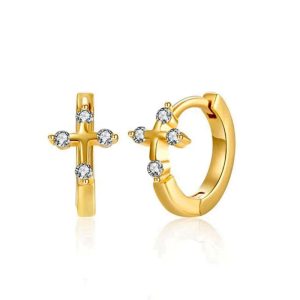
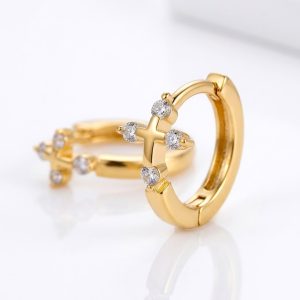
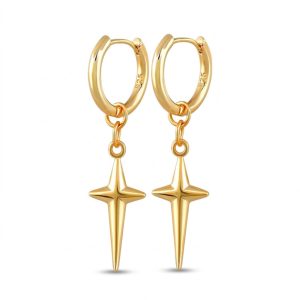
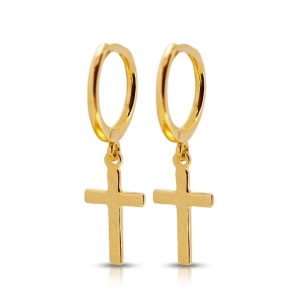
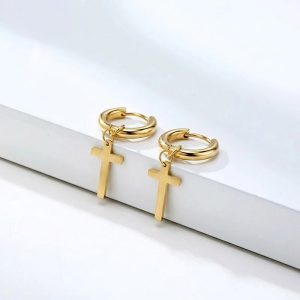
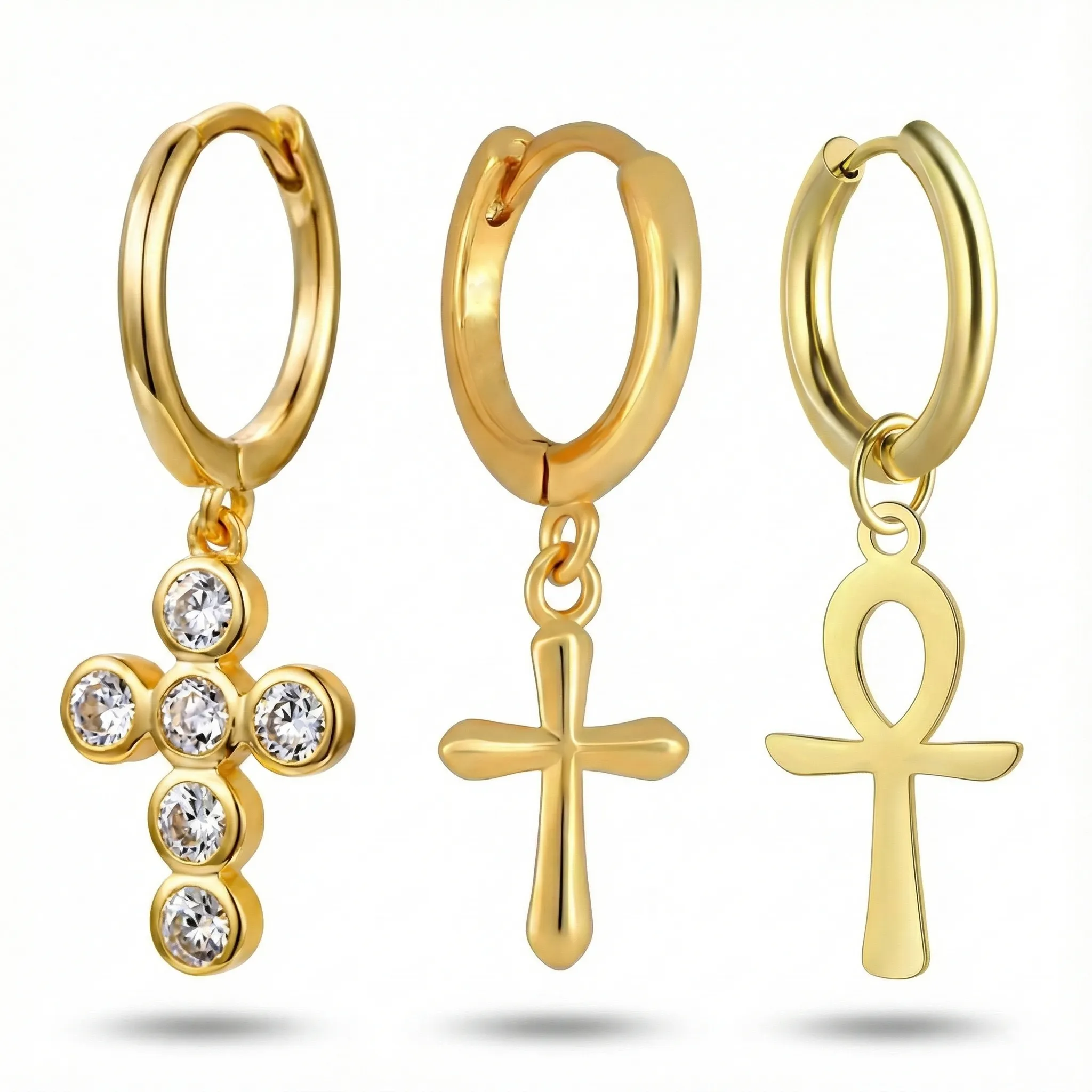
Crystia’s gold cross earrings are built on two primary base metals: 316L surgical-grade stainless steel and 925 sterling silver. Both are hypoallergenic in the clinical sense that matters, meaning minimal nickel migration even under the prolonged skin contact of daily wear. 316L stainless brings superior corrosion resistance through its chromium-molybdenum alloy composition, making it the stronger base for pieces worn in humid climates or through physical activity. Sterling silver as a base gives the gold plating a slightly warmer undertone and a more traditional jewelry-grade feel in the hand.
Gold plating in 14K and 18K refers to the karat value of the gold alloy used in the electroplating bath, not the purity of a solid gold piece. 18K plating uses a gold alloy that is 75% pure gold, which produces a richer, deeper yellow tone. 14K plating at 58.3% gold purity delivers a slightly lighter, more versatile yellow that integrates more easily into mixed-metal looks. Both are applied at a minimum of 2.5 microns thickness in the collection, which is the threshold below which visible wear through daily contact becomes likely within the first year.
Select pieces in the collection are finished using Physical Vapor Deposition, or PVD coating, rather than conventional electroplating. In the PVD process, gold material is vaporized under high vacuum and ionized before being deposited onto the base metal surface at the atomic level. The resulting bond is substantially harder and more adhesion-resistant than electroplated gold because the coating is not layered on top of the surface but integrated into it at a molecular scale. PVD-finished pieces show significantly greater resistance to the abrasion, sweat, and repeated mechanical contact that are the primary drivers of finish degradation in worn jewelry. Where conventional electroplating produces a surface Vickers hardness of roughly 150 to 200 HV, PVD gold coatings typically test between 400 and 600 HV, a difference that translates directly to visible longevity under daily wear conditions.
14K vs. 18K: Choosing the Right Gold Tone for Your Look
The practical distinction between 14K and 18K plating comes down to color temperature and context.
18K gold plating produces the richest yellow tone in the collection: saturated, warm, and immediately recognizable as gold in any lighting condition. This finish performs particularly well under warm interior lighting, candlelight, and the amber tones of golden-hour daylight. It pairs naturally with earth tones, ivory, camel, and the warm end of the neutral palette. For devotional occasions, Sunday services, and holiday events where the traditional association of gold with sacred objects is a feature rather than an incidental detail, 18K is the appropriate register.
14K gold plating reads slightly cooler and less saturated, which makes it more adaptable across the color range of a daily wardrobe. It integrates with greys, whites, and cooler-toned outfits without the friction that a very saturated yellow gold can create in a minimal or contemporary look. For daily wear across a varied wardrobe, 14K is often the more versatile choice precisely because it does not dominate the color field it occupies.
Silhouettes in Gold: What the Metal Adds to Each Form
Gold tone shifts the visual register of every cross earring silhouette in a distinct way, and the collection was built to reflect those differences rather than simply plate existing designs.
Studs: The Symbol Distilled in Gold
A gold cross stud concentrates the full visual weight of the material into the smallest possible footprint. A polished 18K stud at 10mm across the arms reads at face level as a deliberate choice, not an afterthought. Bezel-set stone versions introduce light without expanding the profile, placing white cubic zirconia in gold settings where the warm metal and the cool stone create a contrast that amplifies both.
Hoops: The Circular Tradition in Yellow Gold
Gold hoop cross earrings carry one of the longest-running formal precedents in Western religious jewelry. The circular hoop in yellow gold with a cross at its base references ecclesiastical design language stretching back centuries without requiring the wearer to have any conscious awareness of that history. The visual logic speaks for itself. For wearers who want the cross pendant to read as the primary element rather than an accessory to the hoop, a plain polished gold hoop with a clean geometric cross drop is the clearest expression of this format.
Drops: Gold in Motion
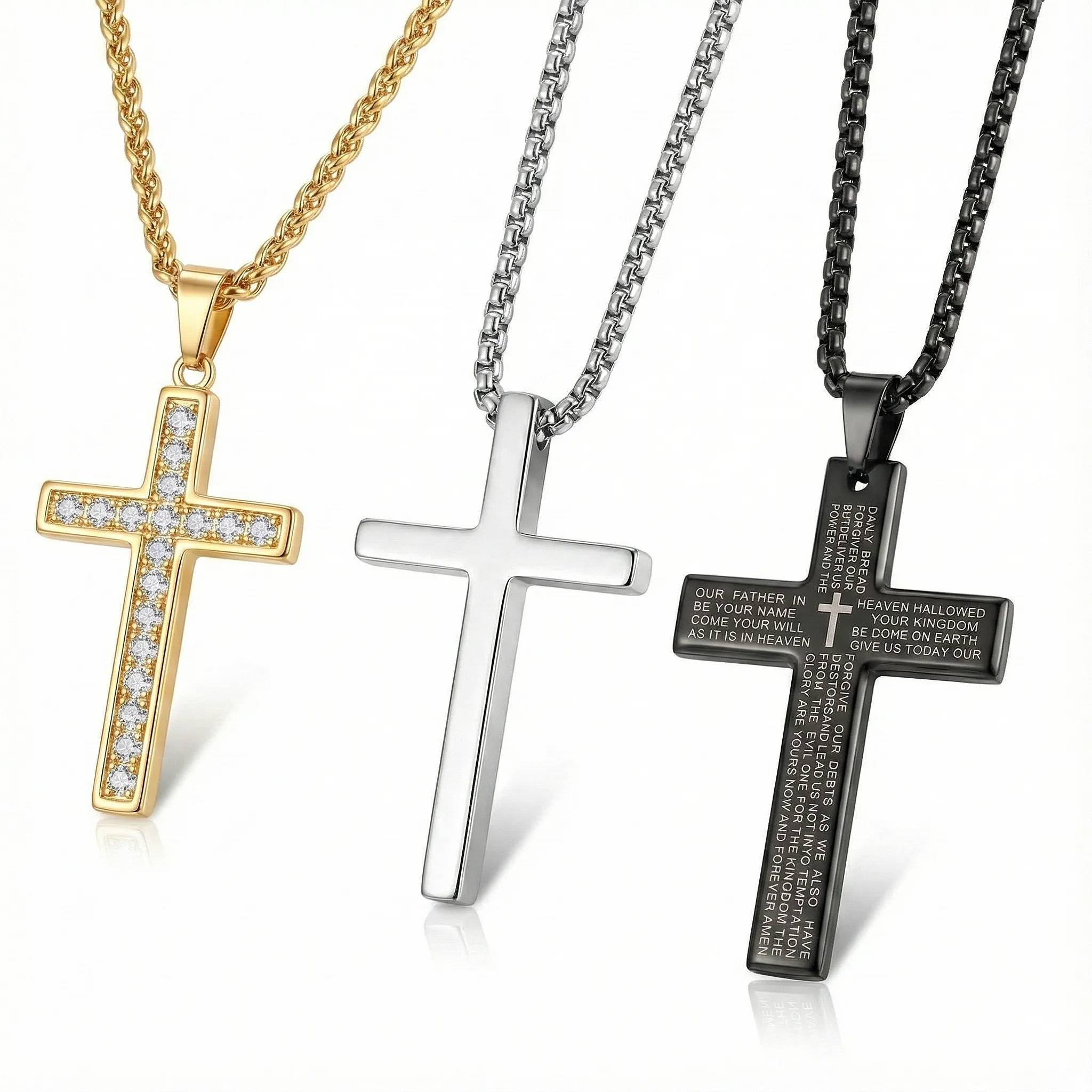
Gold cross drop earrings capture the particular behavior of warm metal in ambient light more effectively than any static format. As the pendant swings, the polished gold surface reflects light at shifting angles, producing the kind of low-intensity brilliance that makes a room take notice without demanding direct attention. At the longer drop lengths in the collection (30mm and above from the base of the finding), a gold cross pendant occupies the upper neck zone and interacts with any chain being worn at the collarbone, making metal coordination between earrings and necklace a consideration worth making deliberately.
Gold Cross Earrings as a Gift
Gold carries a cultural currency in American gifting that other finishes do not. A gold cross earring as a confirmation gift, a graduation present, or a Christmas offering reads as substantial in a way that requires no explanation. The warm tone photographs well, presents well in a box, and communicates care through its association with ceremony and permanence. Pairs in the 14K range with stone-set crosses are the most broadly appropriate for recipients of uncertain specific taste: legible enough as a deliberate choice, restrained enough to fit most personal styles.