The Architecture of the Form: How Cross Hoops Are Built
Not all cross hoop earrings are built the same way, and the structural choices matter both aesthetically and practically.
The Cross as Pendant
The most common configuration suspends a cross pendant from the base of a hoop via a small connecting link. The hoop sits in the piercing and the cross hangs freely below, moving independently as the wearer moves. This creates the visual interplay between the circular ring and the angular cross that defines the form. Drop length from the base of the hoop to the bottom of the cross typically ranges from 12mm to 30mm, with the shorter end suited to everyday versatility and the longer end making a more deliberate statement.
The Cross Integrated into the Hoop
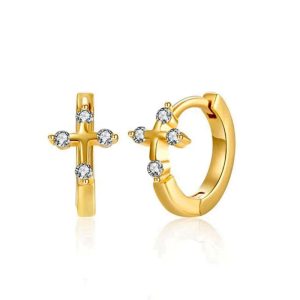
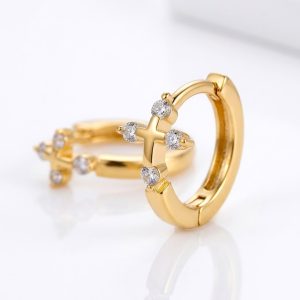
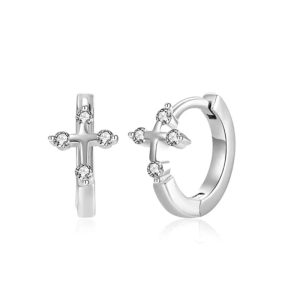
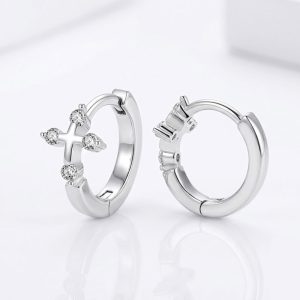
A second construction positions the cross as a fixed element on the hoop itself rather than as a suspended pendant. The cross may sit at the front face of the ring, attached flush with the hoop’s outer surface, or may be formed directly into the hoop’s structure as a cut-out. This version has a lower profile and more contained visual presence, making it the better choice for second or third ear piercings worn alongside other styles, or for wearers who prefer their religious jewelry subtle.
Finishes and What They Communicate
The choice of finish on a cross hoop earring shifts the entire register of the piece, and the collection is built to support genuinely different approaches to the same form.
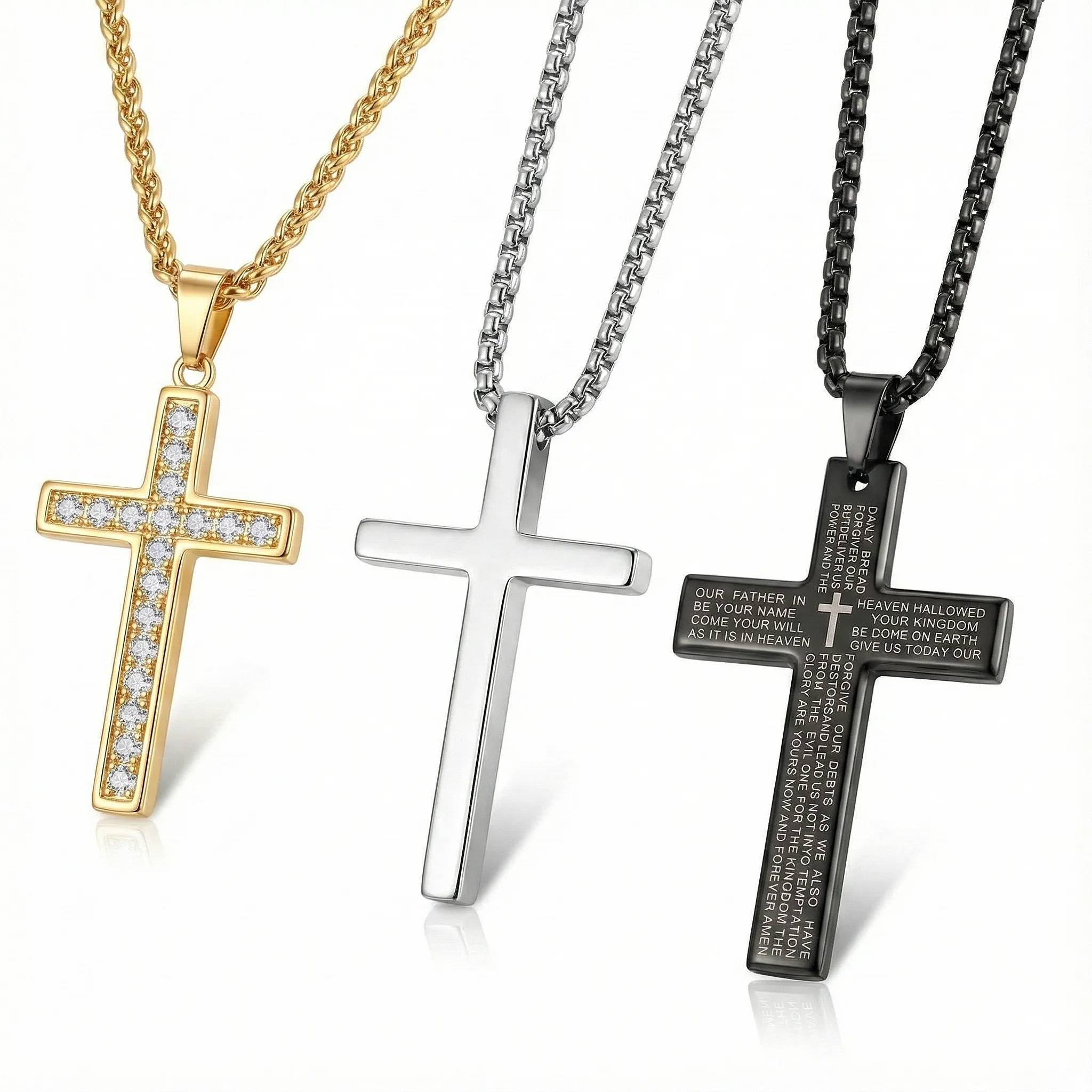
Gold-plated hoop crosses in 18K warm yellow gold carry an immediate visual familiarity: the combination of circular gold and the cross is one of the longest-standing motifs in Western devotional jewelry, and it reads that way whether or not the wearer intends the historical reference. The 14K plating option delivers a slightly cooler yellow tone with equivalent durability, and tends to integrate more easily with mixed-metal looks.
Silver and steel hoops operate in a different register. Cooler in tone and more architectural in feel, they align with the contemporary minimalist aesthetic that has defined American fine and demi-fine jewelry for the past decade. A plain polished 925 sterling hoop with a pavé-set cross pendant bridges devotional jewelry and fashion jewelry in a way that neither demands a religious context nor ignores it.
Black-finish IP-coated hoops represent a third distinct vocabulary, one rooted more in street culture and certain expressions of faith that reject the decorative language of traditional religious jewelry. The IP coating process bonds a metallic black layer to the base metal under ionized vapor conditions, producing a finish that is significantly more durable than paint or chemical blackening and holds up to the contact and abrasion that daily wear entails.
Wearing Cross Hoop Earrings: Scale, Proportion, and Layering
Hoop diameter determines how a cross hoop earring reads at different scales and occasions. Small hoops (10mm to 14mm internal diameter) are the most versatile: they clear the earlobe without pulling, work in professional settings, and pair naturally with other jewelry without dominating. Medium hoops (16mm to 20mm) move more visibly and make the cross pendant more prominent without tipping into statement territory. Larger diameters above 22mm are explicitly statement pieces, worn when the earring is intended to carry the visual weight of an outfit.
For multi-ear styling, a cross hoop in a second or helix piercing alongside a plain stud at the lobe creates a deliberate and balanced composition that reads as considered rather than assembled. For those who wear a dangle cross earrings style in rotation, a cross hoop offers a more contained alternative for days when movement without length is the right choice.