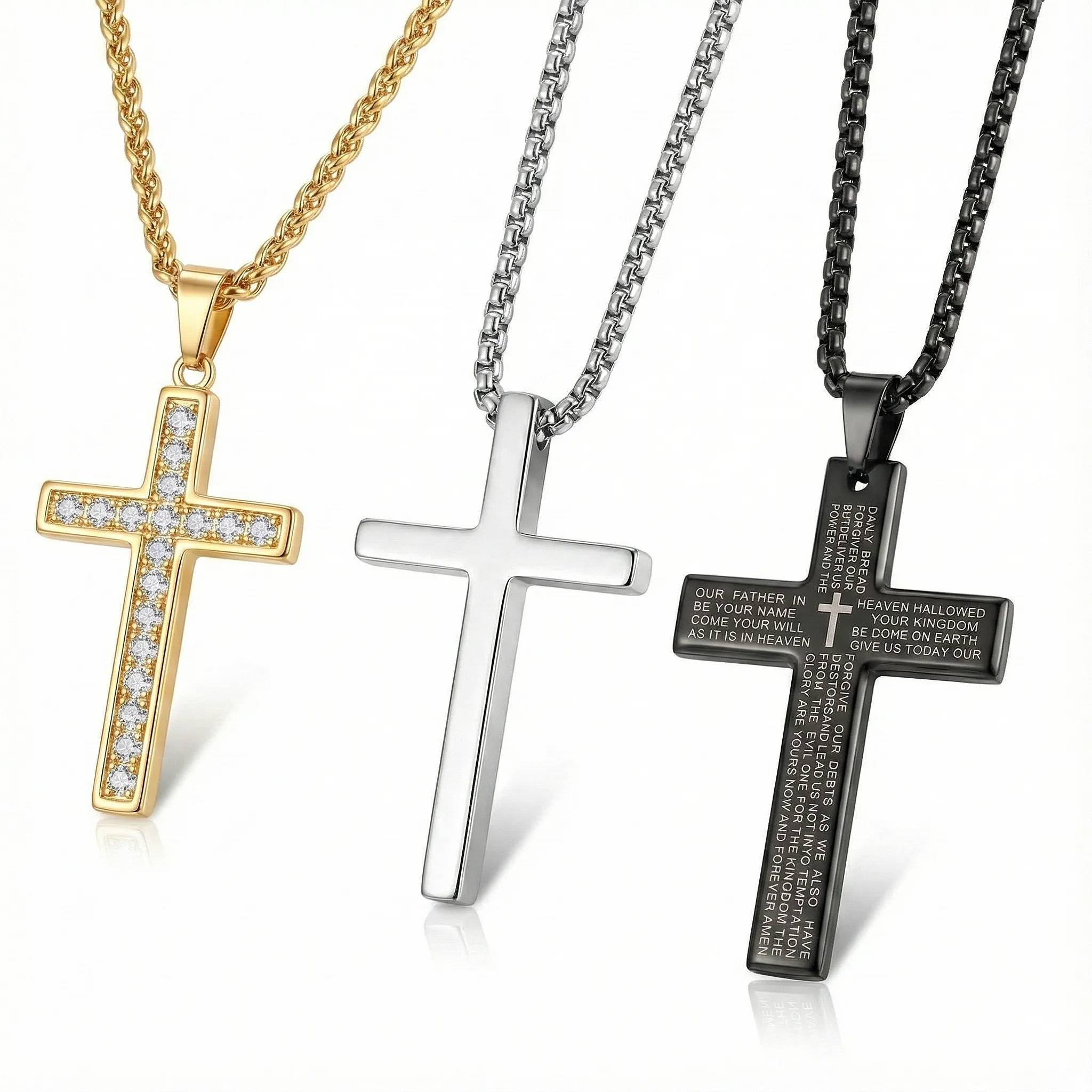

Crucifix vs Cross: What’s the Difference and Which One Is Right for You?
TL;DR – A cross is the symbol alone – two intersecting bars, no figure. A crucifix adds the body of Christ (corpus), depicting the crucifixion explicitly. Catholics traditionally wear crucifixes; most Protestants prefer the empty cross. When buying jewelry, match the symbol to the tradition if faith matters – or choose on style alone.
Walk into any jewelry store and you’ll find them side by side: a simple cross pendant and a crucifix with the figure of Christ. They look similar, they share the same roots, and both carry centuries of meaning. Yet people mix up the two terms all the time – and that confusion can actually matter, whether you’re shopping for yourself, buying a gift for someone whose faith you want to honor, or simply trying to understand what you’re wearing.
This guide breaks down the real difference between a crucifix and a cross, traces how each symbol evolved through history, explains which Christian traditions prefer one over the other, and helps you figure out which is the right choice for you. No theology degree required.
Cross vs Crucifix: Getting the Definitions Straight
The easiest way to remember the distinction is this: every crucifix is a cross, but not every cross is a crucifix.
What Is a Cross?
A cross is the geometric shape itself – two lines intersecting at a right angle, one vertical and one horizontal. As a Christian symbol, it represents the instrument of Christ’s crucifixion and, by extension, his sacrifice, resurrection, and the Christian faith as a whole. The cross appears in hundreds of forms: the Latin cross (the tall, asymmetric shape most people picture), the Greek cross (four equal arms), the Celtic cross (with its distinctive ring), the Jerusalem cross, the Maltese cross, and dozens more.
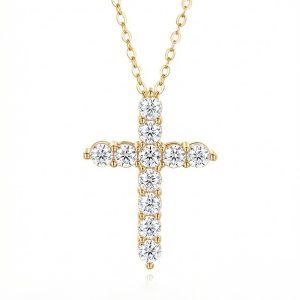
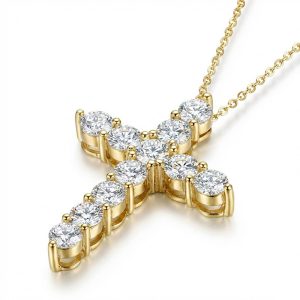
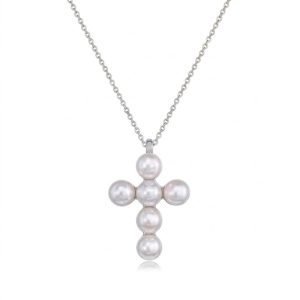
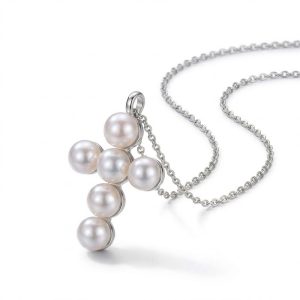
What all of these have in common is the absence of a figure. The cross stands alone. It is a symbol of faith, not a representation of a specific moment.
A few of our favorite plain cross designs :


What Is a Crucifix?
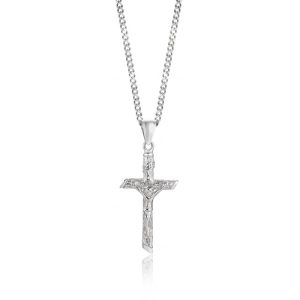
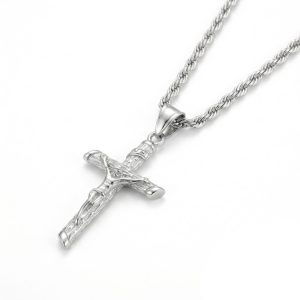
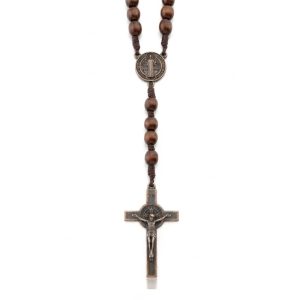
A crucifix is a cross that includes a three-dimensional or sculpted depiction of Jesus Christ on it – referred to as the corpus (Latin for “body”). The crucifix doesn’t just point to the crucifixion in the abstract; it depicts it. Christ’s arms are outstretched, his body shown in suffering or sometimes in a more regal, composed posture depending on the tradition and era.
The word “crucifix” itself comes from the Latin crucifixus, meaning “fixed to a cross.” That specificity is the whole point: the crucifix is not just a shape, it is a scene.
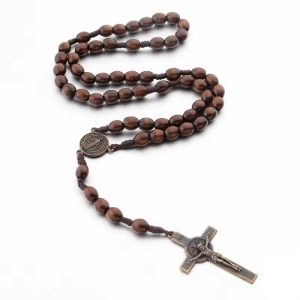
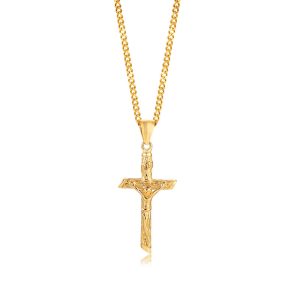
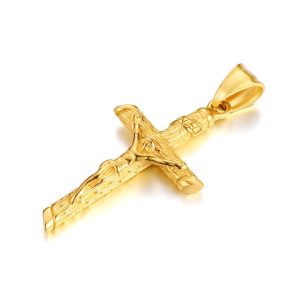
Discover our beautifully crafted crucifixes. :
A Brief History of Two Symbols
Neither the cross nor the crucifix started out as jewelry. Understanding how each became the symbol it is today helps explain why they mean different things to different people.
The Early Cross: A Symbol Hidden in Plain Sight
In the first three centuries of Christianity, the cross was rarely displayed openly. Crucifixion was a Roman method of execution reserved for criminals and the condemned — wearing that symbol publicly would have been both dangerous and, to many early Christians, potentially disrespectful. Early believers used other symbols: the fish (ichthys), the chi-rho monogram, the anchor.
That changed in 312 CE, when Emperor Constantine I converted to Christianity and crucifixion was eventually abolished across the Roman Empire. With the stigma lifted, the cross began its rise as the central symbol of the faith. By the fifth and sixth centuries, cross imagery was everywhere: on churches, coins, manuscripts, and personal adornments.
Crucially, these early crosses were still empty. For several centuries, the cross as a symbol focused on resurrection and glory — Christ triumphant — rather than on the suffering of the crucifixion itself.
The Crucifix: When the Body Appeared
The corpus — Christ’s body on the cross — became more common in Western Christian art around the ninth and tenth centuries. This shift reflected a theological emphasis on Christ’s humanity, his physical suffering, and the sacrifice he made. Rather than looking past the cross to the empty tomb, the crucifix asked the viewer to stop and dwell on what happened on Good Friday.
By the medieval period, the crucifix had become the dominant devotional image in Catholic Europe. Large crucifixes hung above altars. Smaller ones appeared in homes, worn around necks, carried during prayer. The corpus became increasingly realistic and emotionally intense — Baroque crucifixes, in particular, are often striking in their detail.
The Protestant Reformation of the sixteenth century introduced a significant split. Reformers like Luther and Calvin pushed back against what they saw as an excessive focus on images in worship. Many Protestant traditions moved back to the plain cross — empty, abstract, pointing toward resurrection rather than lingering on the crucifixion.
Which Christian Traditions Use Which Symbol?
This is where the practical question gets interesting — and where getting it wrong when buying a gift can matter.
Catholic Tradition: The Crucifix
For Roman Catholics, the crucifix is the primary symbol of the faith. You’ll find it in every Catholic church above the altar, in homes, in schools, worn daily by the devout. The corpus is not optional — it’s doctrinally meaningful. Catholic tradition emphasizes Christ’s redemptive suffering, and the crucifix makes that suffering visible and present.
Many Catholics receive a crucifix necklace at significant moments: First Communion, Confirmation, baptism. It is both a personal devotional object and a public sign of faith.
Protestant Traditions: The Empty Cross
Most Protestant denominations — Baptist, Methodist, Lutheran, Presbyterian, Evangelical, non-denominational — favor the plain cross. The reasoning is largely theological: Christ is risen. He is no longer on the cross. The empty cross points to resurrection and new life rather than dwelling on death. Some traditions also apply a broader principle of avoiding religious imagery.
There are nuances here. Some Lutheran churches retain crucifixes, especially those with more liturgical traditions. Anglo-Catholic congregations within the Anglican/Episcopal tradition often use crucifixes. But as a general rule of thumb: cross for Protestant, crucifix for Catholic.
Eastern Orthodox Tradition: The Three-Barred Cross
Eastern Orthodox Christianity has its own distinct form: the three-barred cross. It has the standard horizontal bar, a smaller titulus bar at the top (representing the sign Pilate had placed above Christ: “Jesus of Nazareth, King of the Jews”), and a diagonal footrest bar at the bottom. Orthodox crosses often include the corpus, but the design is so distinctive that it operates as its own category — recognizable to anyone familiar with Russian, Greek, Serbian, or other Orthodox traditions.
Choosing Between a Crucifix and a Cross for Jewelry
Whether you’re shopping for yourself or for someone else, a few key questions will guide you toward the right choice.
Consider the Faith Background First
If faith is part of the reason for the gift — a First Communion present, a baptism gift, a confirmation keepsake, a meaningful religious piece for someone devout — matching the symbol to the tradition matters. A crucifix for a Catholic, an empty cross for a Protestant. Getting this right shows you paid attention; getting it wrong can feel like a mismatch, even if well-intentioned.
If the person wears their faith loosely, or you’re unsure, a plain cross is the safer and more universally accepted choice.
Think About the Style Statement
Beyond religious meaning, both symbols have evolved into fashion and cultural statements. The cross — especially in gold, gothic, or minimalist forms — has long been part of mainstream jewelry culture regardless of religious affiliation. Celebrities, musicians, and fashion designers have made the cross pendant one of the most recognizable jewelry motifs in the world.
The crucifix tends to read as more explicitly religious in a fashion context. That’s not a negative — it can be exactly what someone wants. A heavy silver crucifix worn on a long chain carries a different visual weight and intention than a delicate gold cross on a thin chain. Both are valid; they just communicate different things.
Gifting Considerations
Cross jewelry is one of the most meaningful gift categories in fine and fashion jewelry, precisely because it carries so much personal and spiritual weight. A few guidelines:
- For a religious milestone (First Communion, Confirmation, baptism): a crucifix for Catholic recipients, a cross for Protestant ones.
- For a graduation, birthday, or “thinking of you” gift to a Christian friend: a simple cross is broadly appropriate.
- For someone whose tradition you don’t know well: opt for the plain cross. It transcends denominational lines.
- For someone who wears cross jewelry as a style choice: focus on the aesthetic — metal, chain length, pendant size, finish — rather than the theological distinction.
Shop Crucifix & Cross Jewelry at Crystia
Whether you’ve decided on a crucifix or a cross — or you’re still exploring — Crystia’s collections are designed for people who want quality craftsmanship with real meaning behind it. Every piece is chosen for its detail, its finish, and the story it carries.
Crucifix Necklaces
From classic Latin crucifixes in sterling silver to ornate gold-plated designs, our crucifix collection is built for those who want the full symbol — corpus and all.
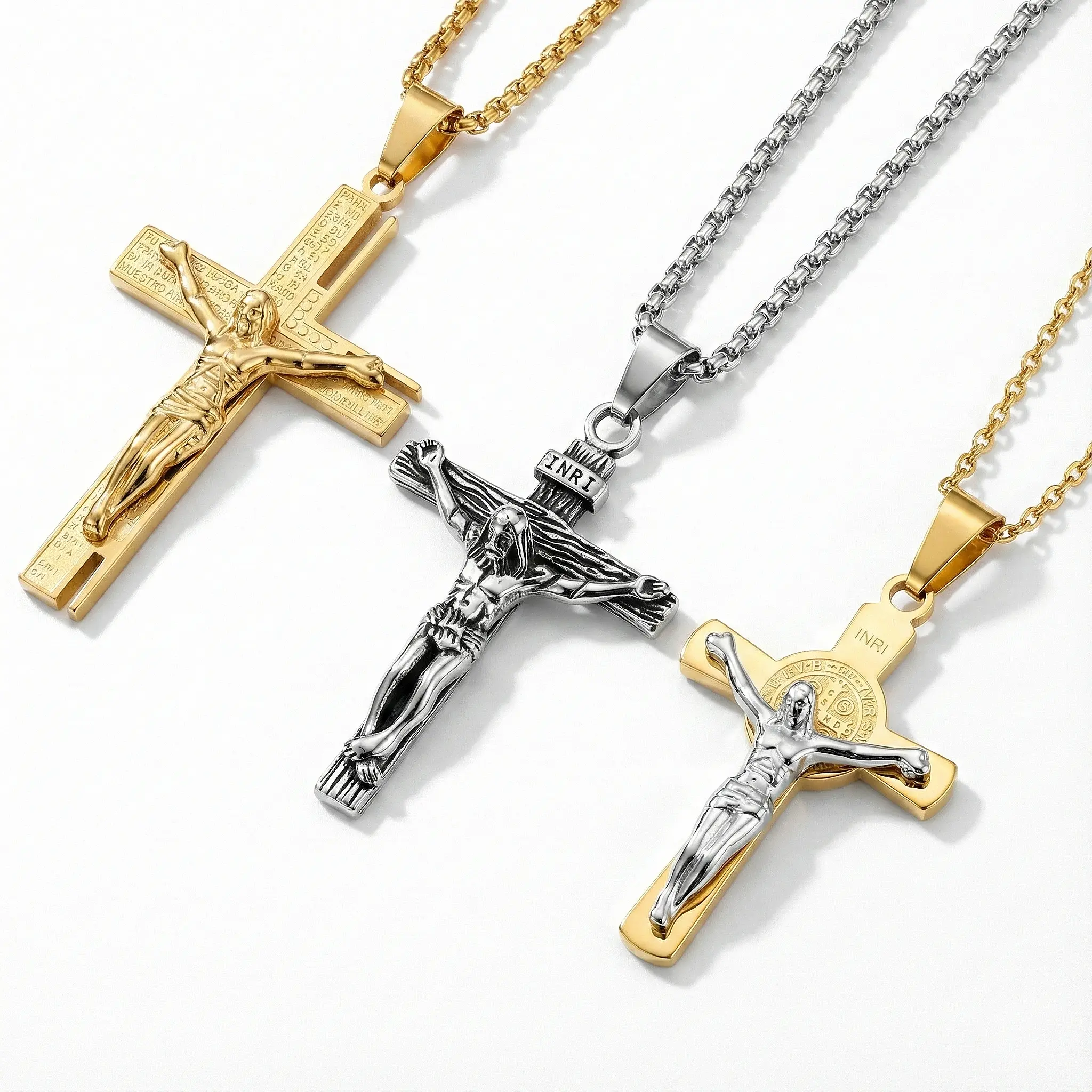
Find your perfectly detailed Crucifix Necklace.
Cross Necklaces
Celtic, gothic, minimalist, diamond-set — if you’re drawn to the clean power of the empty cross, our cross jewelry collection covers every style and material.